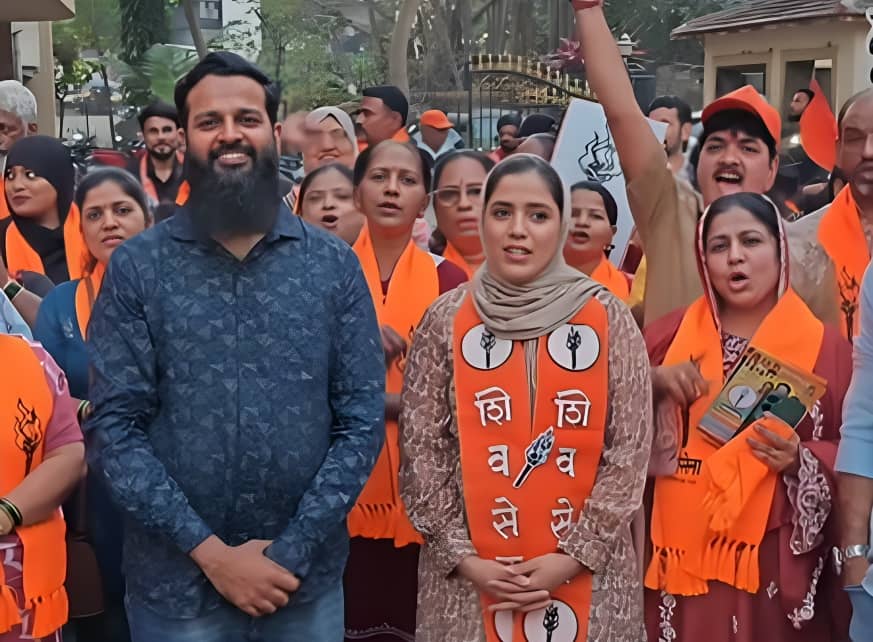
In the wake of Maharashtra’s recent civic elections, Shiv Sena (UBT) corporator Saba Haroon Khan spoke on the significance of the hijab, describing it as a symbol of dignity and personal choice for Muslim women. She highlighted that the attire represents self-respect and identity and should not be used as a political issue or manipulated in electoral campaigns. Saba Haroon Khan’s statements underline the importance of separating religious matters from political discourse, especially in a state experiencing shifting power dynamics following recent elections.
Her father, Haroon Khan, who serves as an MLA, added that the hijab has never been a contentious issue in their constituency or political work. According to him, Muslim women have historically exercised their right to wear the hijab without interference, and the focus should remain on governance and public welfare rather than religious debates. The father-daughter remarks came amid heightened discussions on cultural identity, social freedom, and minority rights in Maharashtra.
These comments follow the Mahayuti alliance’s sweeping victories in several civic bodies, including the Brihanmumbai Municipal Corporation (BMC), which marked a significant political shift in the state. The results ended the decades-long dominance of the Thackeray family in Mumbai’s civic politics and signalled a new chapter for regional governance. In the BMC, Kishori Pednekar was elected as the leader of Shiv Sena (UBT) corporators, reflecting a strategic restructuring within the party.
Political analysts say that Saba Haroon Khan’s remarks come at a critical moment, as Maharashtra navigates complex socio-political issues. They stress the need for political parties to respect religious practices and safeguard individual freedoms while pursuing civic administration. By emphasising the hijab as a matter of dignity rather than politics, the corporator sought to promote inclusivity and communal harmony in a city known for its diverse population.
The statements also resonate with broader discussions around women’s rights and cultural expression in India. While some parties have previously sought to politicise religious attire, Saba Haroon Khan’s perspective highlights the importance of individual autonomy and societal respect for personal choices. Civil society groups have welcomed her remarks, noting that they reinforce the principles of secularism and gender equality.
Shiv Sena (UBT) leadership has further indicated that their focus will remain on urban governance, infrastructure development, healthcare, and education, while encouraging political neutrality on cultural matters. Leaders have called for constructive dialogue and emphasised the need to prevent unnecessary communal tensions. They reiterated that civic issues, such as waste management, water supply, and transportation, should be prioritised over divisive debates in Maharashtra’s public discourse.
As Maharashtra adjusts to the new political configuration, Saba Haroon Khan’s remarks serve as a reminder of the significance of respecting personal freedoms and avoiding the politicisation of religious symbols. The party continues to advocate for inclusive governance and equitable opportunities for all communities in the state.