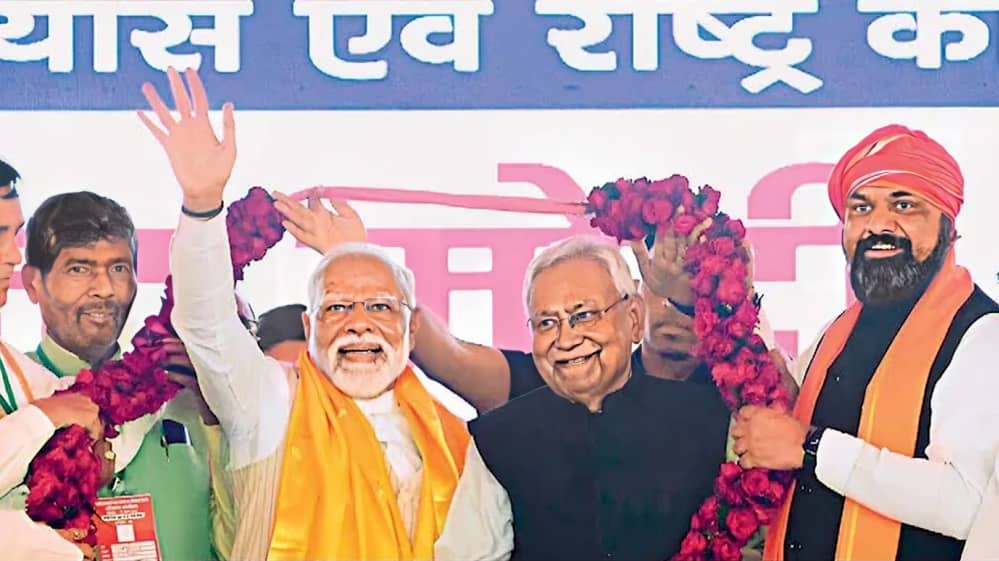
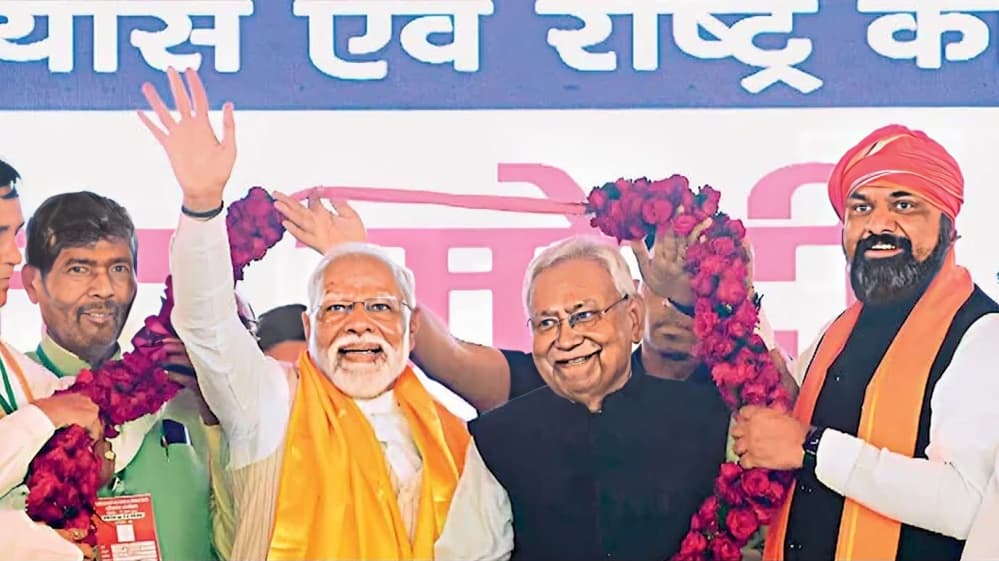
Samajwadi Party (SP) leader Mata Prasad Pandey recently suggested that the Bharatiya Janata Party (BJP) could remove Bihar Chief Minister Nitish Kumar in the coming days, generating significant political speculation. Pandey’s statement has reignited discussions about potential shifts in Bihar’s political landscape, especially regarding the stability of the ruling coalition and the BJP’s strategic intentions in the state.
The SP leader’s comments come amid ongoing political maneuvering in Bihar, where alliances and leadership decisions have often been fluid. Analysts note that Nitish Kumar’s tenure has seen periodic tensions with coalition partners, with BJP playing a central role in shaping state governance. Pandey’s remarks add to the uncertainty, raising questions about the timing, rationale, and implications of a potential leadership change.
While the BJP has not confirmed any such move, the claim reflects broader concerns about political recalibrations at the state level. Experts point out that the party’s decision-making could be influenced by electoral calculations, performance assessments, and efforts to consolidate power. The role of Nitish Kumar within the coalition and his political alignment with national parties are factors likely under consideration.
Political observers emphasize that such statements, even if speculative, can influence public perception and voter sentiment. Pandey’s remarks may also signal attempts by opposition parties to highlight potential instability and create political narratives ahead of future elections. Media analysts suggest that the unfolding developments could impact governance, policy decisions, and administrative priorities in Bihar.
The possibility of a leadership change in Bihar highlights the complex dynamics between regional parties and national stakeholders. Coalition governments in the state have historically required careful negotiation and alignment to maintain stability, with power-sharing arrangements often subject to reassessment. Pandey’s prediction underscores the importance of monitoring political alliances, internal party deliberations, and emerging trends in the state’s political environment.
Observers also note that Bihar’s political scenario has implications beyond the state, influencing regional politics, national party strategies, and electoral projections for upcoming elections. The BJP’s approach to potential leadership changes, if confirmed, may serve as a benchmark for managing alliances in other states where the party is a key stakeholder.
In conclusion, Mata Prasad Pandey’s claim that the BJP may soon oust Nitish Kumar has intensified speculation about Bihar’s political future. While no official confirmation has been made, the remarks highlight the fluidity of state politics, coalition dynamics, and strategic considerations by major parties. The coming days are expected to provide clarity on potential leadership shifts, alliance recalibrations, and the overall trajectory of governance in Bihar, emphasizing the ongoing interplay between political strategy, public perception, and party priorities.