
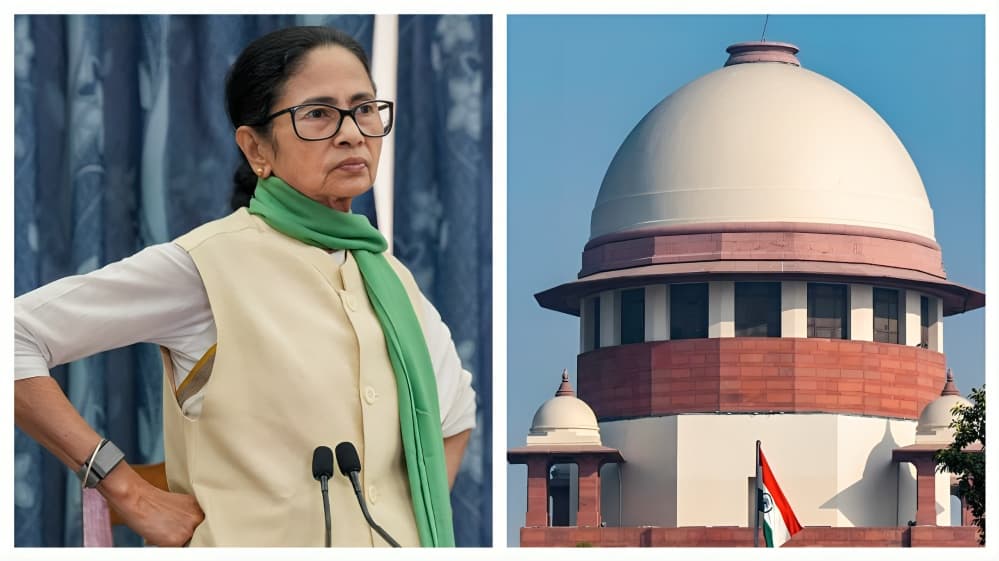
The Supreme Court has allowed the Calcutta High Court to deploy serving and former civil judges to manage claims and objections filed during the Special Intensive Revision of electoral rolls in West Bengal. The matter relates to nearly 80 lakh individuals who have submitted applications seeking corrections, inclusions, or objections in the updated voter list. The decision was taken in view of concerns raised over transparency and administrative trust in the ongoing revision process.
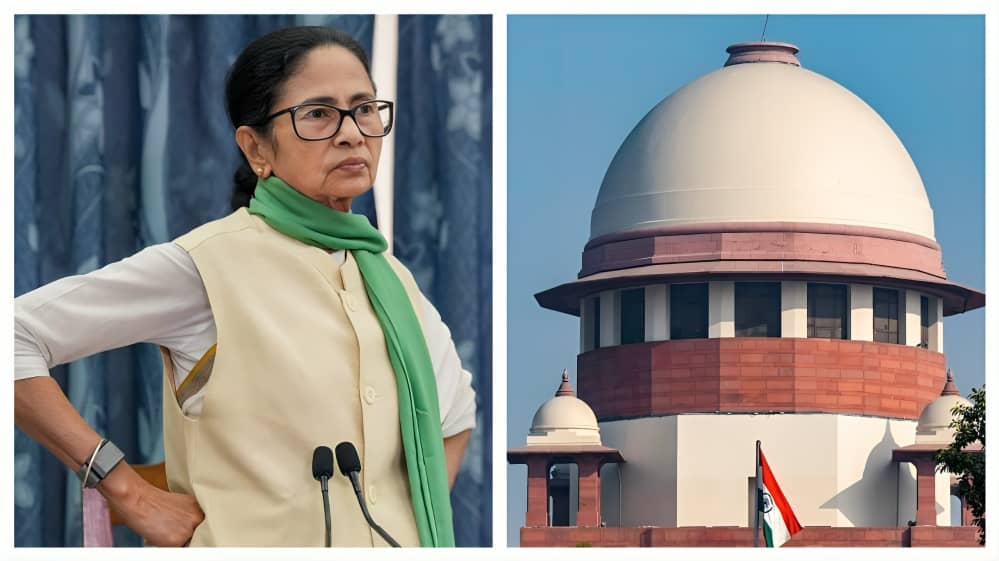
During the hearing, the Supreme Court observed that there appeared to be a trust deficit between the West Bengal government led by Mamata Banerjee and the Election Commission of India. Considering the scale of the revision exercise and the large number of claims involved, the court felt that judicial supervision would help ensure neutrality and fairness. The bench directed the Calcutta High Court to appoint both serving and retired judicial officers to oversee the scrutiny process.
Following the direction, approximately 250 judicial officers commenced work on February 23 to examine the applications. These officers are tasked with verifying claims related to additions, deletions, and corrections in the electoral rolls. The Special Intensive Revision is an important administrative exercise conducted by the Election Commission to update voter lists and ensure accuracy before major elections.
The final publication of the revised electoral rolls is scheduled for February 28. The timeline has made the review process time sensitive, as authorities aim to complete scrutiny before the updated lists are officially released. The involvement of judicial officers is expected to enhance credibility and reduce allegations of bias or irregularities.
Electoral roll revisions are a crucial component of India’s democratic framework. Accurate voter lists ensure that eligible citizens can exercise their right to vote while preventing duplication or ineligible entries. In states with large populations such as West Bengal, the process often involves significant logistical challenges. The current revision has drawn attention due to the high number of claims and objections filed within a limited timeframe.
Legal experts note that the Supreme Court’s intervention underscores the importance of institutional balance in electoral matters. By entrusting the High Court with supervisory responsibility, the apex court has sought to maintain fairness while respecting the constitutional role of the Election Commission. The measure is seen as a step to reinforce public trust in the electoral system.
With judicial officers now engaged in the scrutiny process, authorities are working to ensure that all valid claims are addressed before the final rolls are published. The outcome of this review will play a key role in shaping the voter list for upcoming elections in the state. The development highlights the judiciary’s role in safeguarding democratic processes and ensuring administrative accountability.


