
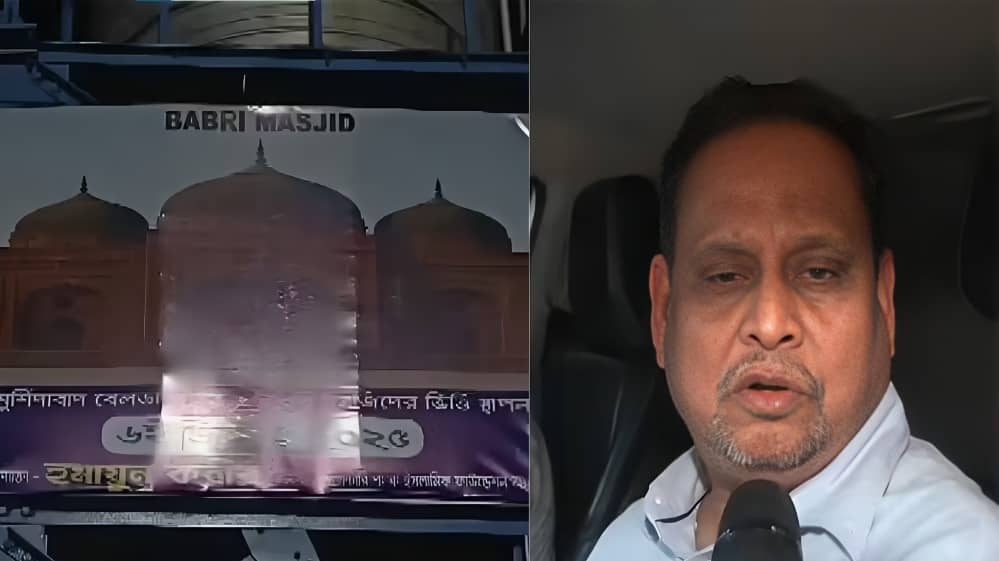
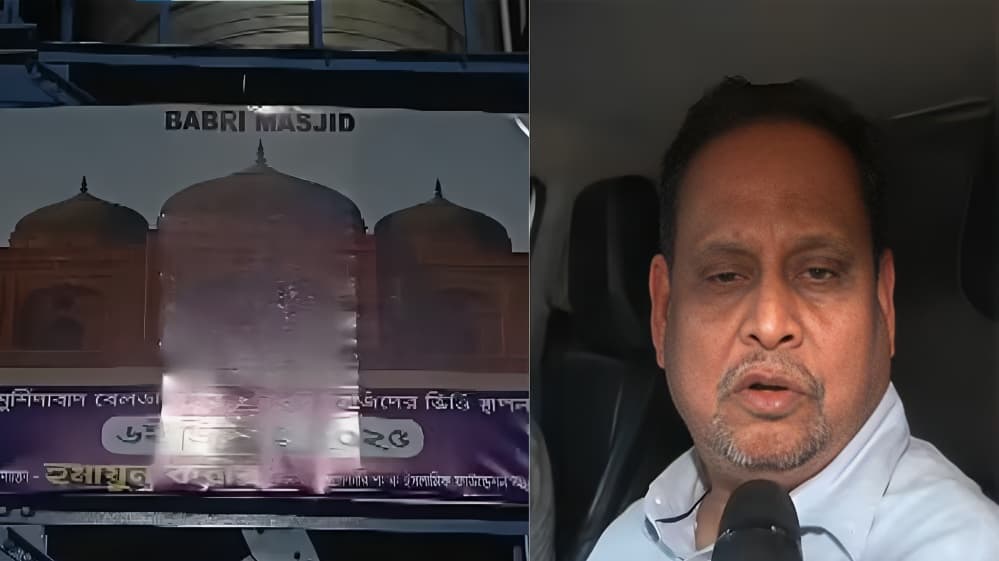
The ruling Trinamool Congress (TMC) in West Bengal suspended its Bharatpur MLA Humayun Kabir after his announcement to construct a replica of the Babri Masjid in Murshidabad district created significant political and social controversy. Kabir’s statement triggered reactions from political parties, religious groups, and civil society, prompting the TMC leadership to act swiftly to prevent escalation and preserve communal harmony in the region.
Humayun Kabir, who represents the Bharatpur constituency, stated in a public forum that he supported the reconstruction of the Babri Masjid, which was demolished in Ayodhya in 1992, as part of a broader plan to address historical grievances. His remarks were met with immediate backlash, with critics arguing that such proposals could inflame communal tensions and disrupt law and order.
In response, TMC leaders clarified that Kabir’s views were personal and did not reflect the party’s official policy. The party emphasized its commitment to secularism and social harmony, stressing that political representatives must uphold these principles. A senior TMC spokesperson stated, “The party has a zero-tolerance approach toward any actions or statements that may compromise communal peace. MLA Humayun Kabir’s suspension is a necessary step to maintain public confidence and prevent unrest.”
Political analysts suggest that the suspension also reflects the TMC’s strategy to manage public perception ahead of upcoming local elections. Murshidabad, which has a diverse population with significant religious communities, is considered sensitive to political and social messaging. By suspending Kabir, the party aims to avoid alienating key voter groups while projecting an image of responsible governance.
Local authorities in Murshidabad have been monitoring community reactions closely, coordinating with law enforcement to prevent any incidents arising from heightened tensions. Community leaders have called for calm and urged residents to refrain from taking any unilateral actions that could escalate conflict. The administration has also increased patrols in sensitive areas to ensure peace.
Meanwhile, opposition parties seized the opportunity to criticize both Kabir and the TMC, arguing that the party’s internal disciplinary measures were reactive rather than proactive. Analysts note that managing communal issues is a recurring challenge for political parties in West Bengal, where historical and religious sentiments intersect with contemporary politics.
The TMC’s decision underscores the party’s need to balance freedom of speech for elected representatives with responsibility toward maintaining social stability. Kabir’s suspension serves as a reminder to political figures about the implications of public statements on communal harmony and governance.
Overall, the incident highlights the complex dynamics of politics, religion, and public sentiment in Murshidabad, emphasizing the importance of careful messaging by elected officials. The TMC’s swift action aims to prevent unrest, reassure communities, and maintain the party’s secular and harmonious image while navigating sensitive socio-political issues.


