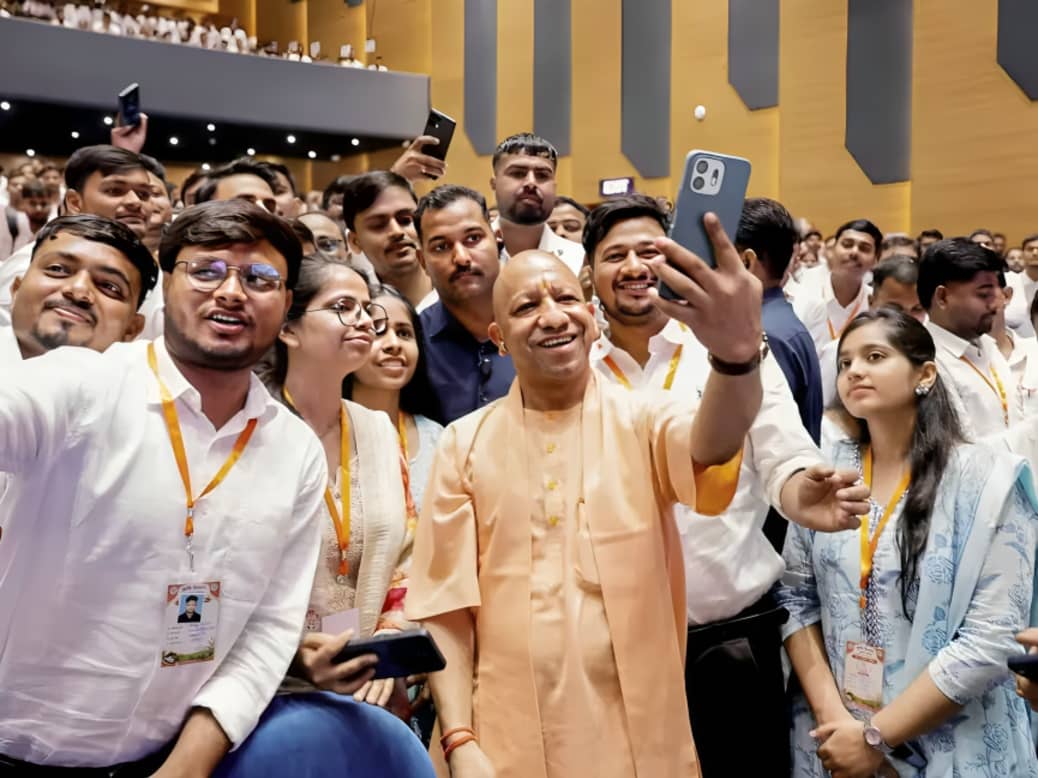
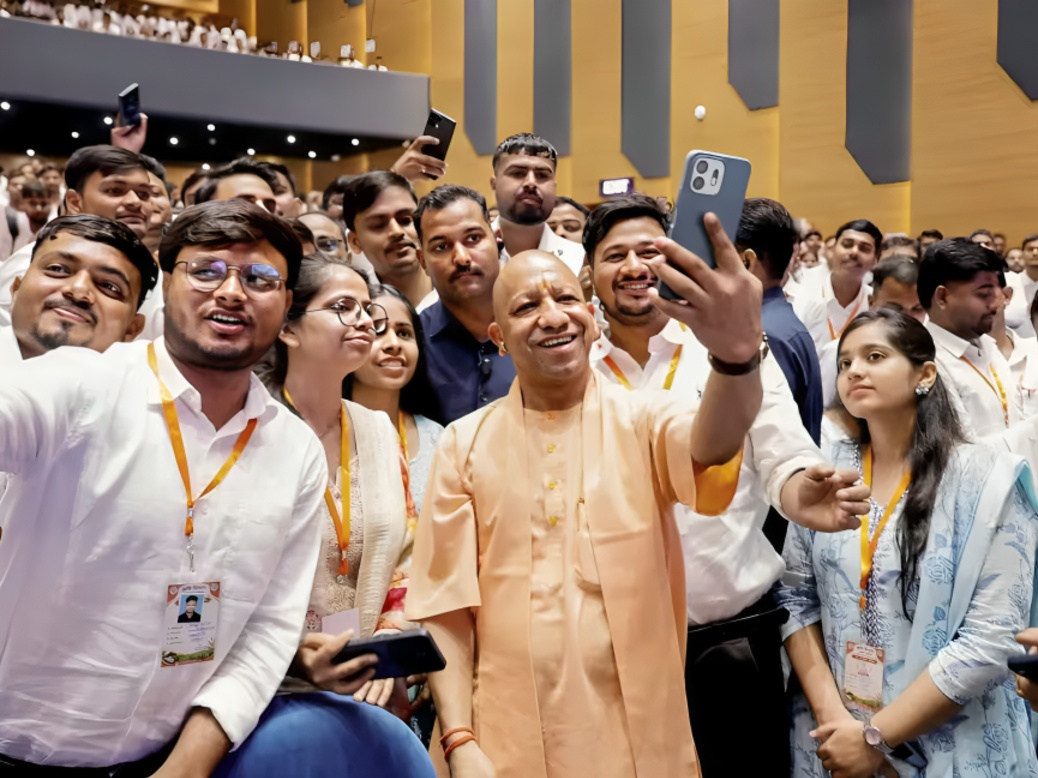
Uttar Pradesh Chief Minister Yogi Adityanath has predicted that the Bharatiya Janata Party will return to power in the state with a grand majority in the 2027 Assembly elections. His remarks come more than a year before the election and reflect the ruling party's focus on welfare, development, tourism, employment and investment as key issues ahead of the polls.
Speaking at the Aaj Tak Panchayat event in Mathura, Adityanath said the BJP's double engine government would secure a comfortable victory in the next Assembly election. He expressed confidence that people who have benefited from government welfare and development programmes would support the party once again.
The chief minister specifically referred to young people, women, farmers and Dalits among the groups that he believes have benefited from government schemes. According to Adityanath, these beneficiaries would play an important role in determining the outcome of the 2027 election. He said he had made a similar prediction before the 2022 Assembly elections and remained confident about the BJP's electoral prospects.
Adityanath's comments place welfare delivery at the centre of the BJP's political narrative for the upcoming election. The ruling party is expected to highlight government schemes and development projects as part of its campaign while seeking another term in office.
Tourism was another major issue highlighted by the chief minister during his Mathura address. He pointed to the religious and cultural importance of the Braj region, which includes important pilgrimage destinations associated with Lord Krishna. According to Adityanath, the large number of devotees and tourists visiting the region demonstrates the economic potential of religious tourism.
He claimed that around 11 crore devotees and tourists visited the Braj region during the previous year. He also said that Uttar Pradesh received around 156 crore devotees and tourists in 2025. Adityanath argued that the large visitor numbers were helping create a connection between faith and economic activity.
The chief minister said the government's approach was to convert the state's cultural and religious heritage into opportunities for economic development. He maintained that tourism could contribute to employment, local business activity and investment when supported by improved infrastructure and public facilities.
Adityanath also highlighted the investment environment in Uttar Pradesh. He claimed that the state had emerged as an investment-friendly destination and that investors following government policies were eligible for incentives. According to him, facilities related to investment, skill development and employment had increasingly moved online.
Employment is expected to be another important issue in the 2027 election. Adityanath claimed that his government had provided employment to around 9.5 lakh young people. He also spoke about measures aimed at strengthening recruitment examinations and preventing question paper leaks.
The chief minister claimed that stricter laws had helped curb paper leaks in the state. He said those found guilty could face severe penalties, including life imprisonment and confiscation of property. These comments were part of his broader criticism of the previous Samajwadi Party government and its handling of recruitment examinations.
Adityanath also referred to religious and cultural issues while criticising the previous government. He alleged that certain religious events and the Kanwar Yatra had faced restrictions before 2017. He said his government had restored the Kanwar Yatra and ensured that it could be conducted in a religious atmosphere.
According to the chief minister, around five crore Kanwariyas participated in this year's Kanwar Yatra and no major untoward incident occurred. These figures and assessments were presented by Adityanath as part of his government's record and should be understood as claims made by the chief minister.
The 2027 Uttar Pradesh election is expected to be one of the most closely watched state elections in India. The BJP will seek to retain power, while opposition parties including the Samajwadi Party and other political groups will attempt to challenge the ruling party.
The political contest is already becoming more visible. Recent exchanges between the BJP and Samajwadi Party have included criticism over governance, development, public services and campaign strategies. The election is likely to involve debates over welfare schemes, employment, infrastructure, law and order, social issues and economic development.
Adityanath's latest comments indicate that the BJP intends to present development and welfare delivery as major strengths of its administration. His emphasis on tourism and investment also suggests that economic growth will form an important part of the government's message before the election.
The chief minister has argued that Uttar Pradesh is undergoing a transformation in which religious and cultural activity is contributing to economic opportunities. He has particularly highlighted Mathura and the wider Braj region as examples of how tourism can support local economies.
At the same time, political claims made during election preparations are likely to face scrutiny from opposition parties. The actual impact of government schemes, employment figures, investment commitments and tourism numbers will remain important issues in the political debate leading up to the election.
The BJP's electoral performance in 2027 will ultimately depend on voter preferences across Uttar Pradesh. The state has a large and diverse electorate, and issues affecting different regions and communities are likely to influence voting behaviour.
For now, Yogi Adityanath has made his position clear. He expects the BJP to return to power with a grand majority and believes beneficiaries of government welfare and development programmes will support the party. The coming months are likely to see increased political activity as parties prepare their strategies for the 2027 Uttar Pradesh Assembly election.