The Bharatiya Janata Party has criticised Telangana Chief Minister A Revanth Reddy after he described the political contest in India as a battle between the Gandhi Parivar and the Sangh Parivar.
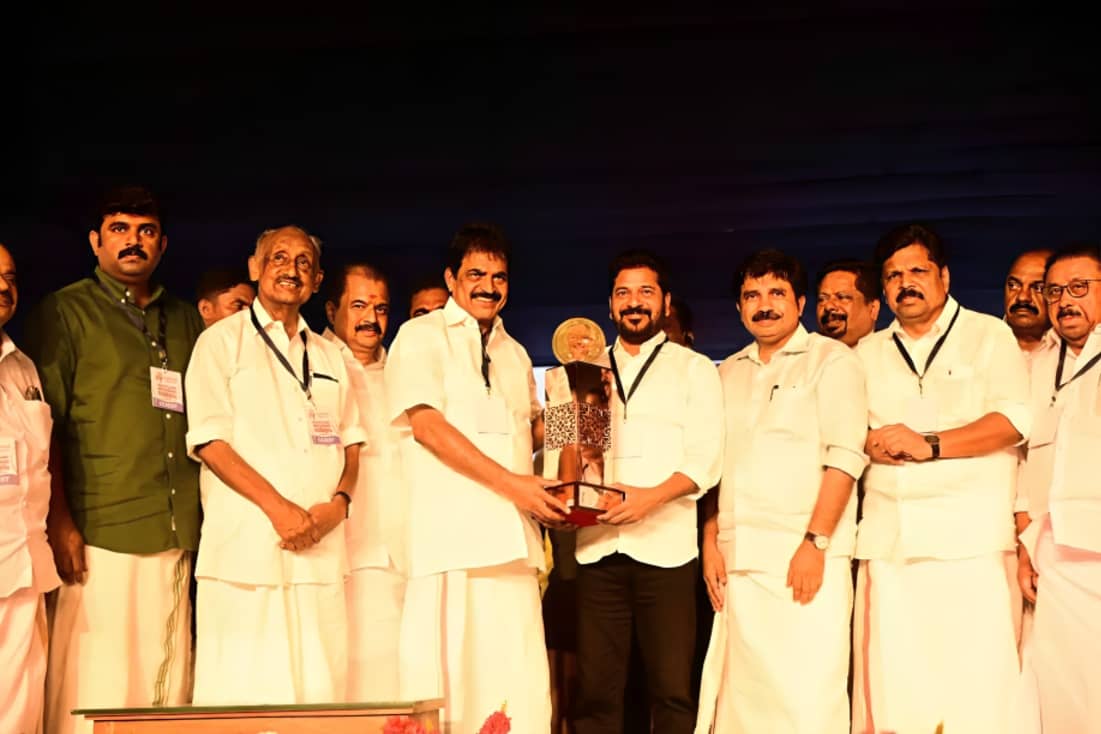
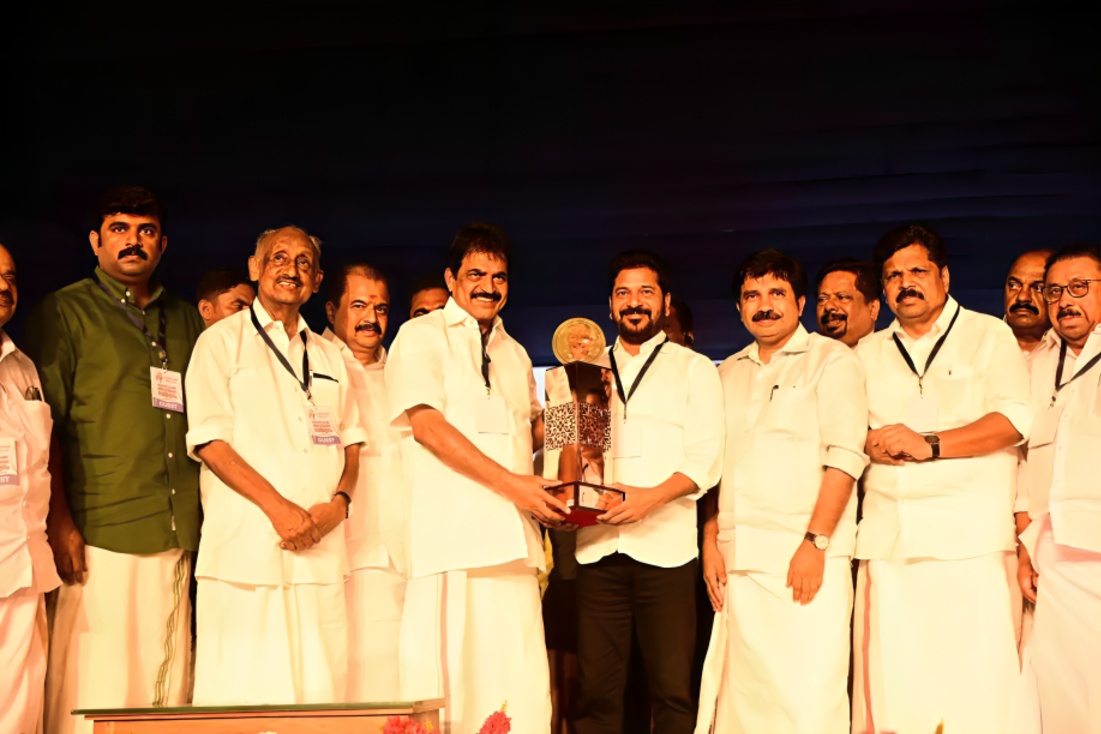
Reddy made the remarks on Friday while attending an event in Nilambur, Kerala, where he received the Aryadan Muhammed Best Public Servant Award. During his speech, the Telangana Chief Minister spoke about the political and ideological differences between the Congress and the organisations associated with the Sangh Parivar.
Reddy said that the future political contest in the country was between the two “parivars”. He described the Gandhi family as representing sacrifice and referred to the contributions of Mahatma Gandhi, Indira Gandhi and Rajiv Gandhi. He also spoke about Sonia Gandhi, Rahul Gandhi and Priyanka Gandhi and their political roles.
Reddy further said that his remaining political ambition was to see Rahul Gandhi become the Prime Minister of India. He called for people to support what he described as the Gandhi Parivar in order to protect democracy, secularism and freedom. These were Reddy’s political views expressed during the Kerala event and do not represent a neutral assessment of the competing political organisations.
The remarks drew a response from the BJP. BJP spokesperson Pradeep Bhandari criticised Reddy in a post on X and argued that the Telangana Chief Minister’s statement revealed what he described as the Congress’s primary political objective.
Bhandari said that Congress was focused on bringing the Gandhi family back to power. He also argued that Reddy’s comments had shifted the political discussion away from issues such as the Election Commission, the Constitution, democracy and allegations relating to “vote chori”.
The BJP spokesperson described Reddy’s remarks as an admission of the Congress’s political priorities. His comments were part of the BJP’s broader political response to Congress criticism of the Election Commission and its recent allegations concerning electoral processes.
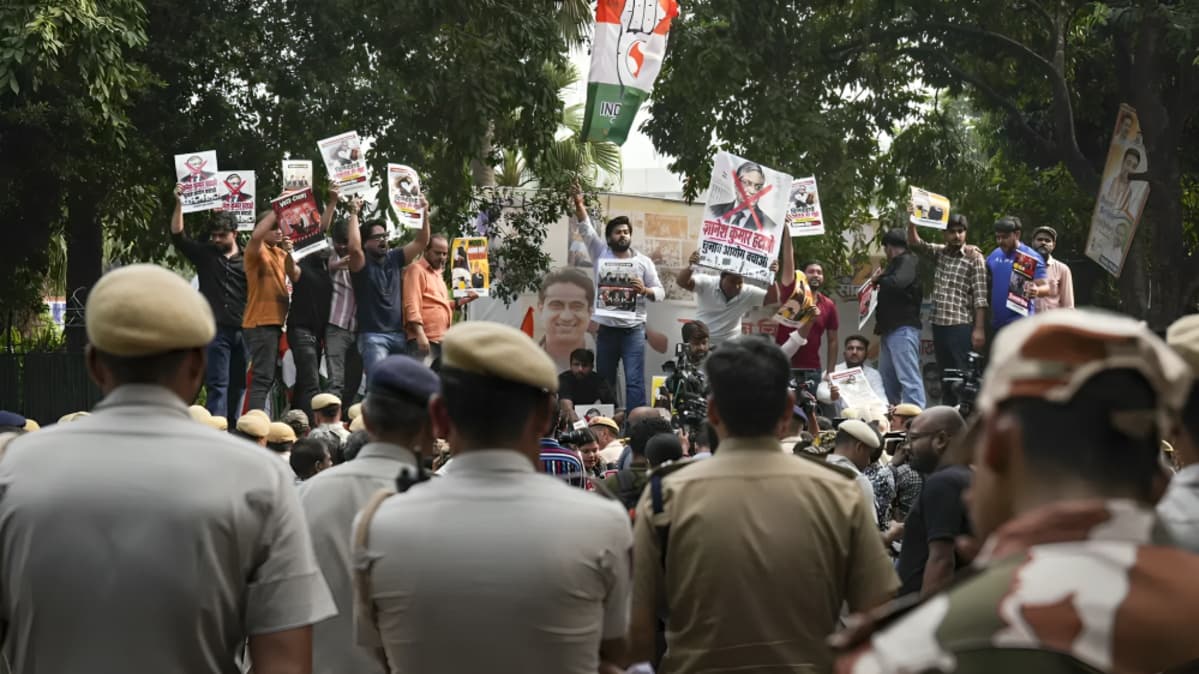
The exchange comes at a time when the Congress and BJP have been engaged in an ongoing political dispute over the functioning of the Election Commission and allegations concerning electoral rolls. Congress leaders have raised allegations about the electoral process, while the BJP and the Election Commission have rejected or disputed those allegations.
The phrase “vote chori”, or vote theft, has been used by Congress leaders in their criticism of the electoral process. The BJP has rejected the allegations and questioned the basis for the claims. Therefore, the issue remains a matter of political disagreement between the parties rather than an established finding that can be presented as fact.
Reddy’s latest remarks were broader than the Election Commission issue. His speech focused on what he described as an ideological and political contest between the Gandhi Parivar and the Sangh Parivar. He argued that the Congress and the Gandhi family represented one political approach, while he accused the Sangh Parivar of pursuing a different approach to the country’s social and political issues.
The Telangana Chief Minister also referred to the role of Kerala in national politics. According to reports of his speech, Reddy pointed to electoral victories involving Rahul Gandhi and Priyanka Gandhi and said Kerala had provided an important political signal. He connected the state’s political developments with his broader argument about the future direction of Indian politics.
The BJP, however, interpreted the speech differently. Bhandari argued that Reddy’s comments demonstrated that the Congress was primarily interested in returning the Gandhi family to political power. He said the Congress’s stated concerns about democracy, the Constitution and the Election Commission should be viewed in that political context.
These statements reflect the competing narratives of the two parties. Congress leaders have been presenting their criticism of the BJP-led government and constitutional institutions as part of a broader defence of democratic institutions. The BJP has rejected those criticisms and accused Congress of using institutional issues for political purposes.
The latest exchange also highlights the continuing importance of the Gandhi family within Congress politics. Rahul Gandhi is a senior Congress leader and former party president, while Priyanka Gandhi Vadra is also a prominent Congress leader. Reddy’s statement that his remaining political ambition was to see Rahul Gandhi become Prime Minister represents his own publicly stated political position.
At the same time, the BJP has frequently criticised what it describes as dynastic politics within Congress. Bhandari’s latest response followed that broader line of political criticism by focusing on the role of the Gandhi family.
The reference to the Sangh Parivar is also politically significant. The term is generally used to describe a network of organisations associated with the Rashtriya Swayamsevak Sangh. Reddy used the term in his speech to frame what he described as a broader ideological contest. The BJP, meanwhile, has rejected his characterisation of the political divide and defended its own political and organisational positions.
The controversy comes amid an increasingly sharp political debate between the ruling BJP and opposition parties over elections, constitutional institutions and the role of political leadership. Congress has continued to raise questions about electoral processes, while the BJP has accused the opposition party of making politically motivated allegations.
There is no indication from the reports that Reddy’s comments themselves represent any formal change in Congress policy. They were made as part of a political speech at a public event. Similarly, Bhandari’s response represents the BJP’s political interpretation of those remarks.
The latest dispute therefore centres on how the two major national political parties interpret the role of leadership, electoral institutions and competing political ideologies. Reddy has framed the contest around the Gandhi Parivar and Sangh Parivar, while the BJP has used the statement to criticise what it sees as Congress’s continued reliance on the Gandhi family.
The exchange is expected to remain part of the wider political debate as Congress and BJP continue to differ over the Election Commission, electoral rolls, allegations of “vote chori” and the broader direction of national politics.
For readers, it is important to distinguish between the statements made by the political leaders and independently established facts. Reddy’s comments represent his political position, while Bhandari’s response represents the BJP’s interpretation and criticism. The competing claims about the Election Commission and electoral processes remain subjects of political and institutional debate.