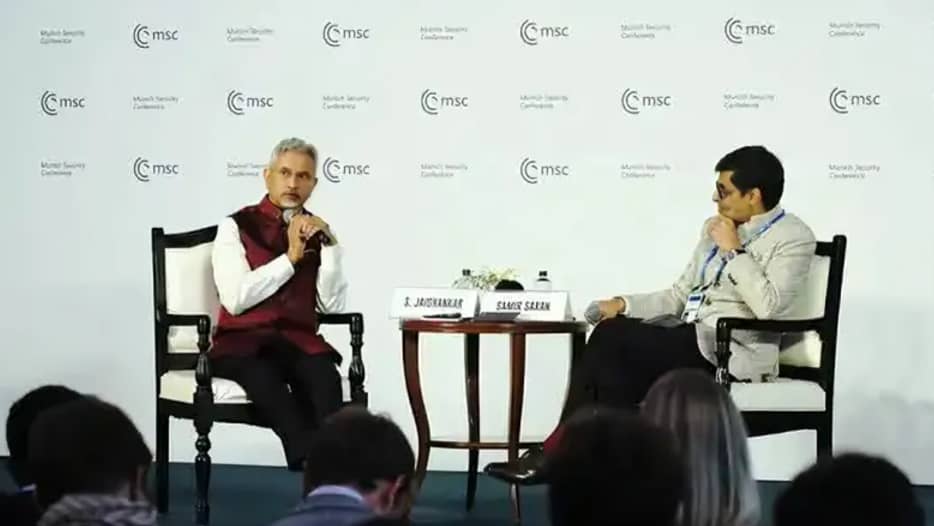
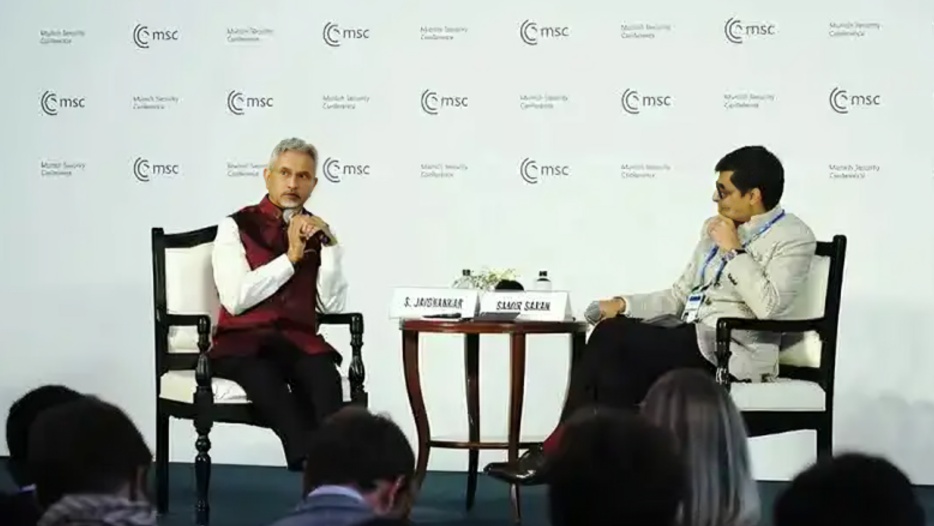
External Affairs Minister S Jaishankar has highlighted India’s expanding role in global affairs, the importance of strategic autonomy and the welfare of Indians working abroad during an interaction with young diplomats participating in the Raisina Forum for Future of Diplomacy 2026.
Jaishankar discussed several aspects of India’s changing engagement with the international community, including growing trade, development cooperation and Humanitarian Assistance and Disaster Relief partnerships. He also spoke about the increasing mobility of skilled professionals and the responsibilities associated with protecting the welfare of Indians living and working overseas.
The External Affairs Minister shared details of the interaction in a post on social media platform X. He said India’s global footprint is expanding through stronger economic, development and humanitarian partnerships. He also pointed to the emergence of a more mobile global workforce, in which skilled professionals increasingly work across national borders.
Jaishankar stressed that the changing nature of international employment creates additional responsibilities for governments. He specifically referred to the welfare of the Indian diaspora, including Indian seafarers. His remarks underline the importance of ensuring that Indian citizens working in different parts of the world receive appropriate support and protection.
Another major theme of his interaction was strategic autonomy. Jaishankar said countries need the ability to make independent decisions and protect their national interests while dealing with a rapidly changing international environment.
Strategic autonomy has become an important part of India’s foreign policy approach as global relationships continue to evolve. Countries are increasingly managing multiple partnerships while attempting to protect their economic, security and strategic interests.
Jaishankar also discussed India’s relationship with African countries. He described the emerging India Africa partnership as one increasingly characterised by the transfer of technology, capabilities and experience.
The partnership between India and African nations has developed across several areas, including development cooperation, capacity building, technology, healthcare, education and humanitarian assistance. Jaishankar’s remarks indicate an emphasis on cooperation that involves sharing knowledge and capabilities rather than focusing only on traditional diplomatic engagement.
He also referred to India’s role in promoting peace and supporting dialogue and diplomacy. According to the minister, international cooperation remains important at a time when countries are facing a complex and rapidly changing global environment.
The interaction also addressed the difficulties governments face while conducting foreign policy in the age of social media. Digital platforms have changed the speed at which information is shared and have made international communication more immediate.
Foreign policy decisions and diplomatic statements can now reach global audiences within minutes. Governments therefore face the challenge of responding quickly while maintaining diplomatic sensitivity and accuracy. Jaishankar identified these developments as an important challenge for modern diplomacy.
The Raisina Forum for Future of Diplomacy 2026 provided an opportunity for young diplomats to interact with senior policymakers and discuss contemporary international affairs. The forum focuses on issues related to diplomacy, geopolitics and the changing global order.
Jaishankar’s interaction also comes at a time when emerging and middle powers are seeking a greater role in international decision making. In a separate engagement, he discussed cooperation among emerging and middle powers and said countries from both the Global South and Global North share an interest in becoming more influential in the international system.
According to Jaishankar, changes in the global balance of power are creating new opportunities for emerging and middle powers. He has pointed to factors including the changing role of the United States, China’s growing influence, stronger competition and increasing interdependence among countries.
He has also argued that emerging and middle powers can reduce risks by diversifying partnerships and cooperating on specific areas of common interest. Such an approach, he said, could contribute to a more multipolar international system and encourage greater cooperation among smaller groups of countries.
The discussion on skilled professionals and diaspora welfare is particularly relevant for India because millions of Indian citizens work and live outside the country. Indian professionals are present across sectors and regions, while Indian seafarers also form an important part of the global workforce.
Jaishankar’s reference to diaspora welfare reflects the broader role of consular and diplomatic engagement in supporting Indian citizens overseas. Issues involving employment, safety, mobility and emergency assistance can require cooperation between Indian missions and foreign governments.
India’s growing trade and development partnerships are another important component of its international engagement. Jaishankar linked the country’s expanding global footprint to these relationships, along with humanitarian assistance and disaster relief cooperation.
The India Africa partnership was another key area highlighted during the interaction. Greater technology and capability transfer can allow cooperation to extend beyond traditional diplomatic relations and contribute to capacity building in partner countries.
India has also emphasised dialogue, diplomacy and peacekeeping as parts of its international engagement. Jaishankar’s remarks placed these efforts within the broader context of a changing global order in which countries are seeking greater flexibility in their foreign policy choices.
The minister’s comments also highlight the increasing complexity faced by diplomats. Traditional diplomatic channels are now operating alongside social media platforms, where political statements and international developments can rapidly influence public opinion.
For young diplomats, understanding this changing environment is becoming an important part of modern foreign policy. Governments must balance transparency and timely communication with the need to protect sensitive diplomatic information and maintain constructive international relationships.
The Raisina Forum interaction therefore covered a broad range of issues affecting contemporary diplomacy. These included India’s economic and development partnerships, strategic autonomy, diaspora welfare, the mobility of skilled professionals, India Africa relations and the impact of social media on foreign policy.
Jaishankar’s remarks come as India continues to expand its engagement with countries across different regions and strengthen partnerships based on economic, technological, developmental and strategic interests.
The minister has also argued that emerging and middle powers can contribute to reforming the multilateral system by developing common agendas and cooperating in areas where their interests overlap. Such cooperation, according to his recent remarks, could contribute to a more balanced and multipolar international order.
Overall, Jaishankar’s interaction with young diplomats focused on the changing requirements of modern diplomacy and India’s expanding international role. His emphasis on strategic autonomy reflects the importance of independent decision making, while his comments on diaspora welfare highlight the responsibilities associated with a growing global Indian workforce.
His discussion of India Africa cooperation further underlined the importance of technology, capabilities and experience sharing in building stronger international partnerships. At the same time, his comments on social media highlighted the new communication challenges facing governments and diplomats.
As global power relationships continue to evolve, India’s foreign policy is expected to focus on maintaining strategic flexibility, strengthening partnerships and protecting the interests of Indian citizens abroad. The issues raised by Jaishankar at the Raisina Forum reflect many of the challenges and opportunities facing Indian diplomacy in the current international environment.