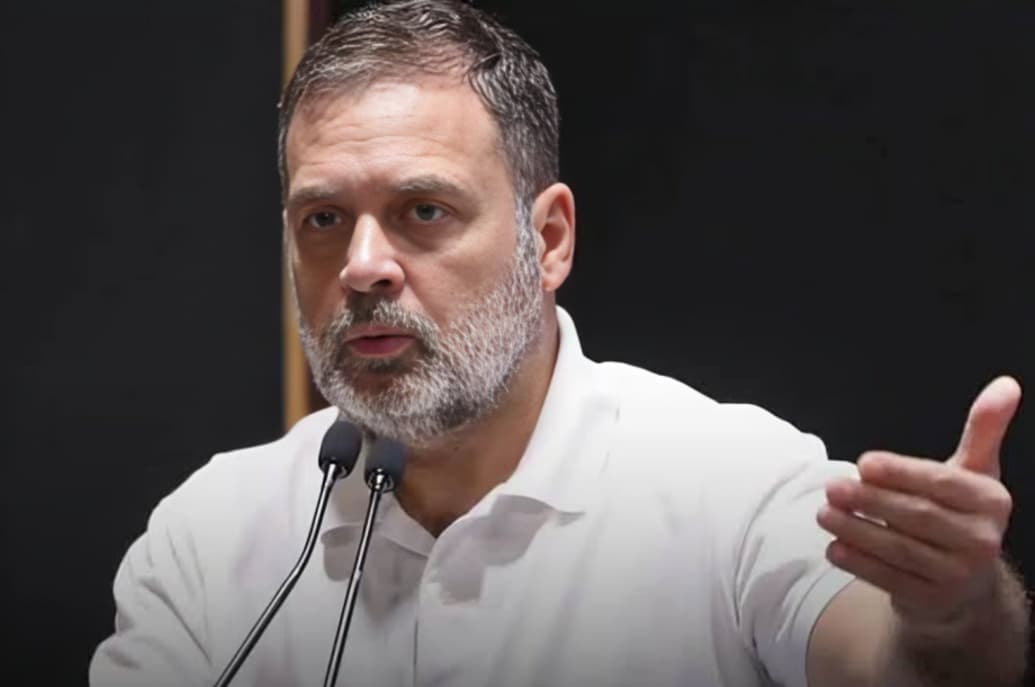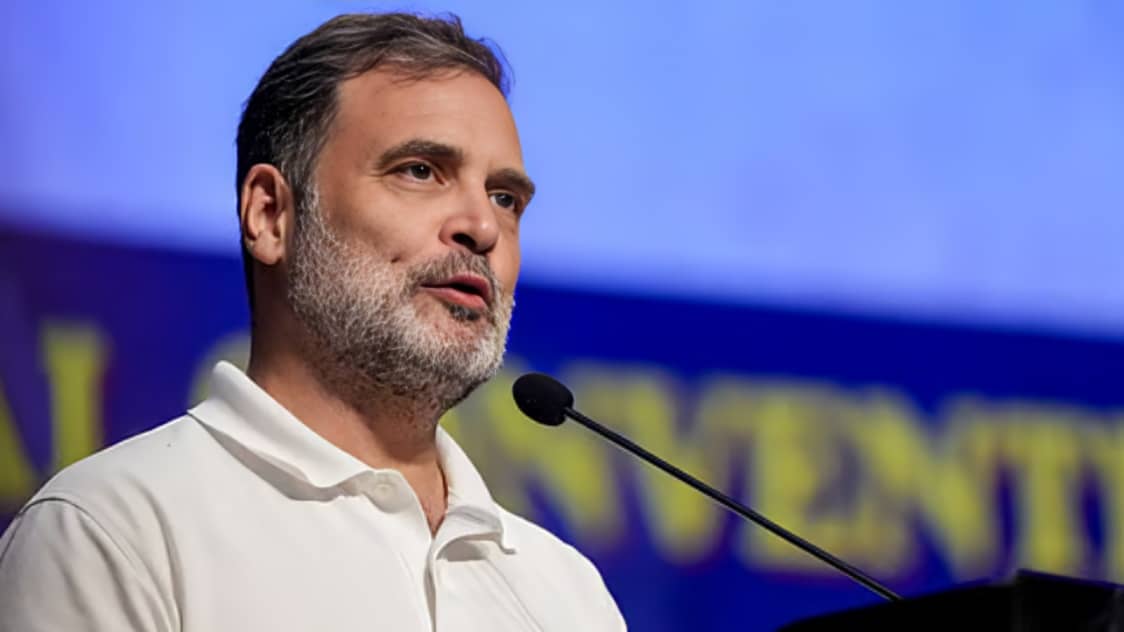
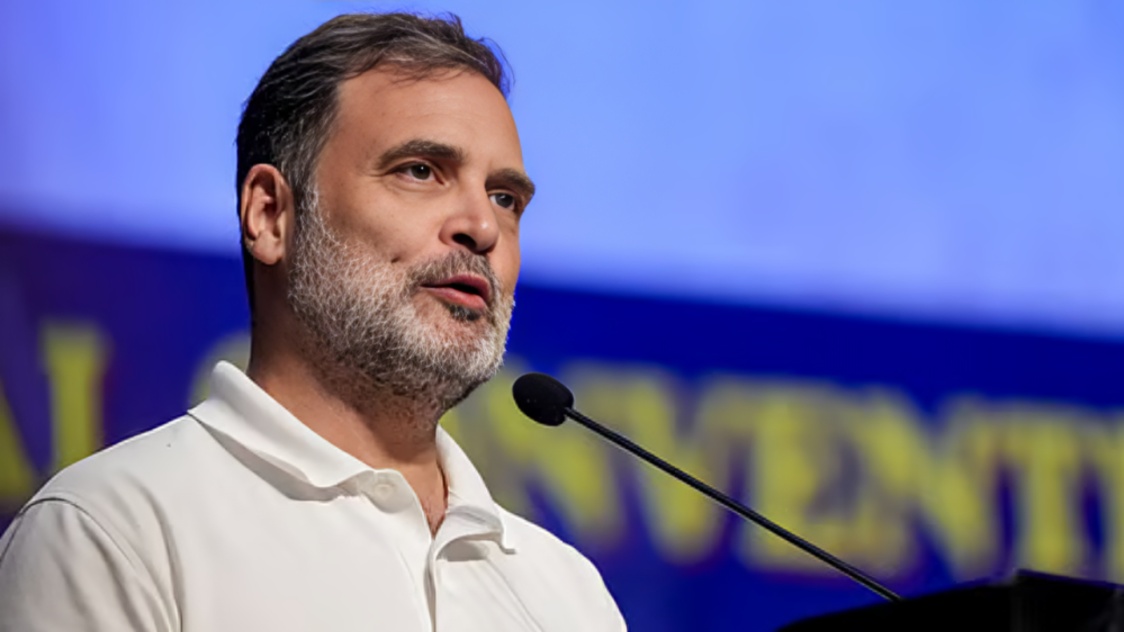
Congress leader Rahul Gandhi has reportedly encouraged party leaders and functionaries to adopt more creative and attention grabbing approaches during public protests. According to Congress functionaries cited in a report by The Economic Times, Gandhi wants the party to move beyond conventional demonstrations and use unexpected elements that can attract public attention and generate wider media coverage.
The reported remarks were made during a closed door meeting at the Congress headquarters on October 5. The meeting involved All India Congress Committee and Pradesh Congress Committee functionaries and was held to discuss upcoming campaigns and protest programmes.
According to the report, Gandhi told party leaders that traditional marches, demonstrations and public meetings remained important but could sometimes appear routine. He reportedly suggested that Congress leaders should think of new approaches that create an element of surprise and make protests more visually noticeable.
The reported strategy places particular importance on the way political protests are perceived by the public and covered on social media. Gandhi is said to have emphasised that a memorable visual moment can help a protest reach audiences beyond those physically present at the demonstration.
His comments come at a time when Congress and other opposition parties have been conducting protests in Delhi over the Special Intensive Revision of electoral rolls and their demands concerning Chief Election Commissioner Gyanesh Kumar.
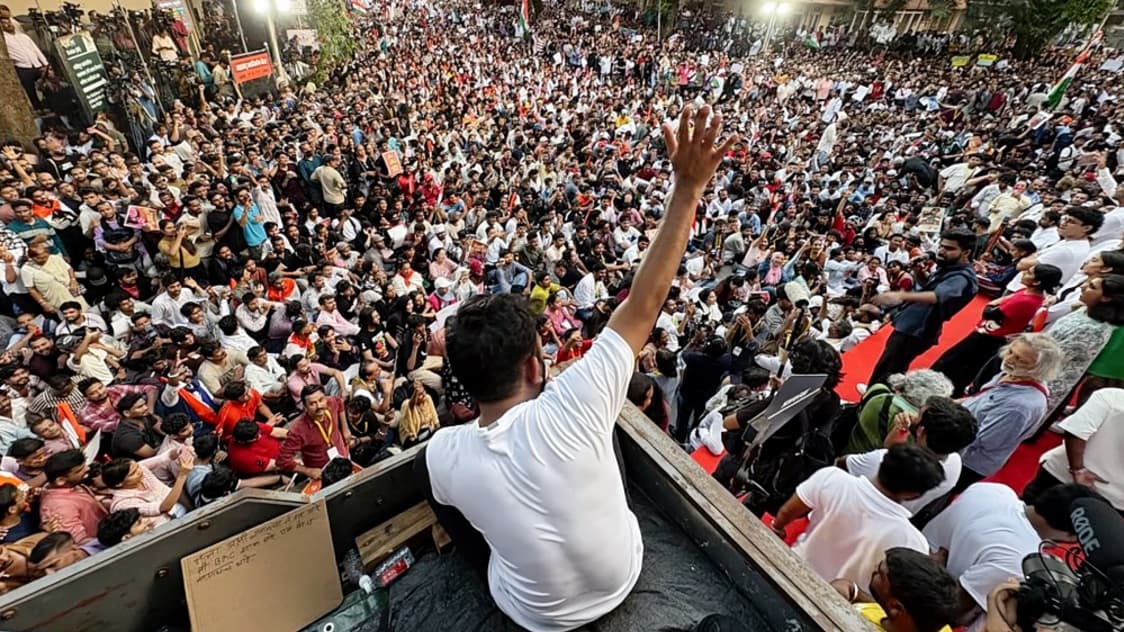
Recent demonstrations involving Rahul Gandhi and other opposition leaders have included several highly visible incidents. During a protest march towards the Election Commission headquarters on October 6, Gandhi climbed onto a police barricade and waved the national flag. The incident was widely photographed and circulated on social media.
The protest later took another turn when Rahul Gandhi and Congress leader Priyanka Gandhi Vadra entered the Akashvani Bhawan premises during the demonstration. The two leaders subsequently participated in a sit in along with other opposition leaders. The unexpected development extended the protest and attracted significant media attention.
The Economic Times report said some Congress functionaries viewed these recent incidents as examples of the type of surprise driven political activity Gandhi had discussed during the October 5 meeting.
Gandhi also reportedly referred to an earlier Youth Congress protest at an artificial intelligence summit at Bharat Mandapam as an example of an action that generated considerable attention. According to the report, he told party functionaries that the unusual nature of that protest had attracted more public discussion than the event itself.
The reported emphasis on social media is also linked to the Congress party's efforts to connect with younger voters. Party leaders have increasingly used digital platforms, short videos and visually distinctive campaign activities to communicate political messages to younger audiences.
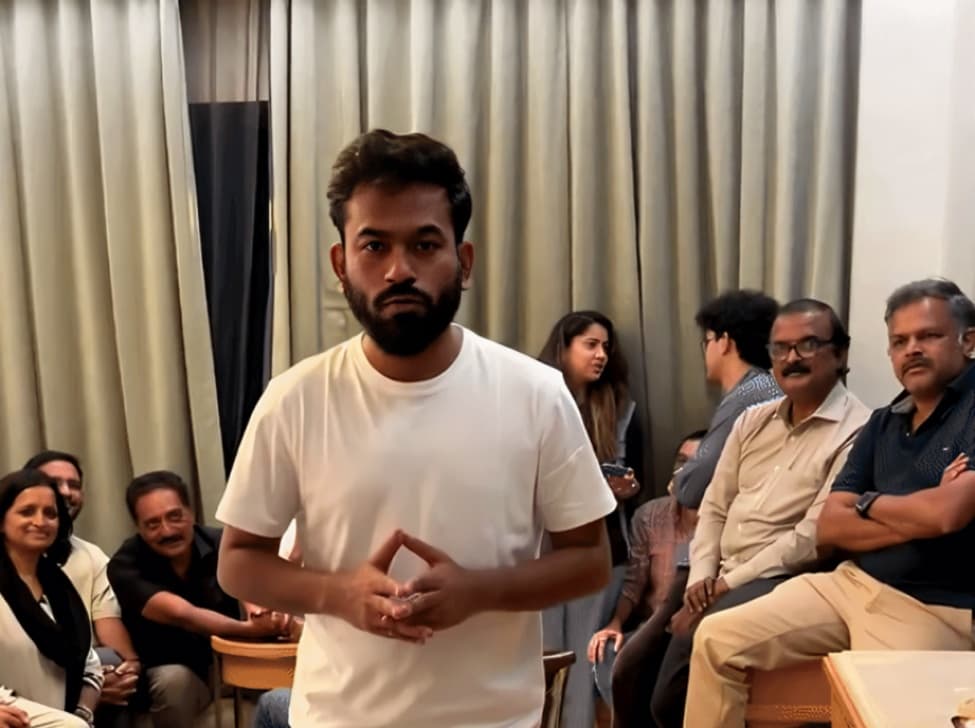
The Congress has also been conducting student outreach programmes as part of its broader campaign efforts. According to the Economic Times report, some of these programmes include carefully planned stage arrangements and other elements intended to make events more engaging for younger participants.
The focus on younger audiences is significant because political parties across India are increasingly competing for attention on social media platforms. Traditional speeches and rallies can reach large audiences, but short videos and visually striking moments can travel much more rapidly online.
Congress leaders have reportedly taken note of this change in political communication. Gandhi's message, as described by party functionaries, is aimed at making the party's protests more dynamic while maintaining their political objectives.
The current protests are primarily focused on opposition concerns regarding the Special Intensive Revision of electoral rolls. Congress and other opposition parties have accused the Election Commission of irregularities and have demanded action, including the resignation of Chief Election Commissioner Gyanesh Kumar. The Election Commission and the ruling side have rejected allegations of political bias and maintained that electoral roll revision is intended to improve the accuracy of voter lists.
The protests have also resulted in confrontations between opposition leaders and Delhi Police. Rahul Gandhi was detained during a protest on October 7 along with other opposition lawmakers and demonstrators. The opposition has said it will continue its campaign over the electoral roll issue.
Delhi Police have also registered cases connected with recent demonstrations. An FIR was registered over the alleged unauthorised entry of Rahul Gandhi, Priyanka Gandhi Vadra and their supporters into the Akashvani Bhawan premises during an earlier protest. Police have also registered additional cases relating to alleged obstruction and incidents involving police personnel during subsequent demonstrations.
Against this backdrop, the Congress leadership appears to be looking for ways to maintain public attention on its campaign. Gandhi's reported advice to party functionaries reflects an effort to combine conventional political mobilisation with modern communication strategies.
However, the use of dramatic or visually striking protest tactics also raises questions about the balance between political messaging and public order. Any protest activity remains subject to applicable laws, permissions and police regulations.
For Congress, the challenge is to ensure that attention generating tactics continue to communicate the party's political message rather than overshadowing the issues being raised. The recent demonstrations show how quickly an unexpected incident can become the central focus of news and social media coverage.
Gandhi's reported message therefore represents a broader shift in political campaigning, where the visual presentation of an event can be almost as important as the speech or policy message delivered during it.
With further opposition protests expected in Delhi, Congress leaders may increasingly experiment with new forms of public engagement. The objective, according to party functionaries cited in the report, is to create greater visibility, connect with younger audiences and ensure that the party's political campaigns receive wider attention.
At the same time, the political issues behind the demonstrations remain central to the Congress campaign. The party and its opposition allies continue to raise concerns over electoral roll revision and demand accountability from the Election Commission.
The reported strategy of using surprise elements is therefore part of a larger effort by Congress to sustain momentum around its protests and reach audiences beyond traditional political gatherings.