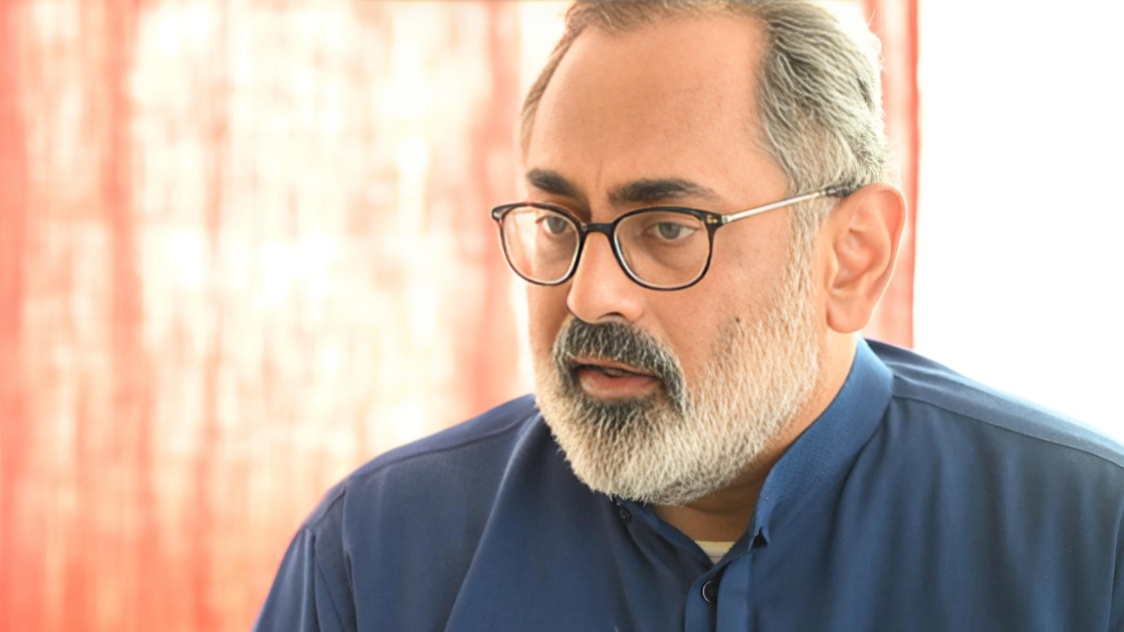
Rajeev Chandrasekhar Warns Kerala Protests Could Strain Centre-State Relations
Thiruvananthapuram, October 12, 2026
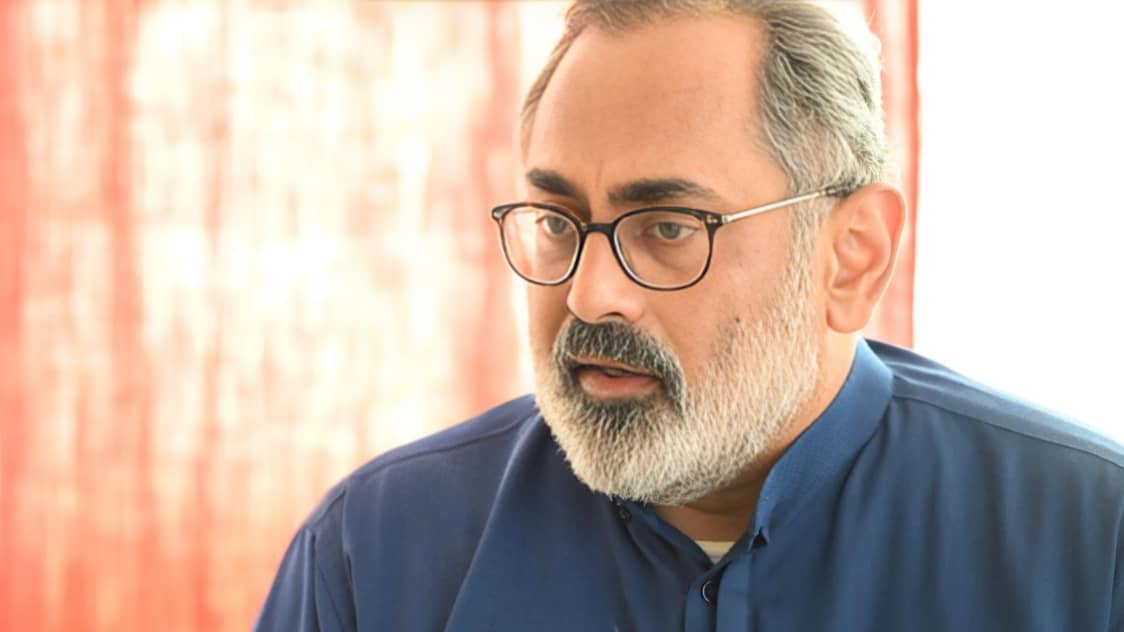
Bharatiya Janata Party Kerala president Rajeev Chandrasekhar has warned that protests involving Union Home Minister Amit Shah and incidents during visits by senior Union officials could affect relations between the Centre and the Kerala government. He argued that confrontational political activities could create an impression of tension between the two governments and potentially affect investment, employment and development in the state.
Chandrasekhar's remarks come amid political disagreements between the BJP and the Congress-led Kerala government over a protest organised during Shah's recent visit to Kollam. He also referred to a separate incident involving Vice-President C. P. Radhakrishnan's convoy during his visit to Kerala.
BJP raises concerns over protests
In a social media post, Chandrasekhar criticised what he described as petty political theatrics surrounding visits by senior constitutional authorities. He argued that such incidents could have consequences beyond party politics, particularly if they raise questions about security arrangements and cooperation between the state and the Union government.
The BJP leader referred to a Youth Congress black-flag protest during Shah's visit to Kollam on September 26. He also highlighted an incident in which two young men riding a motorcycle reportedly came close to the Vice-President's convoy during a visit to Kerala.
Chandrasekhar said such developments could create the impression that relations between the Centre and the state were strained. He warned that this perception could have implications for the state's investment climate and its efforts to generate employment.
His comments reflect the BJP's position that security arrangements for senior constitutional authorities should be treated as an administrative responsibility rather than merely a political issue.
Youth Congress protest during Amit Shah's visit
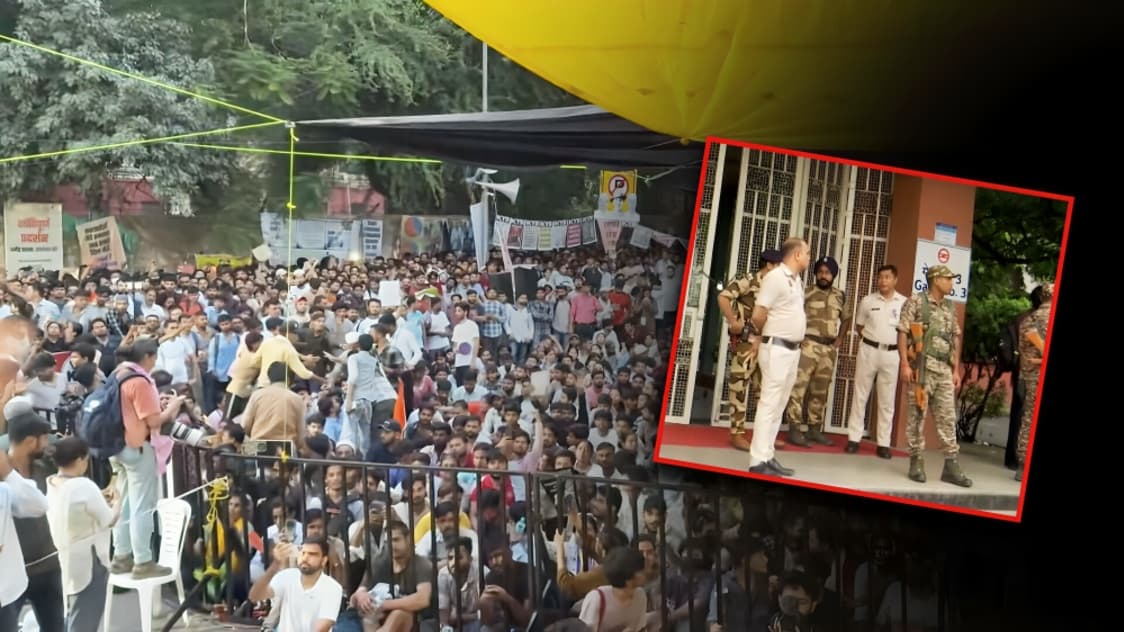
The controversy intensified after Youth Congress activists staged a black-flag protest during Shah's visit to Kollam. The demonstration became a point of political confrontation between the BJP and the Congress in Kerala.
The BJP criticised the protest and questioned whether adequate security arrangements had been made during the Union Home Minister's movement. The party has argued that incidents involving the security of senior leaders require serious examination and accountability.
The Congress and its affiliated organisations have a history of using demonstrations to express opposition to government policies and political leaders. Black-flag protests are a form of political dissent used by parties and organisations to register their objections during public visits.
However, disputes can arise over how such demonstrations are conducted, particularly when they take place near the movements or security arrangements of senior constitutional authorities.
The political debate in Kerala has consequently focused on both the right to protest and the responsibility of authorities to maintain public order and ensure security.
Incident involving the Vice-President's convoy
Chandrasekhar also referred to an incident involving Vice-President C. P. Radhakrishnan's convoy during his visit to Thiruvananthapuram on September 27. According to reports, two young men on a motorcycle came close to the convoy, prompting questions from the BJP about the security arrangements.
The BJP has raised concerns about the circumstances surrounding the incident and called for accountability. Such claims should be distinguished from independently established findings about whether a security breach occurred.
Security arrangements for the President, Vice-President, Union ministers and other protected dignitaries involve coordination among the relevant security agencies and state authorities. The details can vary depending on the nature of the visit, the route and the prevailing security assessment.
Any determination of responsibility for an alleged lapse would depend on the findings of the relevant authorities rather than political statements alone.
Employment and investment concerns
Chandrasekhar argued that ordinary residents of Kerala could ultimately bear the consequences of prolonged political confrontation. He said the state's priority should be employment generation, economic growth and development rather than disputes that deepen tensions between political parties.
Investment decisions can be influenced by a range of factors, including infrastructure, workforce availability, policy stability, market access and the regulatory environment. Political disagreements alone do not establish that investment or employment will decline, but perceptions of instability can become part of how businesses assess a location.
The BJP leader linked the controversy to Kerala's wider economic challenges, including unemployment and the need to expand opportunities for young people. He also criticised the Congress over its political approach and raised concerns about the state's development record under the previous government led by Pinarayi Vijayan.
These comments form part of the BJP's political criticism of its opponents. They represent Chandrasekhar's assessment of the situation and should not be treated as an independent economic finding.
Centre-state cooperation remains important
Relations between the Union government and state governments are important for the implementation of public programmes, infrastructure projects, investment initiatives and welfare schemes. Although political parties may disagree over policies and public demonstrations, administrative coordination remains necessary for many government functions.
Chandrasekhar said the BJP remained willing to cooperate with the Kerala government on development-related matters. At the same time, he maintained that incidents involving senior dignitaries should be addressed seriously.
The controversy highlights the continuing tension between political protest and security responsibilities. Peaceful demonstrations are an established form of democratic expression, while authorities are responsible for maintaining public order and protecting people under their security arrangements.
Whether the recent incidents will have any lasting effect on Centre-state relations remains uncertain. The political statements made so far demonstrate disagreement between the parties, but they do not independently establish a breakdown in cooperation between the two governments.
For Kerala, the wider challenge is to manage political differences while continuing to address employment, investment and development priorities. Further clarification from the relevant authorities about the incidents could help establish the facts and determine whether any administrative action is necessary.