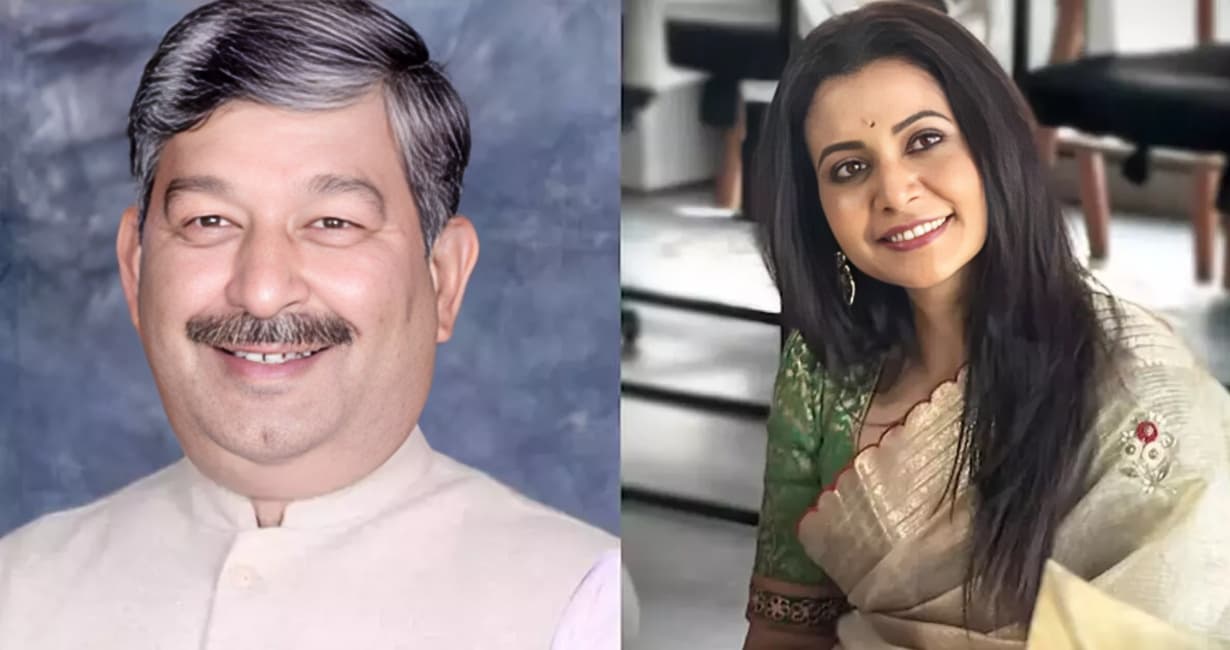
The nomination of CP Radhakrishnan as the National Democratic Alliance’s (NDA) candidate for the upcoming vice-presidential election has triggered strong reactions from the Congress party. Senior leader and MP Manickam Tagore has criticized the move, describing Radhakrishnan as “another RSS man” being elevated to a high constitutional position. His remarks have sparked debate within political circles, highlighting the growing contest between the ruling alliance and the opposition bloc.
Addressing reporters, Tagore questioned the BJP’s repeated practice of nominating individuals with close ties to the Rashtriya Swayamsevak Sangh (RSS) for top national posts. He argued that such appointments reflect a strategy aimed at consolidating ideological dominance across key institutions of Indian democracy. According to him, the vice president’s role requires impartiality and broad-based representation, but the NDA’s choice raises concerns about neutrality.
Tagore also issued a call to the INDIA bloc, the alliance of opposition parties formed to counter the BJP, urging them to take a united stand in the election. He stressed that the opposition must present a collective response to the NDA’s nominee in order to safeguard democratic principles. In his view, a divided opposition would weaken the effort to check the ruling party’s growing influence.
Political observers note that Tagore’s comments are part of a larger debate over the role of ideology in constitutional appointments. While the BJP and its allies argue that Radhakrishnan’s long public service record makes him a suitable candidate, critics point out his long association with the RSS as a sign of growing ideological centralization.
The INDIA bloc now faces the challenge of formulating a common strategy. With several regional parties holding different political compulsions, building consensus will not be easy. However, Tagore and other Congress leaders believe that the vice-presidential election provides an opportunity for the opposition to demonstrate unity and purpose. The bloc’s decision will also be closely watched as a test of its cohesion ahead of future electoral battles.
For the NDA, Radhakrishnan’s nomination is being projected as recognition of his political experience and ability to work across states and communities. Leaders from the alliance argue that his background makes him well-suited to the vice president’s responsibilities, including presiding over the Rajya Sabha. They dismiss opposition concerns, insisting that the selection was based on merit rather than ideology.
Meanwhile, political analysts suggest that the contest for the vice-presidential post may not alter the final outcome, given the NDA’s numerical advantage. However, the election is being framed as a symbolic political battle that highlights contrasting approaches to governance and institutional independence.
In conclusion, Manickam Tagore’s remarks and his appeal to the INDIA bloc underline the opposition’s concern over what they perceive as the growing influence of the RSS within constitutional offices. Whether the bloc can unite on a common candidate or strategy will be an important indicator of its strength in the evolving political landscape.