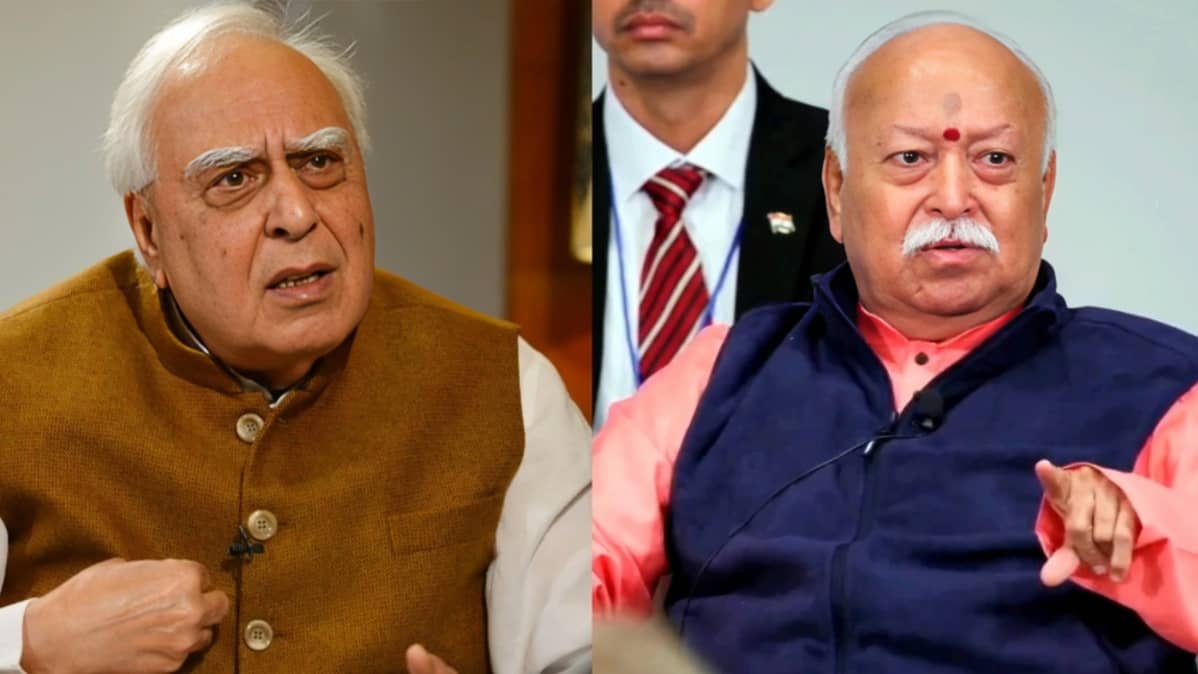
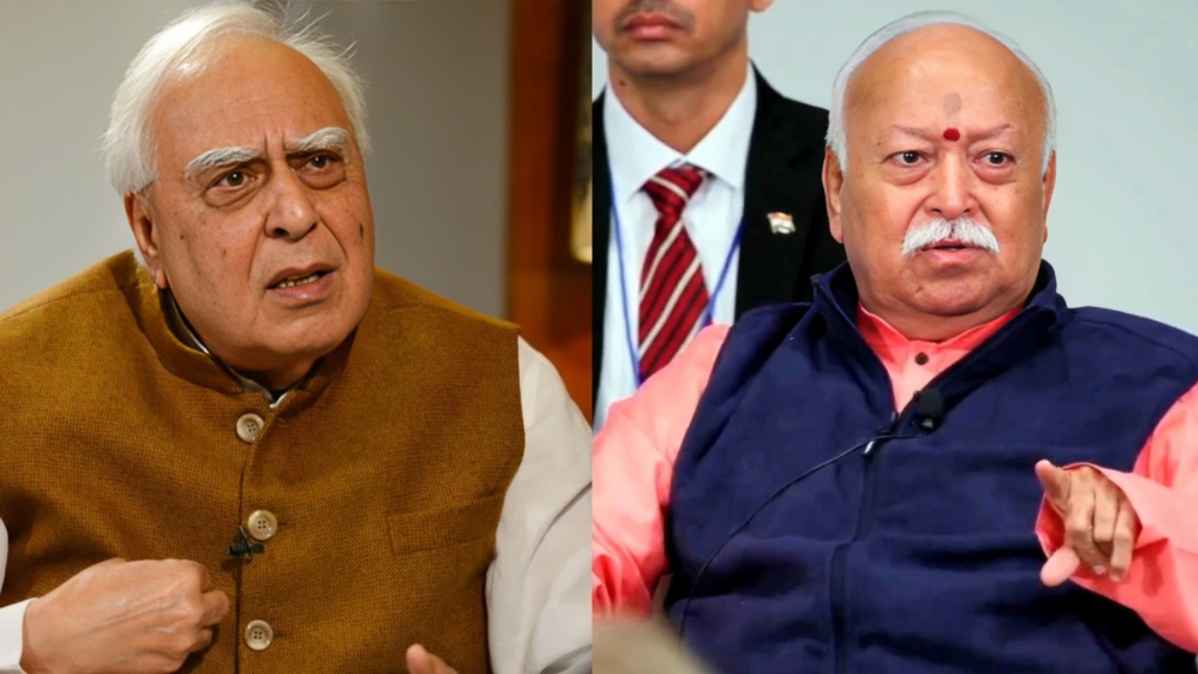
Rajya Sabha MP Kapil Sibal has criticised Rashtriya Swayamsevak Sangh chief Mohan Bhagwat over his recent remarks on unity and diversity during his visit to the United States. Sibal questioned whether Bhagwat’s message about accepting diversity abroad is reflected in India and accused him of taking a different position on domestic issues.
Bhagwat made the comments while addressing more than 6,000 members of the Indian American community and interfaith leaders at an event held at Madison Square Garden in New York. During his address, the RSS chief said that unity and diversity are part of Bharat’s identity. He also said that diversity should be celebrated, respected and accepted while maintaining a sense of unity.
Bhagwat’s remarks attracted significant attention because of their emphasis on social harmony and the acceptance of diversity. Speaking about India’s social character, he presented diversity as an integral part of the country’s civilisational identity and called for different communities to live together with a sense of common belonging.
Sibal, however, sharply questioned the RSS chief’s position. Responding to Bhagwat’s remarks, the Rajya Sabha member said he was left wondering whether the speech could have been delivered by Congress leader Rahul Gandhi because, according to Sibal, the emphasis on diversity and people caring for one another resembled themes frequently raised by Gandhi.
Sibal argued that there was a contrast between Bhagwat’s statements in the United States and what he described as the reality within India. He said that while diversity was being praised abroad, he believed it was not being adequately respected or protected at home. His criticism was presented as a broader political argument about the treatment of minorities, social tensions and the protection of pluralism in India.
The senior advocate also referred to Bhagwat’s earlier remarks concerning the identity of people born in India. Sibal alleged that Bhagwat’s position amounted to double speak, arguing that the RSS chief was presenting a more inclusive message to an international audience while taking a different approach on questions of national identity and social diversity within India.
Sibal further questioned whether Bhagwat had spoken out strongly enough on incidents that, according to him, affected social harmony in India. He referred to incidents involving violence and discrimination and asked why, in his view, the RSS leadership had not raised its voice against such developments.
The comments have added another political dimension to the debate surrounding Bhagwat’s recent international outreach. The RSS chief’s New York address was part of an event focused on universal oneness, social harmony and engagement among different communities. His emphasis on diversity and unity was viewed as an attempt to communicate the organisation’s perspective to a global audience.
Sibal’s response, meanwhile, focused on the difference between political statements and their implementation in everyday life. He argued that simply using words such as celebration, respect and acceptance is not sufficient and that these principles must be reflected in actions.
The exchange has also renewed discussion about the RSS’s ideological position and its relationship with the broader political debate in India. Supporters of the organisation have often described it as a cultural organisation committed to social unity, while critics have questioned its approach towards religious and social minorities. The latest remarks from both sides have brought those competing interpretations back into public discussion.
Bhagwat has previously spoken about Hindu thought, national identity and the importance of social harmony. During his recent American engagements, he stressed the importance of diversity and the idea that different communities can coexist while retaining a shared sense of belonging.
Sibal’s criticism comes amid heightened political debate over the role of the RSS and the direction of Indian politics. His comments are likely to be viewed through the wider political differences between the Congress and organisations aligned with the ideological framework associated with the BJP.
The dispute ultimately centres on how the concept of diversity should be interpreted and implemented. Bhagwat has stressed that diversity is part of India’s identity and should be respected and accepted. Sibal has challenged the consistency of that message, arguing that the principle must also be reflected in domestic political and social conduct.
As the political debate continues, Bhagwat’s remarks and Sibal’s response are expected to remain part of wider discussions about pluralism, national identity, social harmony and the relationship between political statements and actions in India.