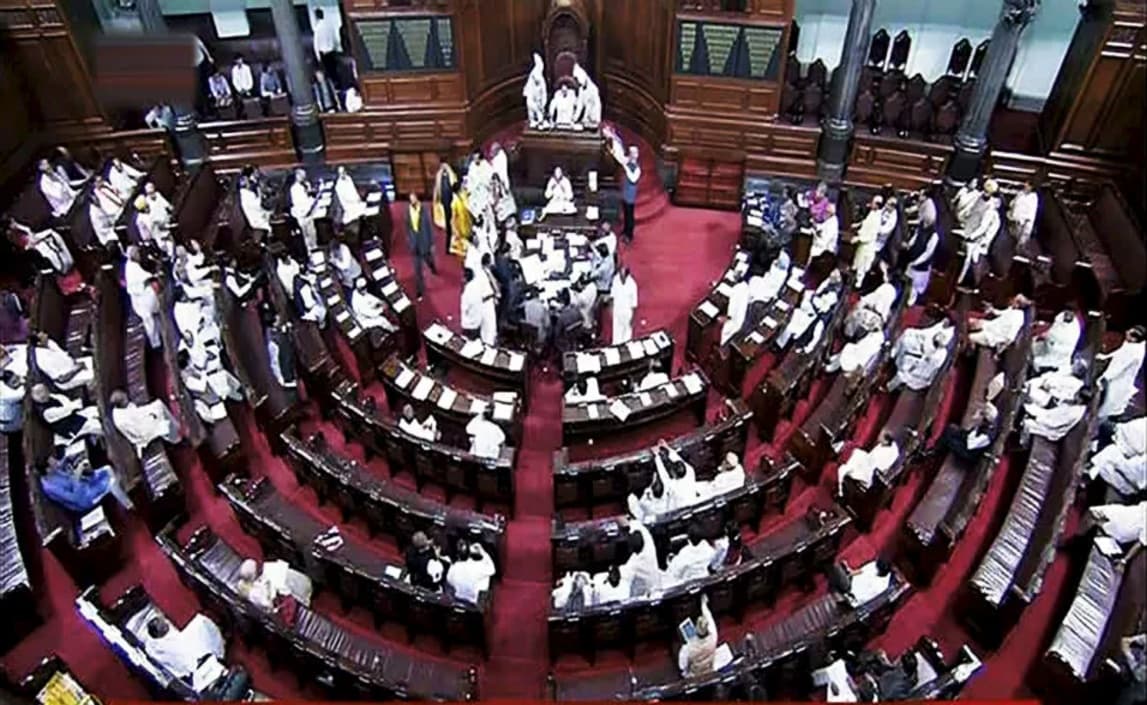

The National Democratic Alliance has improved its numerical position in the Rajya Sabha after newly elected Members of Parliament took the oath of office. The latest development has strengthened the ruling alliance's presence in the Upper House and has renewed political discussions about its legislative position in Parliament.
The Rajya Sabha, which represents the states and Union Territories, has a different composition from the Lok Sabha because its members are elected indirectly by the elected representatives of state legislative assemblies and through other constitutional provisions. As a result, changes in state-level political representation can gradually influence the party strength in the Upper House.
With the induction of the newly elected members, the National Democratic Alliance has moved closer to increasing its overall strength in the Rajya Sabha. Political analysts have observed that the alliance may further improve its numbers depending on the outcome of future by-elections and changes arising from vacancies in different states. In addition, the position adopted by regional parties on specific legislative proposals could also influence parliamentary outcomes on individual Bills.
A stronger numerical position in the Rajya Sabha can assist the government in securing the passage of legislation that requires approval from both Houses of Parliament. However, the passage of constitutional amendment Bills follows a separate constitutional process, requiring the special majority prescribed under the Constitution of India. The exact outcome on any future legislation depends on the attendance and voting pattern of members during parliamentary proceedings.
Despite the improved position in the Rajya Sabha, the political arithmetic in the Lok Sabha remains different. The composition of the Lower House is determined through direct elections, and the current distribution of seats reflects the outcome of the most recent general election. Consequently, the government's legislative strategy continues to depend on the numerical strength available in each House separately.
Political observers believe that parliamentary dynamics may continue to evolve as vacancies are filled, by-elections are conducted and alliances shift over time. Regional parties often play an important role in legislative discussions, particularly on Bills that require broad political consensus.
The oath-taking ceremony for the newly elected Rajya Sabha members marks the formal beginning of their parliamentary responsibilities. Members are expected to participate in debates, committee work and legislative proceedings in accordance with parliamentary rules and constitutional provisions.
The Rajya Sabha plays a significant role in India's bicameral parliamentary system by reviewing legislation, discussing national policy issues and representing the interests of states. Changes in its composition are therefore closely followed by political parties, constitutional experts and policy observers.
As Parliament continues its legislative agenda, the evolving numerical strength of political alliances in both Houses is expected to remain an important aspect of national political discussions. Future developments, including by-elections and parliamentary proceedings, will continue to shape the balance of power and the government's ability to advance its legislative priorities within the constitutional framework.