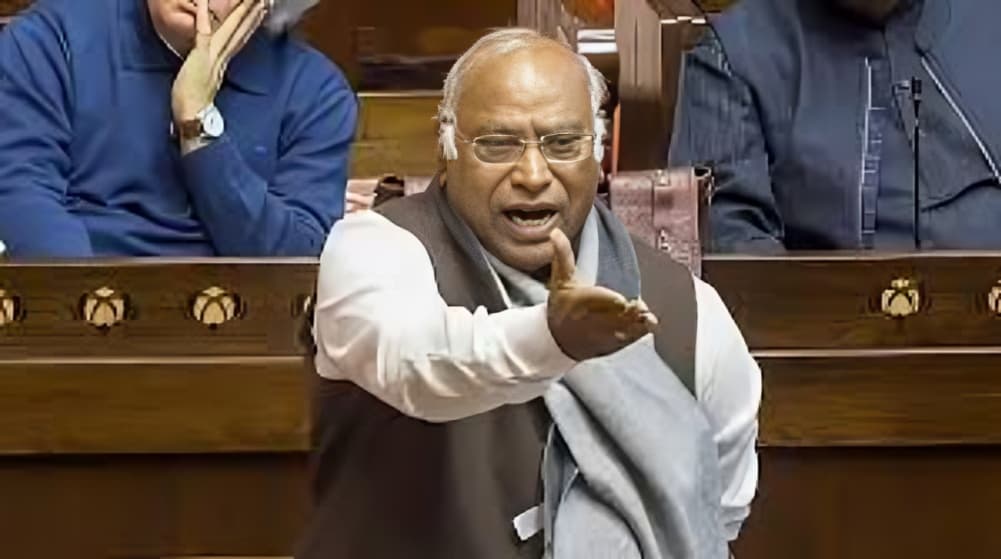
The Rajya Sabha witnessed major disruptions during the ongoing Winter Session of Parliament as Congress chief Mallikarjun Kharge delivered his address. The session, intended to facilitate legislative discussions and policy debates, was temporarily interrupted due to protests and objections from multiple parties. Lawmakers engaged in vociferous exchanges over procedural matters, reflecting the heightened political tensions and contentious issues on the agenda.
The ruckus occurred shortly after Kharge began highlighting key governance concerns, including policy implementation, public welfare programs, and accountability measures. Opposition members raised objections regarding government decisions and procedural protocols, leading to calls for adjournment and intervention from the Chairperson. Security and administrative personnel ensured that the session could continue once order was restored.
Observers note that such disruptions are indicative of the charged political atmosphere in Parliament, particularly during the Winter Session, when parties scrutinize the government’s legislative priorities and public policies. The disagreement in Rajya Sabha coincides with ongoing debates over major bills, including taxation, welfare schemes, and policy measures with nationwide implications. The opposition’s vocal approach underscores its efforts to ensure accountability while asserting its legislative influence.
Chairperson interventions were crucial in maintaining procedural decorum. Members were reminded of parliamentary rules, and repeated attempts were made to resume the session smoothly. Kharge’s address continued despite the interruptions, emphasizing issues such as social justice, economic development, and the need for effective governance. He urged collaborative efforts for policy implementation and highlighted areas where government action could be improved for public benefit.
Political analysts suggest that the disruptions in the Upper House reflect deeper disagreements between ruling and opposition parties over governance priorities. Heated exchanges often emerge when significant policy or budgetary proposals are discussed, particularly when opposition members feel their perspectives are inadequately addressed. Such occurrences, while affecting session efficiency, also demonstrate the role of Parliament as a forum for expressing dissent and scrutinizing executive decisions.
Despite the ruckus, legislative proceedings gradually resumed, with Kharge continuing to present his arguments and suggestions. Members later engaged in structured discussions, and committees were instructed to review specific policy concerns raised during the address. The session’s progress demonstrates the resilience of parliamentary processes, ensuring that debates and deliberations proceed in line with constitutional and procedural frameworks.
Overall, the Winter Session of Parliament highlights the balancing act between robust political debate and orderly legislative conduct. The events in Rajya Sabha, particularly the disruption during Kharge’s address, underscore the need for decorum while allowing members to voice legitimate concerns. Observers anticipate continued discussions on governance, policy reforms, and opposition demands as the session progresses, reflecting India’s vibrant democratic process.