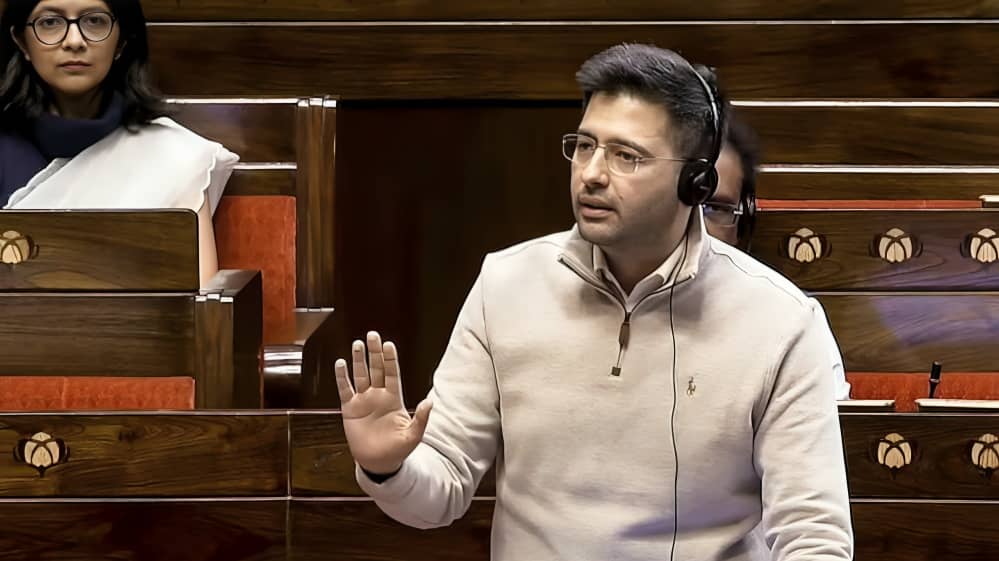
Aam Aadmi Party MP Raghav Chadha has made a strong statement following his removal as the party’s deputy leader in the Rajya Sabha, saying that he has been silenced but not defeated. His remarks, which included the phrase that he would rise like a flood when the time comes, have sparked discussions about his position within the party and the internal dynamics of AAP.
The development comes after the party decided to replace Chadha in the Rajya Sabha leadership role. While the party has not publicly detailed the reasons behind the decision, it has triggered speculation about possible differences within the leadership. Chadha’s recent absence from key party events and public engagements has further fueled these discussions.
In his message addressed to the common people, Chadha suggested that although he may currently be restricted in expressing his views, he remains committed to his political journey. His statement reflects a tone of resilience and determination, indicating that he continues to see himself as an active participant in public life despite the recent changes.
On the other hand, Aam Aadmi Party leaders have rejected claims that Chadha has been deliberately sidelined or prevented from speaking. Party representatives have maintained that internal decisions are taken collectively and are part of routine organizational changes. They have also emphasized that Chadha continues to be an important member of the party.
Political analysts view this development as a significant moment for AAP, as it highlights potential shifts in leadership roles and responsibilities within the party. Changes in parliamentary positions often indicate strategic adjustments, especially in a dynamic political environment. However, without official clarification on the reasons behind the move, it remains unclear whether the decision is purely organizational or linked to internal disagreements.
Raghav Chadha has been a prominent face of the Aam Aadmi Party, particularly in parliamentary debates and public communication. His role as deputy leader in the Rajya Sabha placed him among the key voices representing the party at the national level. His removal from the position has therefore attracted attention from both political observers and the public.
The situation also reflects the broader challenges faced by political parties in managing internal structures and leadership transitions. Maintaining unity while making strategic changes is often a delicate balance. In this case, the contrasting narratives from Chadha and the party leadership have added to the intrigue surrounding the development.
As the situation continues to unfold, it is expected that further clarity may emerge regarding the reasons behind the leadership change and Chadha’s future role within the party. For now, his statement has positioned him as a leader who remains determined despite setbacks, while the party continues to emphasize stability and unity in its ranks.