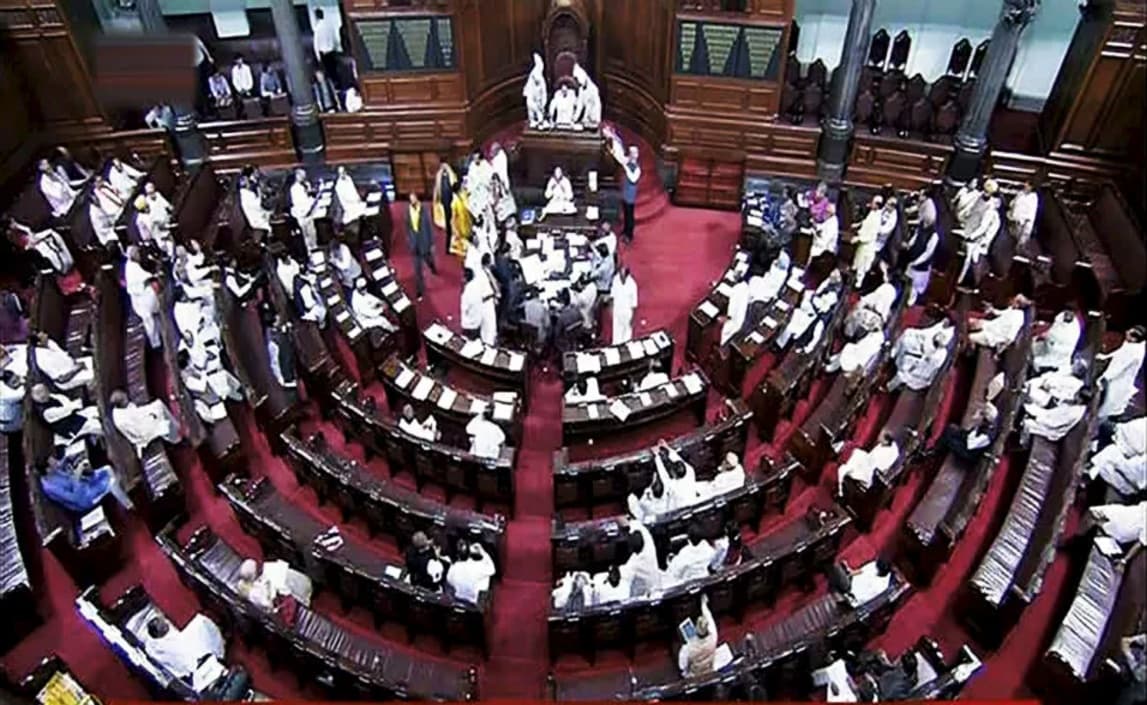

The Rajya Sabha was adjourned for the day following continued disruptions over demands for a discussion on the alleged NEET paper leak. The impasse between the government and opposition parties prevented the House from conducting its scheduled business, extending the parliamentary deadlock that has persisted since the beginning of the week.
Opposition members insisted that the issue of alleged irregularities in the National Eligibility cum Entrance Test should be taken up for an immediate discussion, arguing that the matter concerns millions of students and deserves urgent parliamentary attention. The opposition maintained that Parliament is the appropriate forum to examine issues related to examination transparency, accountability, and public confidence in the education system.
The government, however, accused the opposition of preventing the discussion by introducing additional procedural conditions before agreeing to participate in the debate. According to government representatives, there was willingness to discuss the issue, but disagreements over parliamentary procedures and rules prevented the debate from moving forward.
The disagreement primarily centered on the procedural framework under which the discussion should be conducted. Both the government and the opposition referred to different provisions of the Rules of Procedure governing debates in the Rajya Sabha. As consensus could not be reached, repeated interruptions and protests led to the adjournment of the House.
The continued disruptions have resulted in little or no legislative business being conducted in the Upper House since Monday. Parliamentary adjournments affect the scheduled discussion of bills, policy matters, questions, and other legislative business, often leading to delays in parliamentary proceedings.
The controversy surrounding the NEET examination has emerged as a major political issue in recent weeks. Allegations regarding examination irregularities have prompted investigations by law enforcement agencies, while political parties have exchanged criticism over the handling of the matter. Student organizations and education stakeholders have also called for stronger safeguards to ensure the integrity of national competitive examinations.
Government officials have stated that investigations into the alleged paper leak are ongoing and that action has already been initiated against individuals suspected of involvement. Authorities have emphasized that the investigation will continue in accordance with legal procedures and that those found responsible will face appropriate action under the law.
Opposition leaders have argued that Parliament should hold a comprehensive discussion on the matter to ensure transparency and accountability. They contend that public debate within the legislature would help address concerns raised by students and provide an opportunity for the government to explain the measures being taken to strengthen examination security.
The NEET examination serves as the gateway for admission to undergraduate medical courses across India, making its credibility critically important for millions of aspiring students. Any allegations affecting the examination process receive significant public attention because of their potential impact on educational opportunities and public trust.
Parliamentary observers note that procedural disagreements frequently contribute to legislative deadlocks, particularly when politically sensitive issues are under discussion. While parliamentary rules provide several mechanisms for debates, reaching agreement between the treasury benches and the opposition often determines whether discussions proceed smoothly.
As the parliamentary session continues, efforts may be made to resolve the procedural differences and facilitate a structured discussion on the NEET issue. Both the government and the opposition have indicated that they are prepared to discuss the matter, although they continue to differ on the process through which the debate should take place.
The developments in the Rajya Sabha underscore the importance of parliamentary consensus in addressing issues of national concern. With investigations into the alleged examination irregularities continuing, the demand for a full parliamentary discussion is expected to remain a prominent issue during the current session.