Asian Games 2026 India Misses Medal After Rare Frame Hit
India suffered a narrow setback in the women’s 25m pistol team event at the 2026 Asian Games in Aichi Nagoya after a rare frame hit cost the team valuable points during the rapid stage.
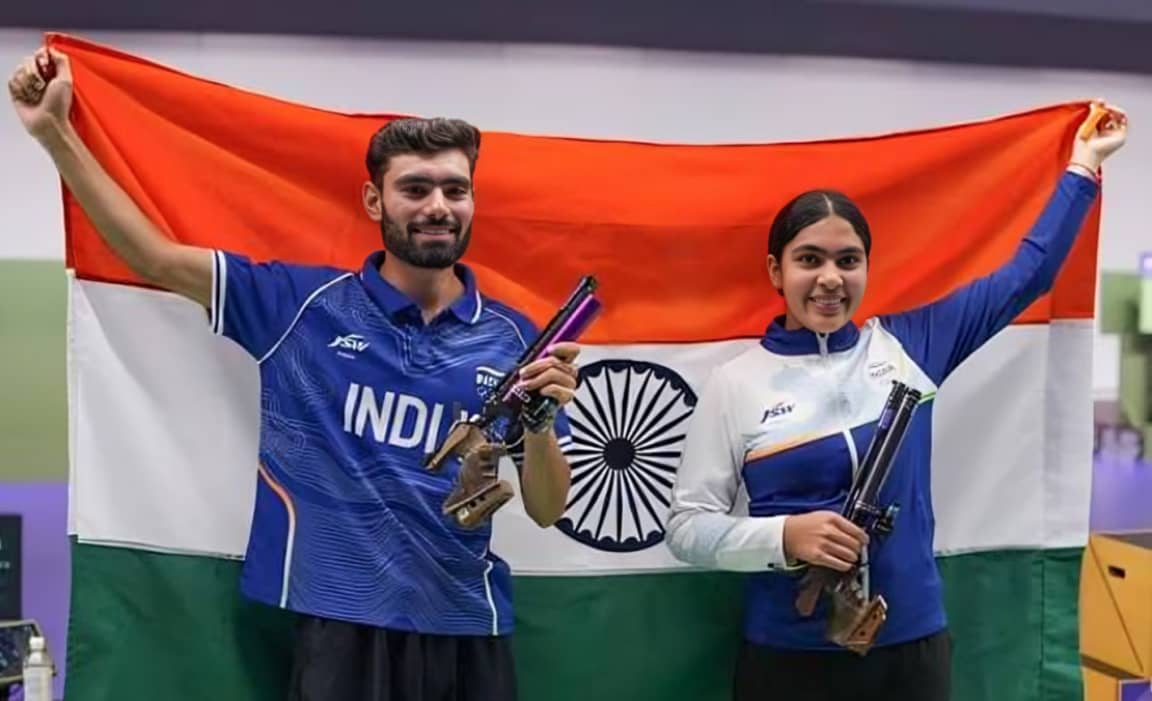
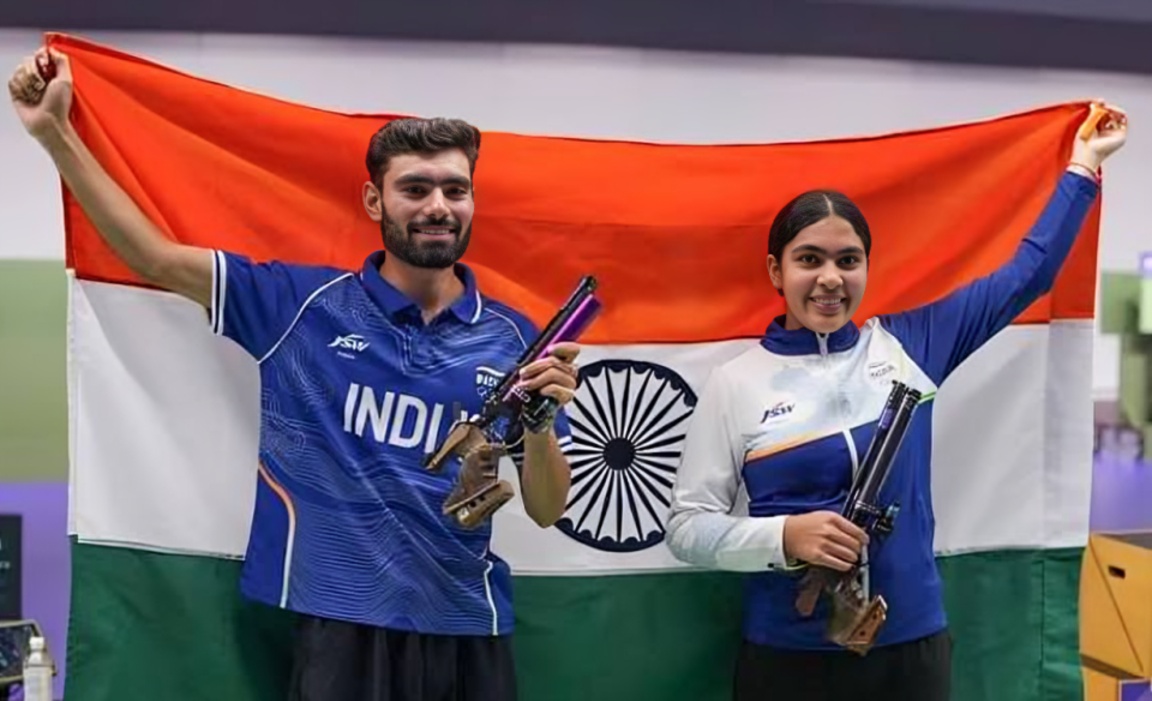
The Indian team featuring Esha Singh, Manu Bhaker and Rahi Sarnobat had been in a strong position after the precision stage. India was second at that point and only one point behind China. However, the rapid stage changed the standings after Sarnobat recorded a zero on one shot.
India eventually finished fifth with a combined score of 1727 points. China won the gold medal with 1743 points, while South Korea finished second with 1735 points and Chinese Taipei claimed bronze with 1734 points. Vietnam finished fourth with 1732 points.
What Happened During the Rapid Stage
The women’s 25m pistol competition consists of precision and rapid stages. During the rapid stage, shooters have significantly less time to complete their shots, making concentration and timing particularly important.
Rahi Sarnobat faced difficulty during one of her rapid series. One of her shots was recorded as a frame hit and therefore received zero points.
A frame surrounds the scoring area of a target. When a shot hits the frame rather than the scoring area, it does not receive points. In a closely contested team event, such a zero can have a major effect on the overall standings because the scores of all three members are combined.
Sarnobat finished the particular series with 39 points from a possible 50. Her overall qualification score was 568 with 16 inner tens, leaving her in 30th position in the individual standings.
India Appeals the Decision
The Indian team challenged the frame hit decision after the shot was recorded as zero.
According to reports, the Indian side believed that there could have been an issue with the scoring technology and appealed the decision. Officials reviewed the incident before rejecting the appeal and confirming the original ruling.
The decision meant that the zero remained on Sarnobat’s scorecard. India therefore had to continue with the reduced team score.
The incident proved costly because the teams were separated by relatively small margins. India finished with 1727 points, seven points behind bronze medallists Chinese Taipei and eight points behind silver medallists South Korea. China was 16 points ahead of India.
India's Final Score
The Indian team finished with a total of 1727 points and 56 inner tens.
Esha Singh was India’s highest scorer with 580 points and 22 inner tens. Manu Bhaker recorded 579 points with 18 inner tens. Sarnobat finished with 568 points and 16 inner tens.
The combined total placed India fifth in the team standings.
China topped the competition with 1743 points and 68 inner tens. South Korea scored 1735 with 65 inner tens, while Chinese Taipei scored 1734 with 48 inner tens. Vietnam finished fourth with 1732 points and 56 inner tens.
How Much Did the Zero Affect India
The frame hit became particularly significant because India had been close to the medal positions before the rapid stage.
A single zero does not automatically determine the result of a team competition, as several other shots contribute to the final score. However, in this case, the loss of a scoring shot left India with less room to recover.
Reports noted that Sarnobat's final score was substantially lower than those of her teammates. She finished 12 points behind Esha and 11 points behind Manu.
Had Sarnobat produced a score closer to her teammates, India's overall total could have been considerably higher. However, such hypothetical calculations do not change the official result, which placed India fifth.
Manu Bhaker Misses Individual Final
The team event setback was also accompanied by a disappointing individual result for Manu Bhaker.
The two time Olympic medallist scored 579 with 18 inner tens and finished 11th in the qualification standings. Only the top eight shooters advanced to the individual final, meaning Bhaker missed qualification by three places.
Sarnobat finished 30th with 568 points.
Esha Singh, however, qualified for the individual final after scoring 580 points with 22 inner tens and finishing eighth in qualification.
Esha Singh Wins Silver
India's shooting campaign received a boost when Esha Singh went on to win the silver medal in the individual women’s 25m pistol event.
Esha reached the final as the eighth qualifier and remained in contention through a series of shoot offs. She eventually finished second behind China's Xiao Jiaruixuan.
The result gave India another shooting medal at the Asian Games and provided a positive outcome after the disappointment of the team event.
India's Shooting Campaign
The women's 25m pistol team result added to a mixed shooting campaign for India at the 2026 Asian Games.
India entered the competition with strong expectations after an impressive performance at the previous Asian Games in Hangzhou. The country had won 22 shooting medals at Hangzhou, including seven gold medals.
At Aichi Nagoya, India's shooters have continued to collect medals, but the results have not always matched the medal haul from the previous edition. The women's 25m pistol team event was another example of how small margins can affect the final standings.
The Indian team had already experienced several near misses in the shooting events. India finished fourth in the women's 10m air pistol team event and Manu Bhaker finished fifth in the individual 10m air pistol final.
The 25m pistol team event initially appeared to offer another medal opportunity, particularly because India was positioned second after the precision stage. However, the rapid stage changed the outcome.
Significance of the Frame Hit
A frame hit is an unusual but recognised occurrence in target shooting. It means the projectile strikes the surrounding frame instead of the scoring portion of the target.
In an event where athletes compete over numerous shots and teams are separated by only a few points, a zero can have a significant impact.
For India, the incident was especially important because the team was already close to the medal positions. The final difference between India and Chinese Taipei was seven points, while the gap to South Korea was eight points.
The Indian team therefore had to settle for fifth place despite starting the competition strongly.
India's Medal Opportunity Remains
Although the team event ended without a medal, Esha Singh's individual silver ensured that India still finished on the podium in the women's 25m pistol competition.
Esha's performance also demonstrated the difference between the individual and team competitions. While the team result was affected by Sarnobat's zero and the combined score, Esha managed to qualify for the individual final and fight through multiple shoot offs before securing silver.
The result also means that the frame hit should be viewed as one moment within a broader team performance rather than the sole explanation for India's fifth place. All three shooters contributed to the final score, and the official standings were determined by the combined results.
What This Means for India
India's fifth place in the women's 25m pistol team event was another example of the narrow margins that can decide shooting competitions.
The team had entered the rapid stage in medal contention but eventually dropped out of the podium positions. The frame hit involving Sarnobat became a major talking point because the shot received zero points and India's appeal was unsuccessful.
At the same time, Esha Singh's silver medal in the individual event ensured that India did not leave the discipline without a podium finish.
For Manu Bhaker, the Asian Games campaign ended without an individual medal after she missed the 25m pistol final and had earlier finished fifth in the 10m air pistol final. Sarnobat also missed the individual final.
Esha's silver therefore became the main positive result for India in the women's 25m pistol competition.
The 2026 Asian Games shooting events have once again highlighted how important every shot can be. India's women's 25m pistol team had a medal within reach after a strong precision stage, but a zero from a frame hit during the rapid stage changed the standings. The subsequent appeal did not alter the decision, leaving India fifth.
The team will look back at the result as a missed opportunity, while Esha Singh's individual silver provided India with a podium finish in the same discipline. The contrasting results underline the unpredictable nature of shooting, where a single shot can make a substantial difference to the final medal positions.