
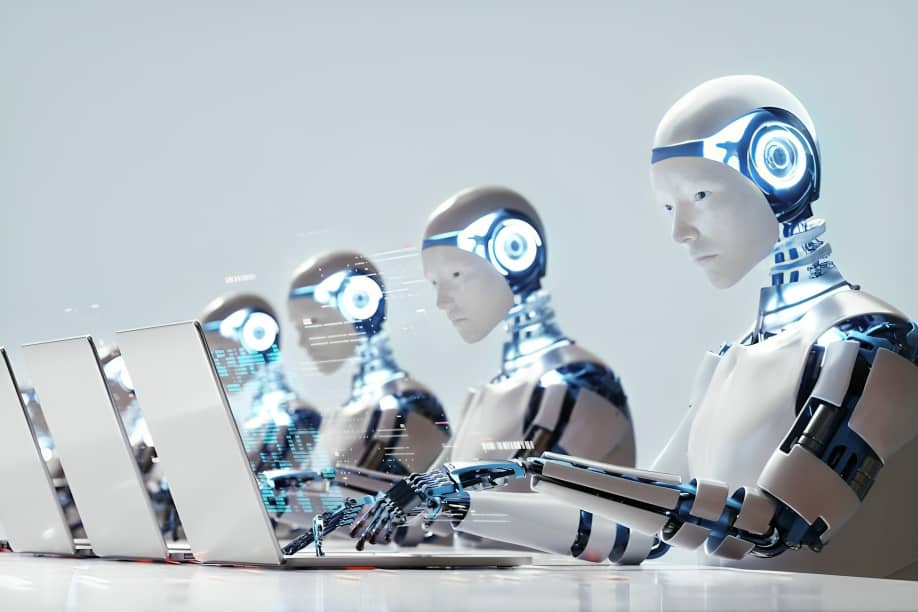
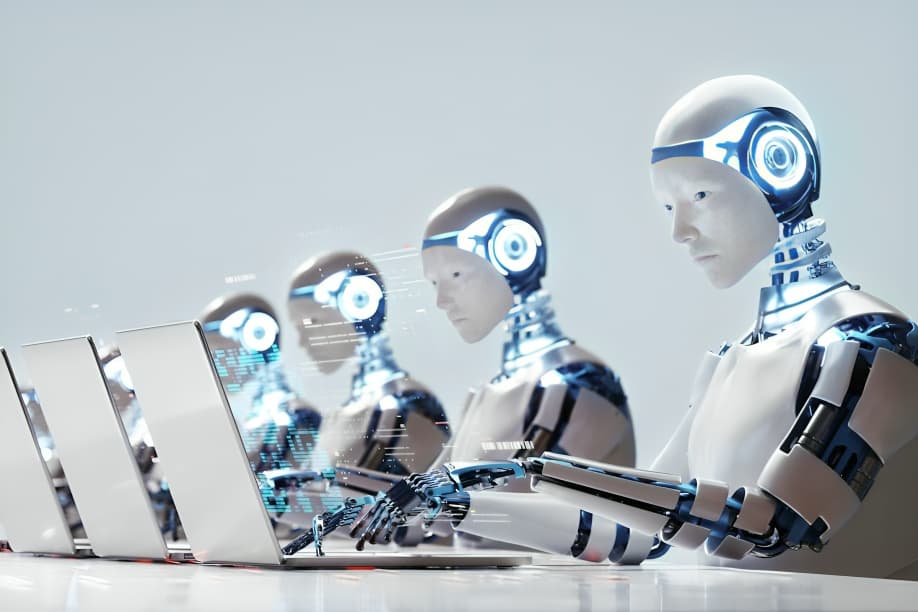
Anthropic Chief Scientist Jared Kaplan has issued a stark warning about the future of employment, stating that artificial intelligence could begin replacing a large portion of office jobs within the next three years. Speaking about the rapid progress in advanced AI systems, Kaplan said the most dramatic transformation is likely to occur between 2027 and 2030, when machines may start building and improving newer versions of themselves.
Kaplan believes that the pace of AI development is no longer linear but exponential. He explained that recent breakthroughs in large language models, automation tools and reasoning systems indicate that AI is moving beyond simple task assistance toward performing complex cognitive work traditionally handled by humans. This shift could significantly affect sectors such as finance, customer service, law, administration, marketing, and data analysis.
According to Kaplan, the key turning point will arrive when AI systems become capable of automating the full cycle of research, development, testing and optimization of new AI models with minimal human intervention. Once that stage is reached, innovation speed could increase dramatically, reducing the time required to build more powerful and efficient systems.
He also noted that many office roles involve repetitive digital tasks, structured analysis and document-based workflows, which are particularly vulnerable to automation. Jobs related to report writing, scheduling, data entry, basic legal research, accounting and routine software coding could see the earliest and largest impact.
However, Kaplan stressed that AI-driven disruption does not necessarily mean the complete disappearance of jobs. Instead, it may reshape job roles, pushing workers toward tasks that require creativity, emotional intelligence, strategic thinking and complex human judgment. He emphasized that the challenge for governments and businesses will be managing the transition responsibly.
Experts say the warning highlights the urgent need for large-scale workforce reskilling and education reform. As AI integration deepens, employees will need to acquire new technical, analytical and interdisciplinary skills to remain competitive. Lifelong learning, digital literacy and adaptability are expected to become core employment requirements.
Kaplan also pointed out that policymaking must keep pace with technological growth. He called for updated labour policies, social safety nets and ethical frameworks to address large-scale job displacement risks. Without proper preparation, AI-driven automation could widen income inequality and create new economic pressures across industries.
Despite the concerns, Kaplan acknowledged that AI could also unlock new economic opportunities if deployed responsibly. Productivity gains, he said, could lead to lower costs for businesses, more efficient public services and the creation of entirely new job categories that do not yet exist.
In India, where a large segment of the workforce is employed in IT services, back-office operations and administrative support, the impact of AI-driven automation could be particularly significant. Industry leaders have already begun investing in AI training programs to prepare employees for evolving job requirements.
Analysts believe that the next few years will be critical in shaping how societies adapt to the accelerating AI revolution. While the technology promises major benefits in healthcare, education, manufacturing and governance, its effect on employment will depend largely on how quickly nations invest in skill development and regulatory readiness.
In summary, Anthropic Chief Scientist Jared Kaplan’s warning signals a rapidly approaching transformation of the global workplace. With AI expected to take over many office functions within the next three years and self-improving systems emerging by the end of the decade, businesses, workers and governments face an urgent need to prepare for one of the most profound shifts in modern employment history.


