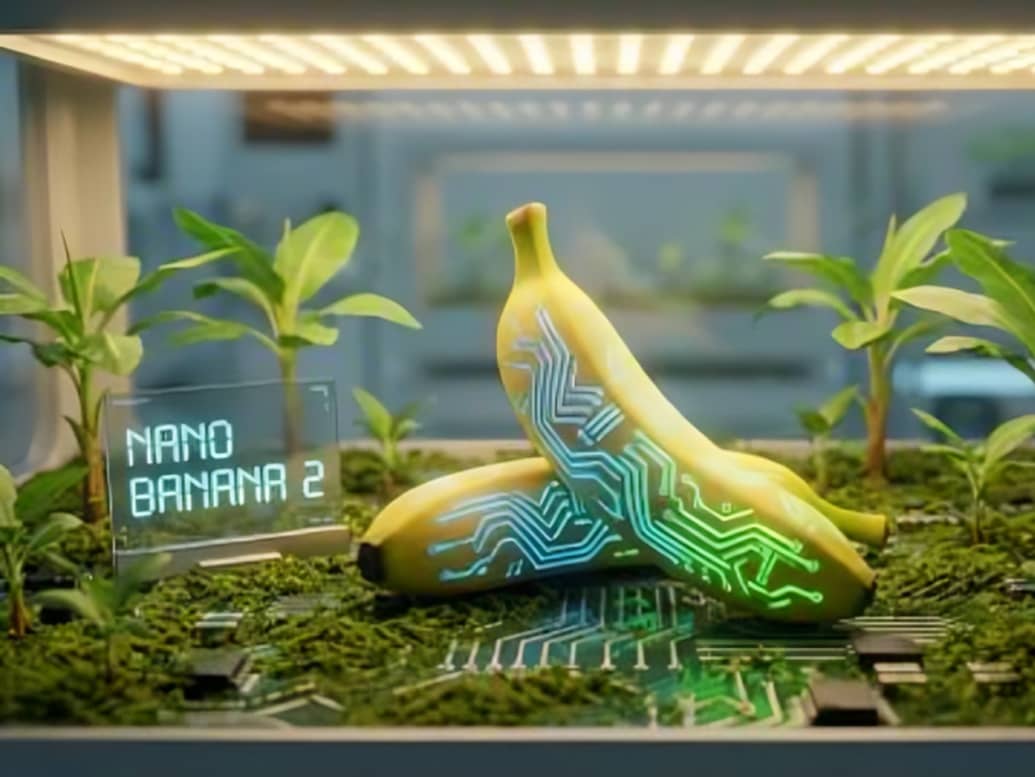
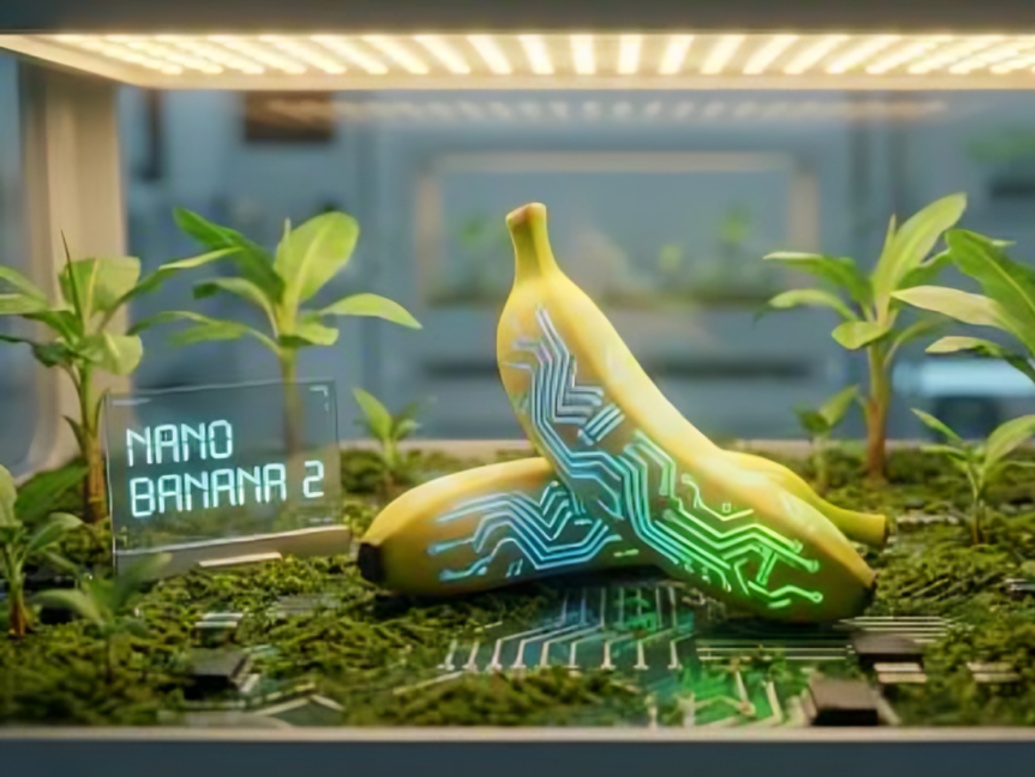
Google has launched Nano Banana 2.1, a new high efficiency artificial intelligence model for image generation and conversational image editing. The updated model is designed to improve image quality, realism, prompt following, text rendering and consistency when users make multiple changes to an image.
Nano Banana 2.1 is part of Google's Gemini family of AI models and is positioned as a more efficient image generation option compared with the company's higher end Nano Banana Pro model.
According to Google's official Gemini API documentation, Nano Banana 2.1 is the latest high efficiency image generation and conversational editing model. It is an update to Nano Banana 2 and focuses on improving the quality and reliability of generated images while maintaining the speed and cost advantages associated with Google's Flash class models.
One of the major upgrades is support for higher resolution image generation. Nano Banana 2.1 can generate images at 1K, 2K and 4K resolutions. The model also addresses certain tiling problems that could occur when generating wide or panoramic images at higher resolutions.
The 4K capability is expected to be particularly useful for users creating detailed graphics, advertising material, product visuals, presentations and other content where image resolution is important.
Google has also improved text rendering. AI image generators have historically faced difficulties when generating readable text inside images, particularly for posters, diagrams, advertisements and infographics.
Nano Banana 2.1 is designed to produce more accurate text and infographic layouts. Google says the model includes improvements in text rendering and infographic layout accuracy.
The model also introduces stronger multi image capabilities. Users can provide up to 14 reference images and combine information from those images when generating a final result.
This capability can be useful for creative workflows where several visual references need to be combined. For example, users can provide different product images, characters, objects or design references and ask the model to create a new composition based on them.
Google says Nano Banana 2.1 can maintain character consistency for up to four characters and object fidelity for up to 10 objects when using multiple reference images.
Another important improvement is multi turn consistency. This means the model is designed to retain important visual characteristics when users make a series of changes to the same image.
For example, a user can generate an image of a character and then ask the model to change the background, clothing or lighting while attempting to preserve the character's appearance. Better consistency can make such iterative editing workflows easier.
The model also supports conversational editing. Instead of requiring users to make every change manually through a traditional image editing application, they can describe the desired change using natural language.
Users can ask the model to modify objects, adjust compositions, change styles or make other visual alterations through a sequence of prompts.
Google has also introduced configurable thinking levels for Nano Banana 2.1. The available options are minimal, medium and high.
The medium level is the default setting. Users and developers can select a different thinking level depending on whether they want faster responses or additional reasoning during complex image generation tasks.
The thinking feature is designed to help the model reason through complicated visual instructions before producing the final image. Google's image generation documentation says the model can generate intermediate thought images as part of this process before producing the final result.
Nano Banana 2.1 also supports grounding through Google Search and Google Image Search. This can help the model use information from Google's search systems when creating images that depend on real world information.
The model's availability extends beyond a single Google application. Google's model card lists Gemini, Google AI Studio, Gemini API, Google Search AI Mode, Google Ads, Google Flow and Google Stitch among the distribution channels for Nano Banana 2.1.
For developers, Nano Banana 2.1 is available through the Gemini API. The stable model identifier is gemini-nano-banana-2.1.
The model accepts text and image inputs and produces image and text outputs. Google lists an input token limit of 131,072 and an output token limit of 32,768 in its Gemini API documentation.
The new model is also aimed at professional creative workflows. Improved image consistency and editing can be useful for marketing teams, graphic designers, content creators, advertisers and developers building applications that require AI generated imagery.
Product visualisation is another potential use case. A company could provide multiple product reference images and use the model to create new scenes while attempting to preserve important characteristics of the original products.
The ability to work with multiple reference images can also be useful for character based creative projects. Instead of relying on a single reference, users can provide several images to help establish the appearance and identity of characters or objects.
Google's model card reports improvements across several internal and public evaluation categories, including text to image generation, general editing, character consistency, product consistency, stylisation and multi reference editing.
However, the model is not without limitations. Google's own model card notes that small text can still sometimes appear blurry, particularly at lower resolutions. The company also says character consistency is not always perfect and that the model can sometimes struggle with spatial relationships such as left and right.
These limitations are important for users who expect completely accurate results from every generation. AI generated images can still contain errors, and users should review important visual content before publishing or using it commercially.
The model can also produce incorrect information when generating images that depend on factual or real world knowledge. Google's model card specifically notes that the system still has limitations in advanced world knowledge, three dimensional reasoning and factuality.
Nano Banana 2.1 is based on Google's Gemini 3.6 Flash technology, according to the Google DeepMind model card. The model was published in October 2026 and is part of the wider Gemini 3 series.
The launch comes as competition in AI image generation continues to increase. Technology companies are increasingly focusing on image editing rather than simple text to image generation, with improvements in reference handling, consistency and natural language editing becoming important differentiators.
Google's latest model follows this direction by combining image generation with conversational editing and multi image reference support.
The 4K output capability is another important addition because high resolution images are increasingly needed for professional design and commercial applications. Users can select between different resolutions depending on their requirements, with 4K available when greater detail is needed.
The model also supports a wide range of aspect ratios. Google's documentation lists formats including square, portrait, landscape, widescreen and extremely wide or tall configurations at supported resolutions.
For ordinary users, the most noticeable improvements are likely to be better image realism, improved text inside images, more reliable editing and stronger consistency across repeated changes.
For developers, the combination of API access, multiple reference images, configurable thinking and search grounding provides additional flexibility when building AI powered image applications.
Despite the improvements, Google continues to position Nano Banana 2.1 as a high efficiency model rather than simply replacing every capability of its higher end image models. Users with demanding visual requirements may still choose other Gemini image models depending on the specific task.
The launch also demonstrates Google's continued effort to integrate AI image generation across its wider ecosystem rather than keeping it limited to a standalone image generation service.
As Nano Banana 2.1 becomes available across Gemini and Google's developer platforms, its new capabilities could make AI assisted image creation more useful for everyday users as well as professional creators.
Overall, Nano Banana 2.1 represents a significant update to Google's AI image generation technology. Its combination of 4K output, improved realism, better text rendering, multi image references and configurable thinking gives users more control over image creation and editing.
However, users should continue to review AI generated images carefully, especially when accuracy, brand identity, product details or factual information are important.