

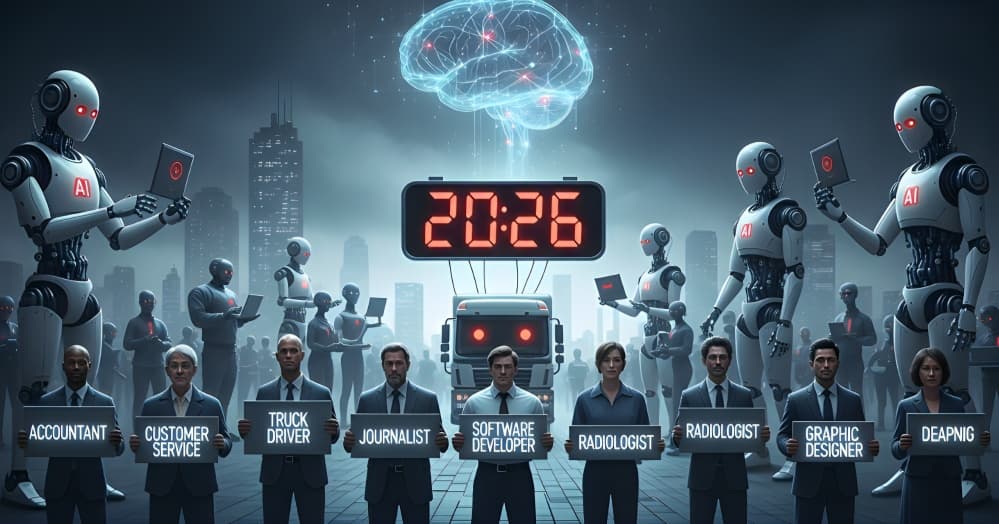
Microsoft has highlighted the growing impact of artificial intelligence on the global workforce, identifying nearly 40 job roles that are likely to undergo major disruption by 2026. The findings are based on internal research, industry trends, and the increasing adoption of generative AI tools across sectors. While the company has not stated that all these jobs will disappear, it has warned that many roles will change significantly as automation takes over routine tasks.
According to Microsoft, jobs that rely heavily on repetitive processes, structured data handling, and predictable workflows are most at risk. These include roles such as data entry operators, transcriptionists, basic customer support executives, telemarketers, payroll clerks, and routine bookkeeping staff. In the creative field, entry-level content writing, basic graphic design, and simple video editing tasks may also see increased automation due to AI-powered tools.
The company noted that AI systems are becoming more capable of handling tasks like document processing, customer queries, scheduling, and even preliminary data analysis. As a result, businesses are increasingly using AI to improve efficiency and reduce costs. This shift is expected to reshape how organisations structure their workforce over the next few years.
However, Microsoft has stressed that artificial intelligence should be viewed as a productivity tool rather than a direct job killer. Many roles will evolve instead of vanishing completely. For example, customer service professionals may move from handling basic queries to managing complex interactions, while content creators may focus more on strategy, creativity, and quality control rather than routine production.
The report also points to the creation of new job categories driven by AI adoption. Roles such as AI trainers, prompt engineers, data ethicists, cybersecurity specialists, and AI compliance officers are expected to grow. Demand for professionals who can combine technical knowledge with problem-solving, communication, and leadership skills is likely to increase.
For India, the implications are particularly significant given its large workforce in IT services, business process outsourcing, and administrative roles. Experts suggest that reskilling and upskilling will be crucial to ensure employment stability. Microsoft has encouraged governments, educational institutions, and companies to invest in digital literacy, AI fundamentals, and continuous learning programs.
Industry analysts believe that workers who adapt early will benefit the most from the AI transition. Skills such as critical thinking, creativity, emotional intelligence, and cross-domain expertise are seen as less likely to be automated. Technical skills related to AI deployment, data management, and system oversight are also expected to remain in high demand.
Microsoft’s assessment reflects a broader global trend where artificial intelligence is transforming workplaces rather than eliminating work altogether. The company has reiterated that the future of employment will depend on how effectively individuals and organisations adapt to technological change, making preparedness and learning key to staying relevant in the AI-driven economy.


