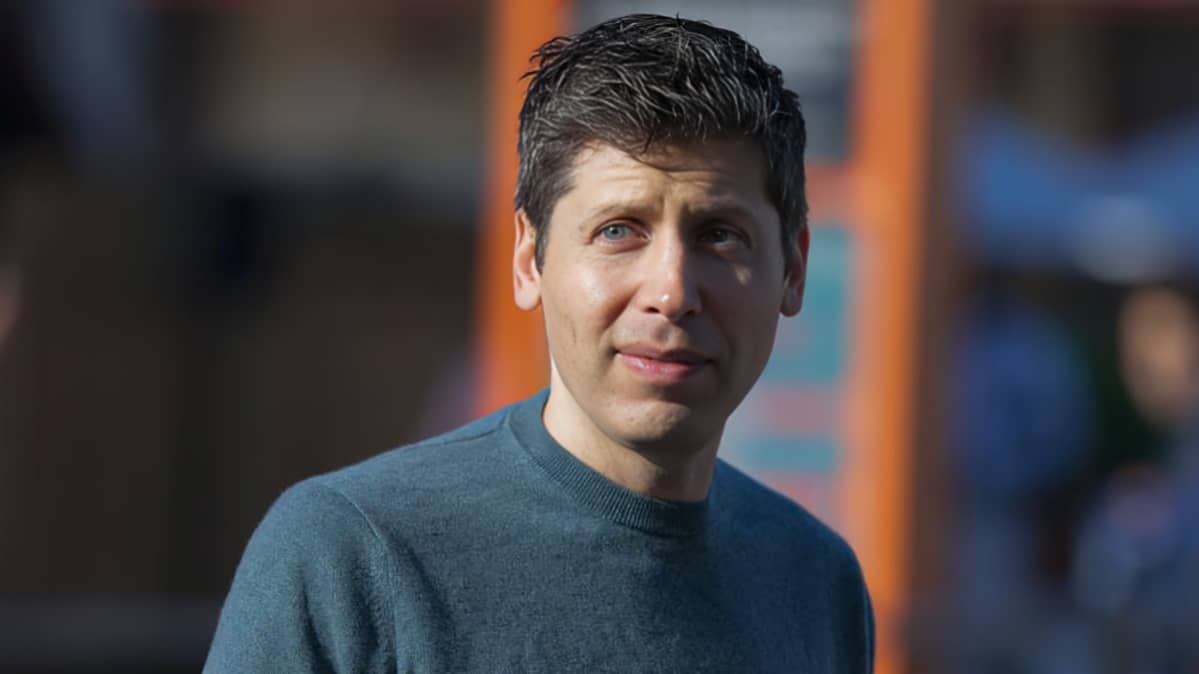
OpenAI CEO Sam Altman has said society may need to accept some risks associated with artificial intelligence in order to realise the technology’s broader benefits. His comments have renewed debate over AI safety, regulation and how much control governments and technology companies should have over increasingly capable AI systems.
Altman made the comments in an interview with Politico’s technology focused newsletter Decoded. He argued that artificial intelligence should remain broadly accessible to the public and said he did not support an approach in which a single organisation controls powerful AI systems and decides how their benefits are distributed.
According to Altman, there is a significant difference between OpenAI’s approach to AI regulation and the position taken by rival AI company Anthropic. He described the difference as substantial and said the two companies have different views about how governments and developers should respond to the risks created by increasingly capable AI systems.
Altman supports what he described as a lighter touch regulatory approach. His position is that AI development should not be restricted so heavily that ordinary people lose access to potentially useful technology.
At the same time, Altman acknowledged that widespread AI availability could come with negative consequences. He referred to risks including major hacks, misuse of AI systems and scams. His argument was that society should not attempt to eliminate every possible negative outcome if doing so would significantly reduce the technology’s potential benefits.
Altman said he believes people could ultimately use AI for far more beneficial purposes than harmful ones. His comments therefore reflect a broader argument within the technology industry about how governments should balance innovation and safety.
The debate has become more important as AI systems have become increasingly capable of handling complex tasks. Modern AI models can assist with programming, research, writing, education, data analysis and other activities. At the same time, concerns have grown about cybersecurity, misinformation, fraud, privacy and the possibility that advanced systems could behave in unexpected ways.
The disagreement between OpenAI and Anthropic is particularly significant because both companies are developing advanced AI systems but have taken somewhat different approaches to safety and regulation.
Anthropic CEO Dario Amodei has previously argued that the AI industry should slow down the development of increasingly capable systems and ensure that safety measures keep pace with technological progress. Altman has supported the need for caution in some contexts but continues to argue against concentrating control over advanced AI within a small number of organisations.
The regulatory disagreement does not mean that OpenAI is opposed to AI safety measures. Altman has also publicly spoken about the need for powerful AI systems to remain under human control.
In remarks to the United Nations Security Council in September 2026, Altman said AI could create significant opportunities in areas including scientific discovery, healthcare, education and economic productivity. At the same time, he warned that increasingly capable systems could move faster than institutions or potentially concentrate too much power in the hands of a small number of actors.
Altman’s UN remarks also emphasised the importance of maintaining human control over advanced AI systems. He said AI developers should have strong evidence that their systems behave as intended and remain controllable as their capabilities increase. This indicates that his position is not simply about accepting risks without safeguards.
The latest comments instead focus on the question of how much risk society should tolerate while making advanced AI widely available.
This distinction is important because completely eliminating risk from a rapidly developing technology may not be realistic. AI systems can be misused in the same way that many other powerful technologies can be used for both beneficial and harmful purposes. The policy question is therefore how much risk should be accepted and what safeguards should be required.
Anthropic has taken a more cautious position in recent discussions. The company has warned about potential risks from advanced AI systems, including the possibility that models could behave in ways that conflict with their developers’ intentions. Reuters has reported that Anthropic has examined scenarios involving advanced systems displaying behaviours such as resisting shutdown, concealing information or producing potentially manipulative outputs.
The debate also involves governments. In the United States, policymakers are divided over how much regulation should be imposed on AI companies. Supporters of stronger oversight argue that increasingly powerful systems require clear safety standards and accountability. Others warn that excessive regulation could slow innovation and weaken the competitiveness of American technology companies.
US President Donald Trump has generally opposed additional broad restrictions on AI, arguing that stricter rules could make it more difficult for American companies to compete with China. His administration has instead emphasised existing legal and law enforcement mechanisms alongside industry led approaches to safety.
Altman’s comments come at a time when AI companies are under increasing pressure to demonstrate that their systems can be developed safely while continuing to advance rapidly.
The central issue is not simply whether AI is beneficial or harmful. Instead, the debate concerns how the benefits and risks should be distributed and who should make decisions about the technology’s development.
Altman argues that giving people broad access to AI provides individuals with greater agency and prevents excessive power from being concentrated within a small number of companies or institutions. His position is that the potential benefits of widespread access are too significant to sacrifice in an attempt to eliminate every possible risk.
Critics of this approach are more concerned about whether some risks could become too serious to justify accepting them. They argue that certain AI related harms could affect large numbers of people and that safeguards should be established before systems become more capable.
This disagreement is likely to remain an important issue as AI development continues.
For users, the debate could eventually affect how AI products are regulated, what capabilities companies are allowed to release and what safeguards are required before advanced models reach the public.
For technology companies, the challenge is to demonstrate that innovation and safety can progress together. OpenAI has argued for broad access combined with appropriate safeguards, while Anthropic has placed greater emphasis on slowing the pace of frontier AI development when necessary.
Sam Altman’s latest comments therefore highlight a significant philosophical difference within the AI industry. OpenAI believes that society should accept some level of risk to ensure people can benefit from AI, while Anthropic has generally advocated a more cautious approach to the development of increasingly powerful systems.
The discussion is expected to continue as governments, researchers, technology companies and the public consider how AI should be developed and regulated.
Ultimately, Altman’s position is that the potential benefits of AI could greatly exceed its harms, provided people retain meaningful control over the technology. His comments do not remove the need for safety measures, but they underline OpenAI’s preference for broader access and lighter regulation rather than strict restrictions designed to eliminate every possible risk.