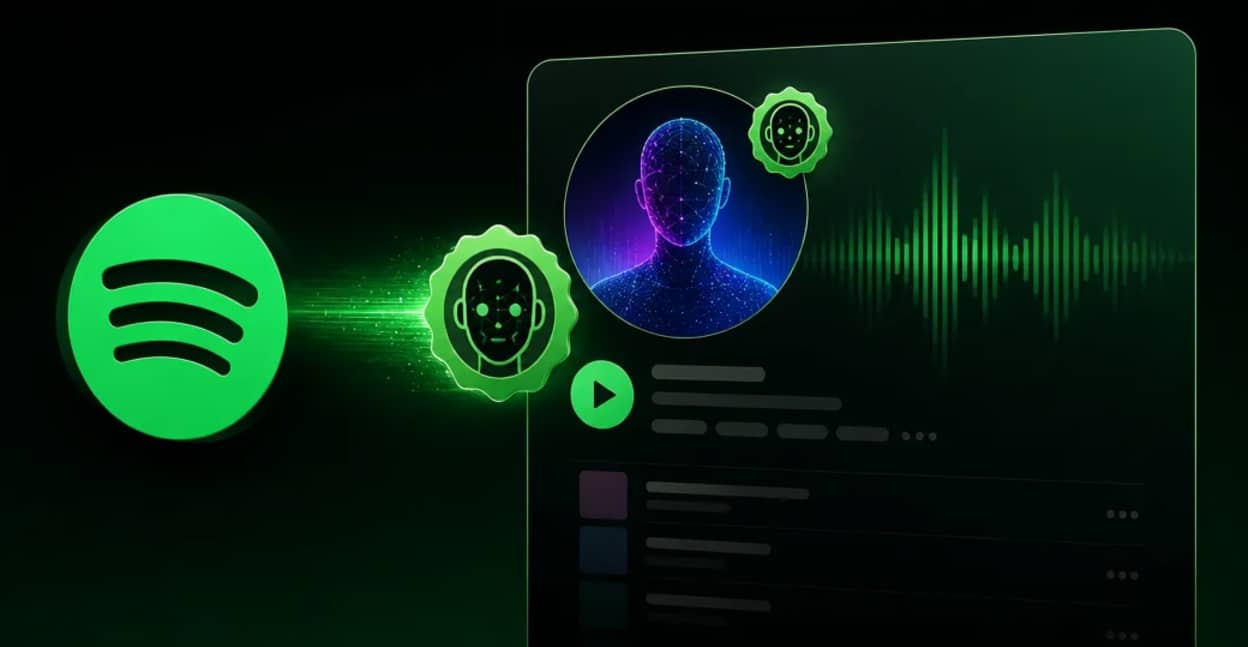
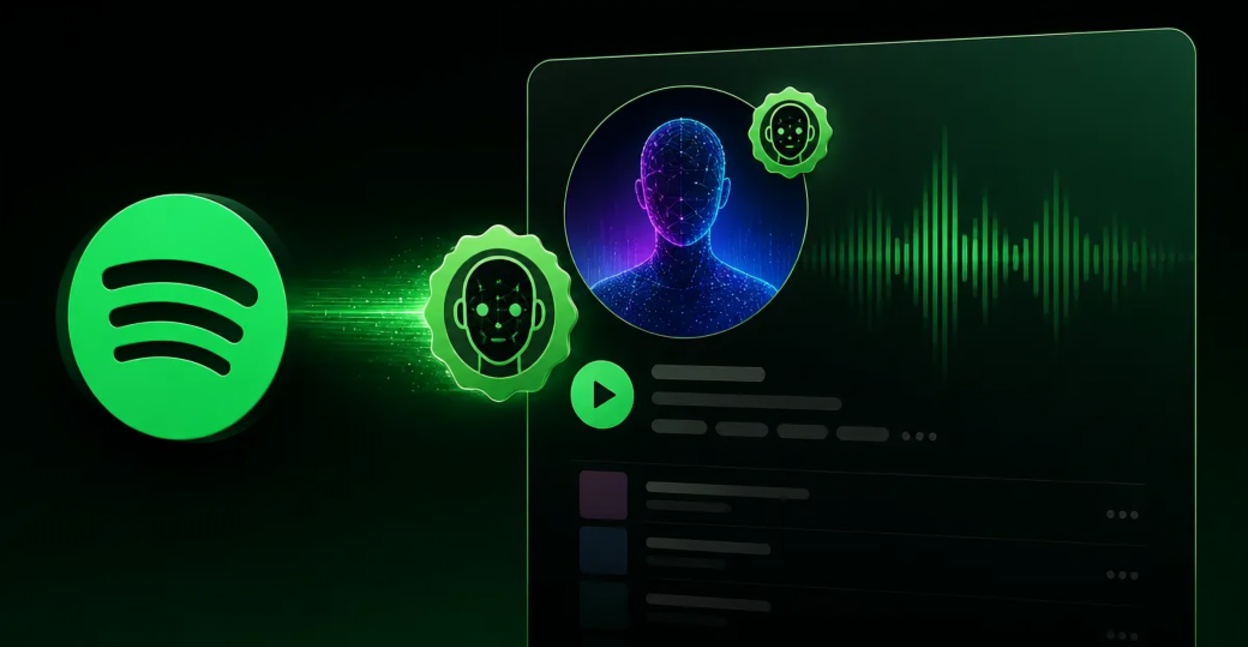
Spotify is preparing to introduce a new transparency feature that will identify certain AI generated artists and musical projects through an AI Persona label on artist profiles.
The move comes as artificial intelligence continues to transform the music industry. AI tools are increasingly being used to create vocals, instruments, compositions, production elements and even complete musical identities. While the technology has opened new creative possibilities, it has also created questions about transparency, ownership and whether listeners can easily distinguish between human artists and artificial personas.
Spotify’s proposed AI Persona label is aimed at making that distinction clearer for listeners.
New AI Persona Label
Under the planned system, selected artist profiles could receive an AI Persona designation. The label would provide users with additional context about the nature of an artist appearing on the platform.
The feature is expected to begin rolling out from mid September, according to reports.
The introduction of a dedicated label could make it easier for listeners to understand when they are engaging with a musical project that relies substantially on artificial intelligence.
This is particularly relevant as AI generated music becomes more sophisticated and increasingly resembles traditionally produced music.
Growing Use of Artificial Intelligence in Music
Artificial intelligence has become an important part of the modern music industry.
Artists and producers are using AI tools for songwriting assistance, sound design, music production, mastering and other creative processes.
At the same time, some projects use AI to create virtual performers or entirely synthetic musical identities.
These developments have created a new category of music that does not always fit traditional definitions of an artist.
For listeners, determining whether a particular profile represents a human musician, a virtual performer or an AI generated project can sometimes be difficult.
Why Transparency Matters
The introduction of AI Persona labels is largely connected to the growing demand for transparency.
Listeners may want to know whether the voice they hear belongs to a human performer or was generated using artificial intelligence.
Similarly, users may want to understand whether an artist profile represents a real individual or a digitally created persona.
Clear identification could help Spotify provide more information without necessarily preventing AI generated music from being distributed on the platform.
The approach allows listeners to make informed decisions about the content they choose to stream.
Concerns Over Misleading Artist Profiles
The rapid growth of AI generated music has also raised concerns about misleading artist identities.
Some listeners have encountered profiles that appear to represent conventional musicians but may actually involve artificial intelligence or virtual performers.
Without clear information, users may not always know how a particular track was created.
The AI Persona label could address part of this problem by making the nature of certain profiles more visible.
However, the precise criteria Spotify will use to determine which profiles qualify for the label will be important.
What the Label Could Mean for Artists
For human musicians, the introduction of AI labels could help distinguish their work from fully artificial musical projects.
Independent artists in particular may benefit from clearer identification because listeners can better understand who is behind a particular profile.
At the same time, musicians who use AI as part of their creative process may need to consider how their work is classified.
There is an important distinction between an artist using AI as a production tool and an entirely AI generated musical persona.
The implementation of the system will therefore be closely watched by musicians and industry professionals.
AI Does Not Necessarily Mean Fully Artificial Music
The term AI generated music can describe several different production methods.
An artist might use artificial intelligence to generate ideas while writing the final song themselves.
Another musician could use AI for background instrumentation, mixing or mastering.
A separate project could use artificial intelligence to create vocals, compositions and an artist identity.
These examples represent very different levels of AI involvement.
Spotify's labeling approach will need to account for these differences so that listeners receive meaningful information rather than a simple classification that does not explain how AI was used.
Impact on Listeners
For Spotify users, the proposed change could provide additional context while browsing artist profiles.
Listeners who prefer human performers may use the information when deciding what to stream.
Others may be interested in AI generated music and could use the labels to discover new forms of digitally created entertainment.
The feature could therefore improve transparency without necessarily limiting access to AI generated content.
Wider Debate Around AI Music
The Spotify initiative comes amid a broader debate over artificial intelligence and the future of the music industry.
Record labels, musicians, technology companies and streaming platforms are discussing issues including copyright, voice rights, artist consent and the use of training data.
The ability of AI systems to imitate human voices has been particularly controversial.
Artists have raised concerns that their voices or musical styles could be reproduced without permission.
Clear labeling is one potential way for platforms to provide greater transparency while the industry continues to develop broader rules around artificial intelligence.
Potential Industry Impact
If Spotify successfully implements AI Persona labels, other streaming platforms could consider similar measures.
Spotify is one of the world's largest music streaming services, meaning changes to its platform can influence industry practices.
A widely adopted labeling system could eventually make information about AI involvement a standard part of music distribution.
This could also encourage AI music creators to provide clearer information about how their projects are developed.
What Users Can Expect
The reported rollout is expected to begin around mid September.
Users may see the AI Persona designation directly on relevant artist profiles.
The exact appearance, eligibility requirements and scope of the feature may become clearer as Spotify provides additional information.
Listeners should therefore treat early reports as preliminary until the company publishes its final implementation details.
The Future of AI and Streaming
Artificial intelligence is likely to remain an important part of the music ecosystem.
As AI generated songs become increasingly difficult to distinguish from traditionally produced recordings, transparency will become more important.
Streaming platforms have a responsibility to give users enough information to understand what they are listening to, while also allowing legitimate creators to experiment with new technologies.
Spotify's AI Persona initiative could represent one step towards achieving that balance.
Conclusion
Spotify is reportedly preparing to introduce AI Persona labels for certain artist profiles from mid September.
The initiative is designed to provide greater transparency about AI generated artists and virtual musical identities as artificial intelligence becomes increasingly common in music production.
The move follows growing concerns about misleading artist profiles and the difficulty listeners may face when trying to determine whether a musical identity represents a human performer or an AI generated persona.
The effectiveness of the initiative will depend on how Spotify defines AI involvement and communicates that information to users.