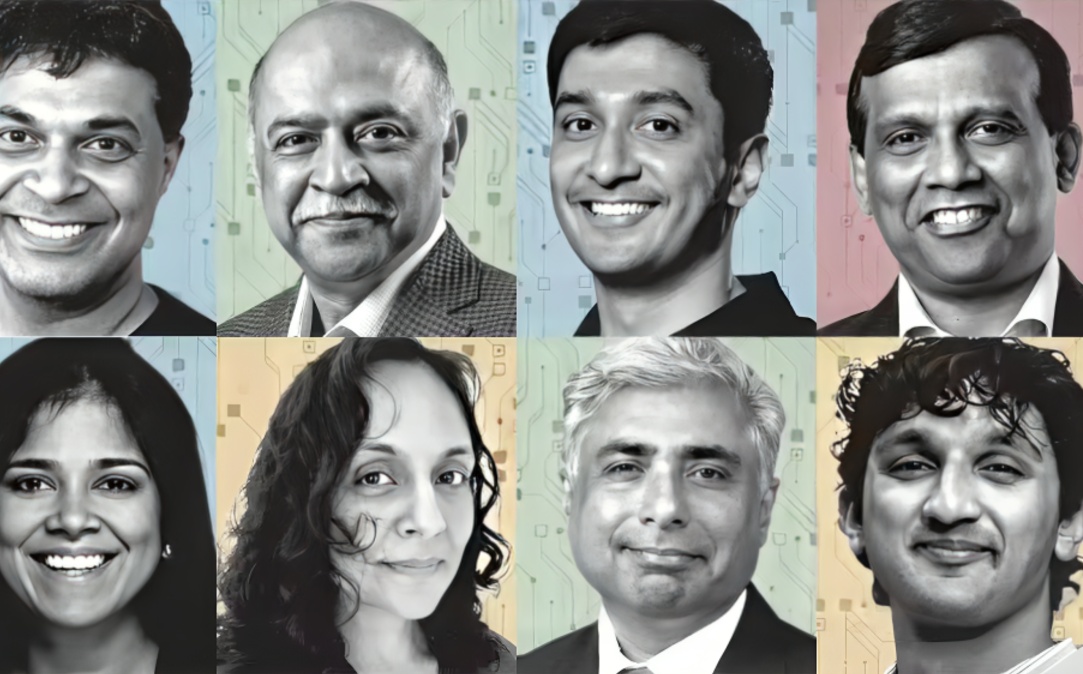
TIME has unveiled its 2026 TIME100 AI list, highlighting 100 individuals who are influencing the development and direction of artificial intelligence around the world.
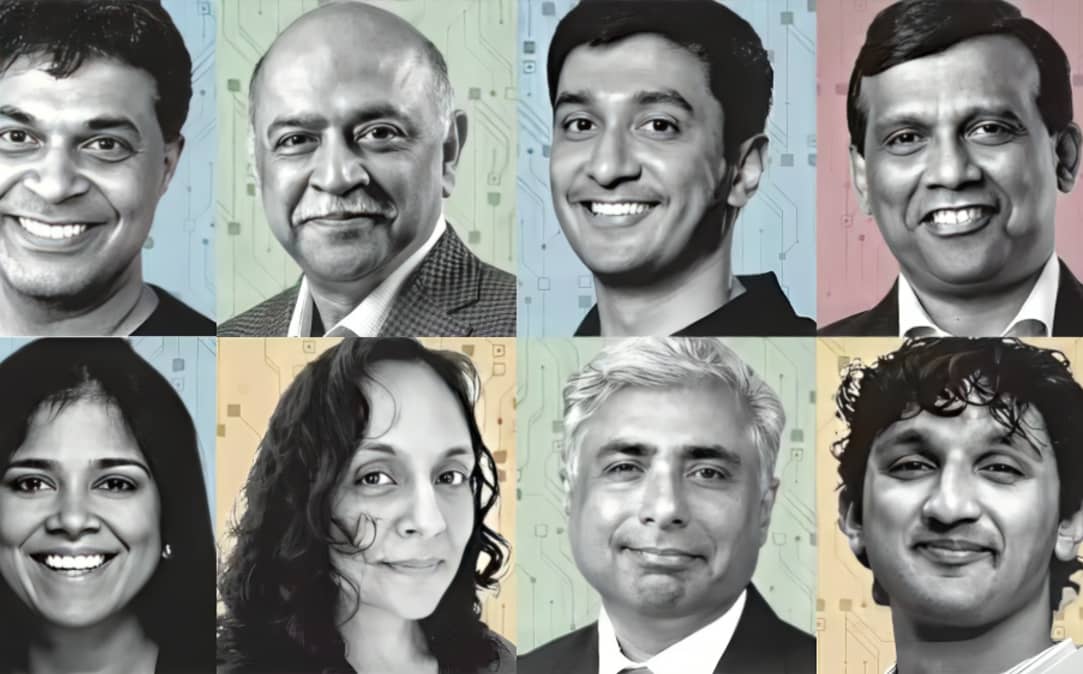
The fourth edition of TIME100 AI was published on August 27, 2026. The list is divided into four broad categories: Leaders, Innovators, Shapers and Thinkers. Among the honourees are 10 Indians and people of Indian origin whose work covers a wide range of areas within the rapidly expanding artificial intelligence industry.
The Indian and Indian-origin representation includes technology executives, AI researchers, entrepreneurs, healthcare specialists, semiconductor leaders and people working in AI policy and governance.
Among the names is Vivek Raghavan, co-founder of Bengaluru-based Sarvam AI. He has been recognised in the Innovators category for his work on developing AI systems focused on Indian languages and India's technological self-reliance.
Raghavan previously spent more than a decade working on Aadhaar-related digital infrastructure. He later worked with Pratyush Kumar on open-source AI for Indian languages at AI4Bharat, a research laboratory associated with IIT Madras. The two co-founded Sarvam AI in 2023.
Sarvam AI has been developing multilingual AI models designed for Indian users. Its work reflects a growing effort to build artificial intelligence systems that can understand India's linguistic diversity and address local requirements.
Another India-based name on the list is Utkarsh Saxena, co-founder and CEO of Adalat AI. The company works on speech and language technologies for Indian courtrooms. Its systems are aimed at addressing challenges involving transcription and case management within the judicial system.
The list also includes prominent Indian-origin technology executives working at major global companies.
Arvind Krishna, chairman and CEO of IBM, has been recognised in the Leaders category. Born in Andhra Pradesh and an IIT Kanpur graduate, Krishna has led IBM since 2020. He is among the senior technology executives influencing the development and adoption of enterprise artificial intelligence.
Arvind Raman is another Indian-origin figure featured in the Leaders category. He serves as acting head of the US Center for AI Standards and Innovation and director of the National Institute of Standards and Technology. His work places him close to discussions surrounding AI standards and technological governance in the United States.
AI research is represented by Anima Anandkumar, a professor at the California Institute of Technology. She has been recognised in the Innovators category. An IIT Madras alumna with a PhD from Cornell University, Anandkumar has also held a senior research position at Nvidia. Her work has contributed to developments in machine learning and artificial intelligence research.
Healthcare is another important area represented on the list.
Suchi Saria, founder and CEO of Bayesian Health, appears in the Innovators category. Her work focuses on applying machine learning to healthcare and clinical decision-making. AI-based systems can potentially help medical professionals identify changes in patient conditions and support clinical workflows.
The semiconductor industry is represented by Sanjay Mehrotra, chairman, president and CEO of Micron Technology. He is listed among the Innovators. Micron is a major participant in the semiconductor industry, which forms an important technological foundation for modern AI systems.
Advanced AI models require significant computing power and specialised hardware. As a result, semiconductor companies have become increasingly important to the broader artificial intelligence ecosystem.
The list also recognises individuals working on AI policy and technology governance.
Sunny Gandhi, co-executive director of Encode, appears in the Shapers category. Encode is a youth-led organisation involved in AI policy and advocacy in the United States.
Meetali Jain, executive director of Tech Justice Law, is another Shapers category honouree. Her work focuses on legal issues involving technology-related harms, including cases concerning AI systems, chatbots and minors.
Ravi Kumar S, CEO of Cognizant, has been recognised in the Thinkers category. His work is closely connected with the changing relationship between artificial intelligence, businesses and the global workforce.
As AI adoption increases across industries, companies are increasingly examining how workers can be trained and reskilled for changing roles. This makes workforce transformation an important part of the wider AI discussion.
Together, the Indian and Indian-origin names on the TIME100 AI 2026 list represent different layers of the artificial intelligence ecosystem.
Vivek Raghavan is working on Indian-language foundational AI models, while Utkarsh Saxena is applying AI to the judicial system. Arvind Krishna and Ravi Kumar S are leading major global technology companies. Sanjay Mehrotra represents the semiconductor sector, while Anima Anandkumar and Suchi Saria are contributing to AI research and healthcare.
Arvind Raman, Sunny Gandhi and Meetali Jain represent another important part of the AI landscape involving standards, public policy, advocacy and legal questions.
The diversity of these contributions demonstrates that artificial intelligence is no longer limited to the development of large language models or consumer chatbots.
AI is now influencing healthcare, semiconductor manufacturing, enterprise software, courts, public administration, research, education, employment and government policy.
The recognition of Indian and Indian-origin professionals also reflects India's growing role in the international AI ecosystem.
India has a large technology workforce, a strong academic research base and a rapidly expanding startup ecosystem. Indian companies and researchers are increasingly working on AI systems designed specifically for local languages and applications.
Vivek Raghavan's inclusion is particularly significant in this context. TIME's profile highlights his emphasis on AI sovereignty and the importance of developing Indian-language AI systems within the country.
Sarvam AI has released open-weight models and developed technology aimed at supporting multiple Indian languages. According to TIME's profile, Sarvam's vision-language model can process documents across 22 Indian languages and English.
The recognition comes as global competition in artificial intelligence continues to intensify. Technology companies, governments and research institutions are investing heavily in computing infrastructure, advanced models and AI applications.
The Indian presence on the TIME100 AI list therefore provides a snapshot of how professionals of Indian origin are contributing to different parts of this global transformation.
At the same time, the list should not be interpreted as an official ranking of countries or nationalities. TIME's methodology categorises people according to their influence and work in artificial intelligence rather than formally classifying them by nationality. The count of 10 Indian and Indian-origin names is based on independently established backgrounds.
The 2026 TIME100 AI list highlights the increasingly broad nature of artificial intelligence and the range of expertise required to develop and govern the technology.
From building multilingual AI models in India to establishing international AI standards, improving healthcare systems and developing semiconductor infrastructure, the recognised individuals are contributing to different stages of the AI ecosystem.
For India, the recognition also highlights the growing global visibility of its technology talent and AI companies.
The inclusion of Sarvam AI and Adalat AI alongside executives from IBM, Micron and Cognizant demonstrates the range of Indian and Indian-origin participation in the global AI sector.
As artificial intelligence continues to reshape industries and public policy, the contributions of researchers, entrepreneurs, engineers, executives and policymakers are expected to become increasingly important.
The TIME100 AI 2026 list provides a global snapshot of that transformation and places 10 Indian and Indian-origin professionals among the people whose work is helping shape the future of artificial intelligence.