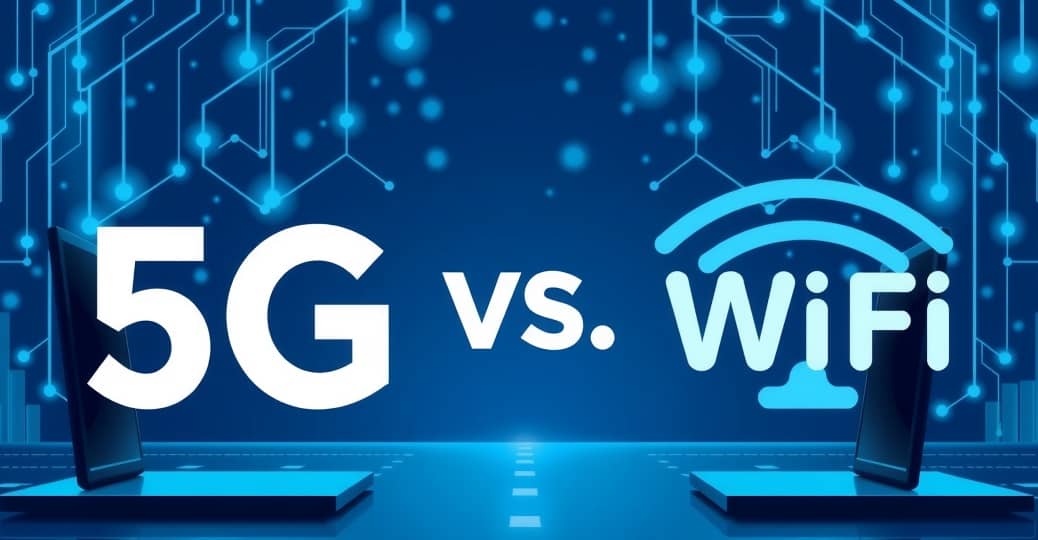
With the rapid expansion of 5G networks in India and the growing adoption of Wi-Fi Calling, users now have multiple ways to make high-quality voice calls. Both technologies provide HD voice quality, but they operate in very different ways, making it essential to understand when to use each.
5G is the fifth-generation mobile network, succeeding 4G LTE, and is available through operators like Reliance Jio, Bharti Airtel, Vodafone Idea, and BSNL. It leverages cellular towers to deliver faster data speeds, lower latency, and advanced voice technologies like Voice over New Radio (VoNR) or Voice over LTE (VoLTE). One of 5G’s key strengths is mobility: it works seamlessly while commuting, walking, or driving outdoors. In urban areas, 5G coverage is generally stable, though signal strength may drop inside buildings, lifts, or basements.
Wi-Fi Calling, or Voice over Wi-Fi (VoWiFi), differs significantly. Instead of relying on cellular towers, it routes calls through a broadband Wi-Fi connection. This allows users to make and receive calls, send messages, and maintain their mobile number even in areas with poor cellular reception. Wi-Fi Calling is particularly useful indoors, in offices, or in homes where thick walls can reduce network signal. It also saves battery compared to cellular calling and can reduce costs for international calls when using hotel or local Wi-Fi.
A simple comparison highlights key differences: 5G requires a 5G-capable device and network coverage, offers mobility, and provides reliable location tracking for emergencies. Wi-Fi Calling, on the other hand, works with compatible 4G or 5G devices, functions without a mobile signal, and is limited to Wi-Fi coverage areas. While both offer HD voice, Wi-Fi Calling’s clarity can be superior indoors, whereas 5G is better for outdoor use and data-intensive activities such as video calls or streaming.
In practice, users should switch between the two based on location and network conditions. Outdoors, on highways, or while commuting, 5G provides uninterrupted connectivity. Indoors, in basements, or in office spaces with weak mobile reception, Wi-Fi Calling ensures stable and clear voice quality. Many Indian operators, including Jio, Airtel, Vi, and BSNL, support VoWiFi at no extra cost, making it a convenient option for subscribers.
Both 5G and Wi-Fi Calling are complementary. While 5G enhances mobility and data performance, Wi-Fi Calling improves voice clarity where mobile networks fall short. By understanding their differences and usage scenarios, users in India can maximize call quality and network efficiency in 2026.