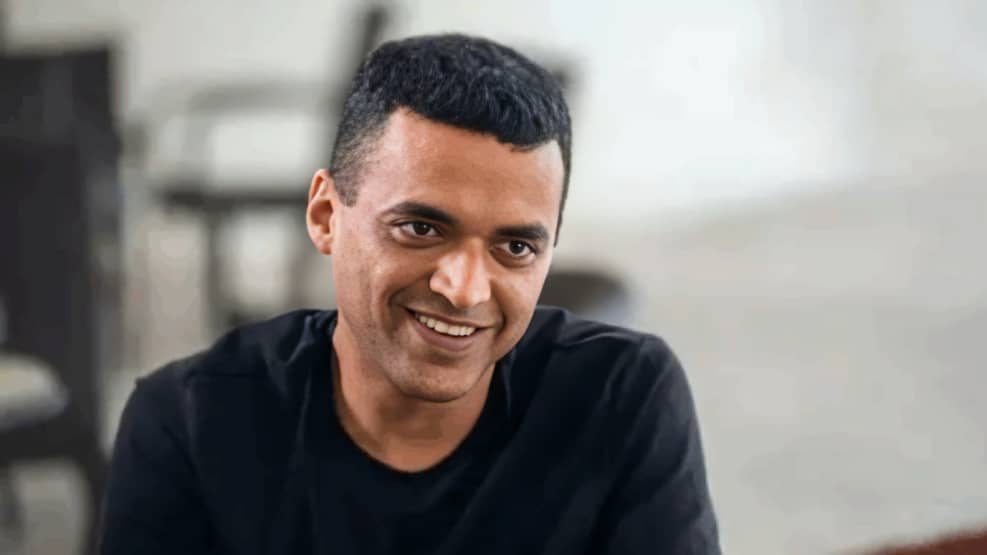

Deepinder Goyal has expanded his entrepreneurial journey into the health technology sector with the launch of a new wearable device named Temple. The device is currently in its early access phase, with only 100 units released for testing among a carefully selected group of users.
The initial rollout of Temple is aimed at individuals such as athletes, scientists and professionals who require advanced health monitoring tools. This limited release is designed to gather feedback and improve the product before a wider public launch.
Temple is positioned as a next generation wearable focused on health tracking and biometric analysis. While full technical specifications have not been publicly detailed, the device is expected to monitor key health indicators and provide real time insights to users.
The move marks a significant diversification for Deepinder Goyal, who is widely known for founding Zomato. His entry into health technology reflects the growing interest among technology entrepreneurs in wearable devices and digital health solutions.
Wearable health technology has become an important segment in the global tech industry, with increasing demand for devices that can track fitness, wellness and physiological data. Products in this category are often used for preventive healthcare, performance optimization and lifestyle monitoring.
The early access strategy adopted for Temple allows the development team to test the device in real world conditions. Feedback from the selected users will play a crucial role in refining the product’s features, accuracy and usability.
By restricting access to a small group, the company aims to ensure controlled testing and high quality data collection. This approach is commonly used in technology development to identify potential issues and improve product performance before large scale release.
The involvement of athletes and scientists suggests that the device may be designed for high precision data tracking. Such users typically require reliable and advanced metrics for training, research and performance analysis.
Although detailed information about the device’s features is still limited, the focus appears to be on combining health monitoring with intelligent data interpretation. This could include tracking physical activity, sleep patterns and other biometric signals.
The launch of Temple highlights the increasing convergence of technology and healthcare. Wearable devices are becoming more sophisticated, offering users deeper insights into their health and lifestyle habits.
Industry observers note that early stage testing is critical for products in this category, as accuracy and reliability are essential for user trust. The feedback from the current 100 unit trial will likely shape the final version of the device.
As the project develops, more details are expected to be revealed regarding pricing, availability and technical capabilities. A wider commercial launch may follow after the completion of the early access phase.
Overall, the introduction of Temple marks a new direction for Deepinder Goyal, expanding his focus from food technology into the growing field of health and wearable innovation.