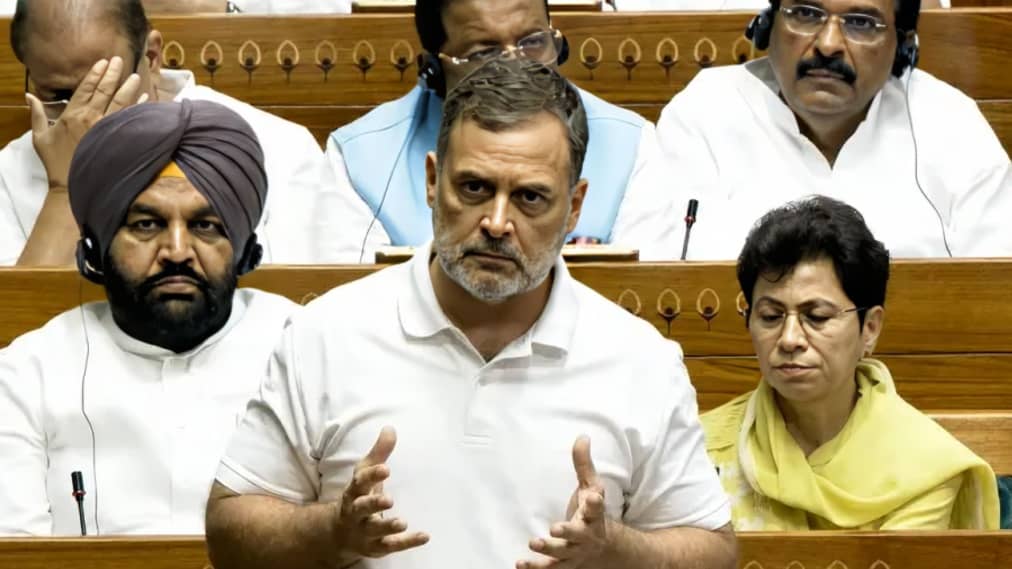
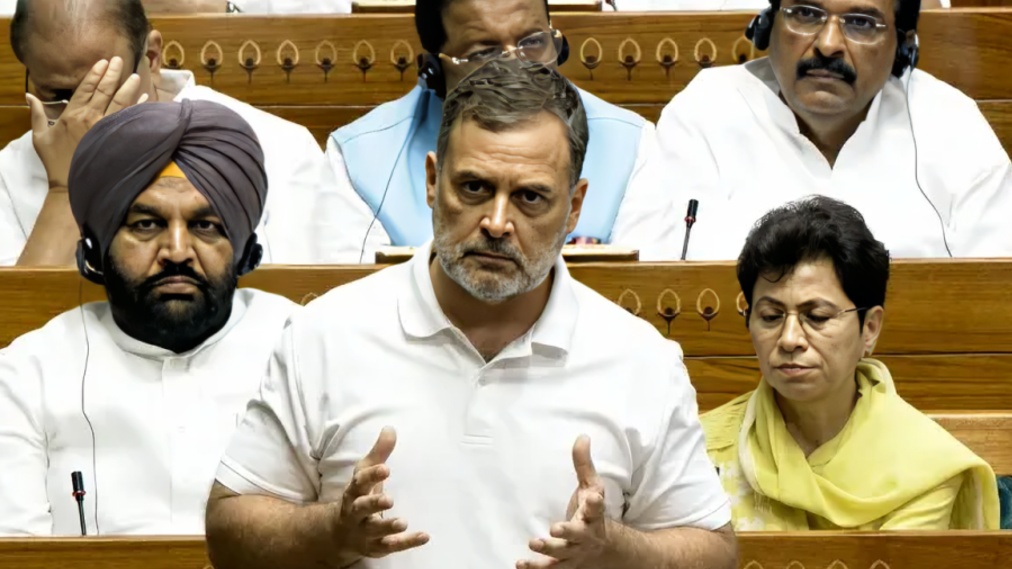
Union Home Minister Amit Shah has criticised Leader of the Opposition in the Lok Sabha Rahul Gandhi over his allegations of vote theft and alleged collusion between the Election Commission of India and the Bharatiya Janata Party. Shah accused the Congress of using the issue to explain its electoral defeats and alleged that Gandhi was attempting to protect the voting rights of infiltrators.
Shah made the remarks in New Delhi on Thursday, October 22, 2026, while addressing an event linked to the launch of projects worth Rs 8,941 crore aimed at improving the condition of the Yamuna River. The programme also provided a platform for the senior BJP leader to criticise the Congress and the Aam Aadmi Party over their political positions and governance records.
The remarks have added to the ongoing political dispute over electoral rolls, the role of the Election Commission and opposition allegations concerning the fairness of elections in India.
Shah Rejects Congress’s Vote Theft Claims
During his address, Shah said the BJP’s repeated electoral victories had prompted opposition parties to raise allegations of vote theft. He argued that the Congress and its allies were using the issue to explain why they had lost elections in several states.
Shah directly addressed Rahul Gandhi, alleging that his repeated references to vote theft were connected to a desire to protect the votes of infiltrators. The allegation formed a central part of Shah’s criticism of the Congress leader.
The Home Minister also questioned the suggestion that the BJP’s electoral success was primarily linked to Narendra Modi becoming Prime Minister in 2014. He argued that the BJP had won elections in several states even before Modi assumed the office, while the Congress had experienced prolonged periods out of power in various parts of the country.
Shah cited the Congress’s electoral record to challenge the opposition’s argument that alleged irregularities were responsible for its defeats. He maintained that electoral outcomes reflected public choices and said political parties should not attribute losses to vote theft without substantiating their allegations.
The remarks represent the BJP’s position in the ongoing dispute. Rahul Gandhi and other opposition leaders have raised concerns about electoral processes and alleged irregularities, while the BJP has rejected those accusations. The competing claims should be assessed separately from any findings made by election authorities or courts.
Dispute Over the Election Commission
The political disagreement has focused on allegations made by opposition leaders about the conduct of elections and the functioning of the Election Commission of India. Rahul Gandhi has previously questioned electoral processes and alleged that the BJP benefited from irregularities in voter lists and election administration.
The BJP has rejected the allegations and argued that opposition parties are attempting to discredit election results after suffering defeats. Shah’s latest remarks continued that criticism, with the Home Minister accusing the Congress of turning vote theft allegations into a political explanation for its electoral setbacks.
The Election Commission is the constitutional body responsible for administering elections to Parliament and state legislatures, among other electoral responsibilities. Allegations involving voter registration, electoral rolls or election procedures require examination through the relevant legal and institutional processes.
Political statements by either side do not, by themselves, establish whether electoral misconduct has occurred. Any specific allegation must be evaluated using supporting evidence and the findings of the competent authorities.
Shah Questions Congress’s Electoral Record
Shah also referred to the Congress’s long periods outside power in several states. He questioned why the party’s electoral difficulties should be attributed to alleged vote theft rather than considered in the context of its political performance and public support.
He defended the BJP’s electoral record and rejected suggestions that the party’s victories were the result of improper practices. Shah also responded to criticism about his confidence in predicting future electoral outcomes, arguing that his political assessments were based on his experience and connection with the country.
In another part of his address, Shah criticised opposition protests and demonstrations. He said political parties could not overturn the public mandate through protests or pressure tactics, arguing that electoral victories had to be secured through the democratic process.
His comments reflect the continuing confrontation between the ruling BJP and the Congress-led opposition over election results, institutional accountability and political legitimacy.
AAP Also Comes Under Shah’s Criticism
Shah also targeted the Aam Aadmi Party, led nationally by Arvind Kejriwal, over its governance record in Delhi and Punjab. His remarks broadened the address beyond the dispute with Rahul Gandhi and included criticism of opposition parties governing or seeking power in different states.
The BJP and AAP have frequently clashed over governance, public services and political accountability. Shah’s criticism formed part of the BJP’s wider argument that opposition parties should focus on their performance rather than use allegations of electoral wrongdoing to challenge the ruling party.
The claims made during political speeches remain the views of the leaders delivering them. A balanced assessment of governance and electoral conduct requires reference to verifiable records, official findings and responses from the parties concerned.
Rs 8,941 Crore Package for Yamuna Projects
The political remarks were delivered during an event in Delhi associated with a package of water and sewerage projects worth approximately Rs 8,941 crore. The projects are intended to improve the Yamuna River’s condition by expanding sewage treatment capacity, strengthening sewer networks and reducing the discharge of untreated wastewater.
According to reports on the programme, the package includes 43 projects under the Delhi Jal Board. Ten projects worth around Rs 2,827 crore were scheduled for inauguration, while foundation stones were to be laid for 33 additional projects valued at approximately Rs 6,114 crore.
The planned infrastructure includes a new sewage treatment plant at Okhla, upgrades to existing treatment facilities, decentralised sewage treatment plants, pumping stations and an expanded sewer network. The package also includes a new water treatment facility at Chandrawal.
Delhi has faced persistent concerns about pollution in the Yamuna, particularly along the stretch flowing through the national capital. Untreated sewage, waste discharge and inadequate treatment infrastructure have been identified as major contributors to the problem.
The projects aim to address some of these infrastructure gaps. Their long-term impact will depend on implementation, operational performance and the effective prevention of untreated sewage entering the river.
Political Debate Continues
Shah’s remarks underline the continuing political tension between the BJP and the Congress over electoral fairness and the legitimacy of election results. The BJP has accused opposition parties of using vote theft allegations to explain their defeats, while opposition leaders have called for scrutiny of electoral procedures.
The wider debate involves questions about voter registration, institutional independence and public confidence in elections. Resolving specific allegations requires evidence-based investigation and appropriate institutional review rather than political accusations alone.
Meanwhile, the Yamuna projects announced at the Delhi event represent a separate development initiative focused on sewage treatment and river pollution. The projects will be judged by their implementation and measurable results.
As political parties continue to exchange accusations, the key distinction remains between claims made by political leaders and facts established through official records. Shah’s statements reflect the BJP’s position on the controversy, while the Congress’s allegations remain part of the broader political dispute over electoral processes in India.