Jairam Ramesh Criticises MGNREGA Replacement, Calls VB-G RAM G Act a ‘Surgical Strike’ on Rural Safety Net
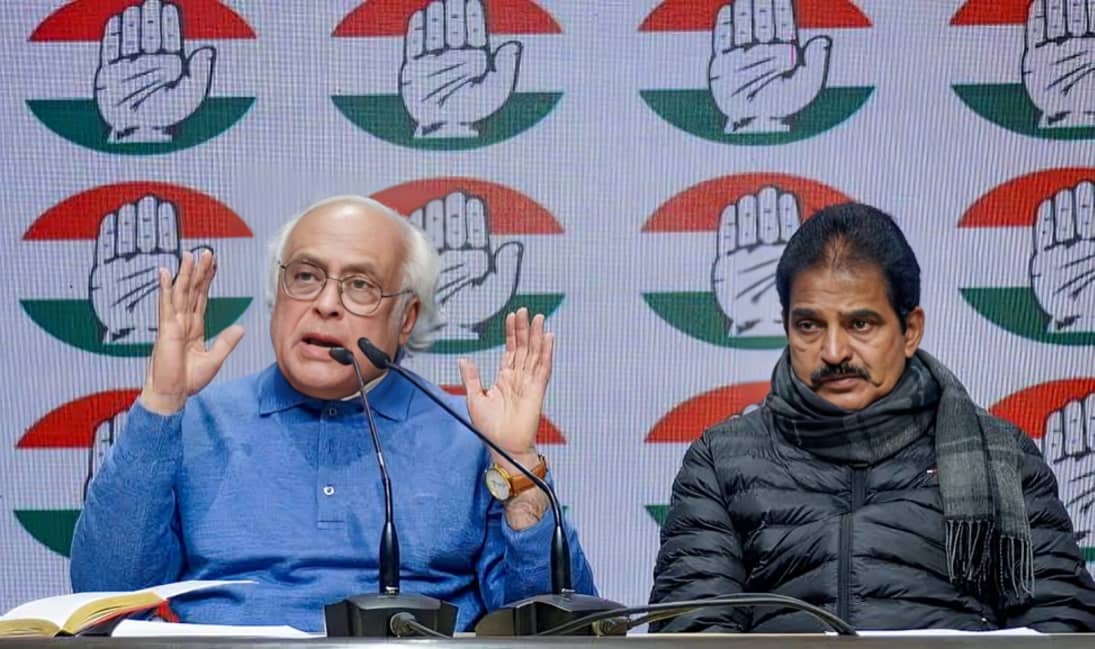
New Delhi, October 20, 2026: Congress leader Jairam Ramesh has criticised the replacement of the Mahatma Gandhi National Rural Employment Guarantee Act (MGNREGA) with the Viksit Bharat–Guarantee for Rozgar and Ajeevika Mission (Gramin) Act, commonly known as the VB-G RAM G Act. He described the change as a “surgical strike” on the social safety net that has supported rural households during periods of economic hardship.
In a post on social media platform X on Tuesday, Ramesh referred to drought conditions in Beed and other districts of Maharashtra. He said the regions were facing their worst drought in a decade and argued that MGNREGA had provided an important source of employment support to rural workers during periods of severe distress.
Ramesh alleged that replacing the previous employment guarantee framework had weakened this protection. His remarks also referred to a field-level investigation that reportedly found a gap between official employment records and conditions at certain work sites in drought-affected Beed district. According to reports cited by the Congress leader, workers were listed as employed even though people were reportedly not found at five inspected sites.
The allegations have added to the political debate over the implementation of the new rural employment legislation. Ramesh also raised concerns about alleged irregularities in attendance records and wage payments, referring to reports of similar practices in Uttar Pradesh and other states. These claims form part of the Congress party’s criticism of the new framework and should be distinguished from independently established findings.
What has changed under the new law?
The VB-G RAM G Act, 2025, replaced MGNREGA with effect from July 1, 2026, following a notification issued by the Union government. MGNREGA, introduced in 2005, had provided a statutory guarantee of up to 100 days of wage employment per financial year to eligible rural households whose adult members volunteered for unskilled manual work.
Under the new legislation, the statutory employment guarantee has been increased to 125 days per financial year for eligible rural households. The government has said the framework is intended to strengthen rural livelihoods, improve infrastructure and support sustainable development in villages.
According to the Ministry of Rural Development, the Centre allocated ₹95,692.31 crore for the programme in the 2026–27 financial year. The government has also stated that the total programme outlay, including the expected contribution from state governments, is estimated to exceed ₹1.51 lakh crore.
The ministry has said that wages under the new framework will continue to be transferred directly into workers’ bank or post office accounts. It has also stated that wages are to be paid weekly or within 15 days after the closure of the relevant muster roll, with delay compensation available under the law where applicable.
Concerns over rural employment and implementation
The debate is not limited to the number of guaranteed employment days. Opposition leaders have raised concerns about the scheme’s implementation, including the role of technology, the distribution of financial responsibilities between the Centre and states, and the effect of administrative changes on workers and gram panchayats.
The allegations cited by Ramesh highlight a key issue for rural employment programmes: whether official records accurately reflect the work carried out on the ground and whether wages reach the people entitled to receive them. In drought-affected areas, access to employment and timely wage payments can be particularly important for households that depend on daily labour for income.
However, the allegations of false attendance entries and wage diversion require verification through relevant records, investigations and responses from the authorities concerned. Ramesh’s statements represent the Congress party’s position on the issue; they should not, by themselves, be treated as proof of wrongdoing by any particular individual or group.
Government’s position
The Union government has presented the VB-G RAM G Act as a reform intended to expand employment guarantees and link rural work more closely with infrastructure creation and long-term development. Its stated provisions include a 125-day employment guarantee, direct benefit transfers for wages, and arrangements to carry forward eligible ongoing works from the previous system.
The Ministry of Rural Development has also said existing, e-KYC-verified MGNREGA job cards would remain valid until new rural employment guarantee cards are issued. It has stated that workers should not be denied employment solely because their e-KYC process remains pending.
These assurances provide the government’s stated position, while the concerns raised by the Opposition focus on how effectively the new system is functioning in practice. Assessing the impact of the transition will depend on implementation, access to work, timely payment of wages and the resolution of any verified irregularities.
Ramesh’s criticism has therefore brought renewed attention to the future of rural employment support, particularly in regions facing drought and livelihood insecurity. The central question is whether the new framework will deliver its promised employment opportunities and wage protection to eligible rural households while addressing concerns about transparency and accountability.
As the new system continues to operate, verified information on work provided, wages paid and complaints investigated will be important in assessing its performance. The debate over the replacement of MGNREGA is likely to remain a significant issue in discussions about rural livelihoods and welfare policy in India.