Rajnath Singh Calls for No Double Standards on Terrorism at SCO Meeting in Tajikistan
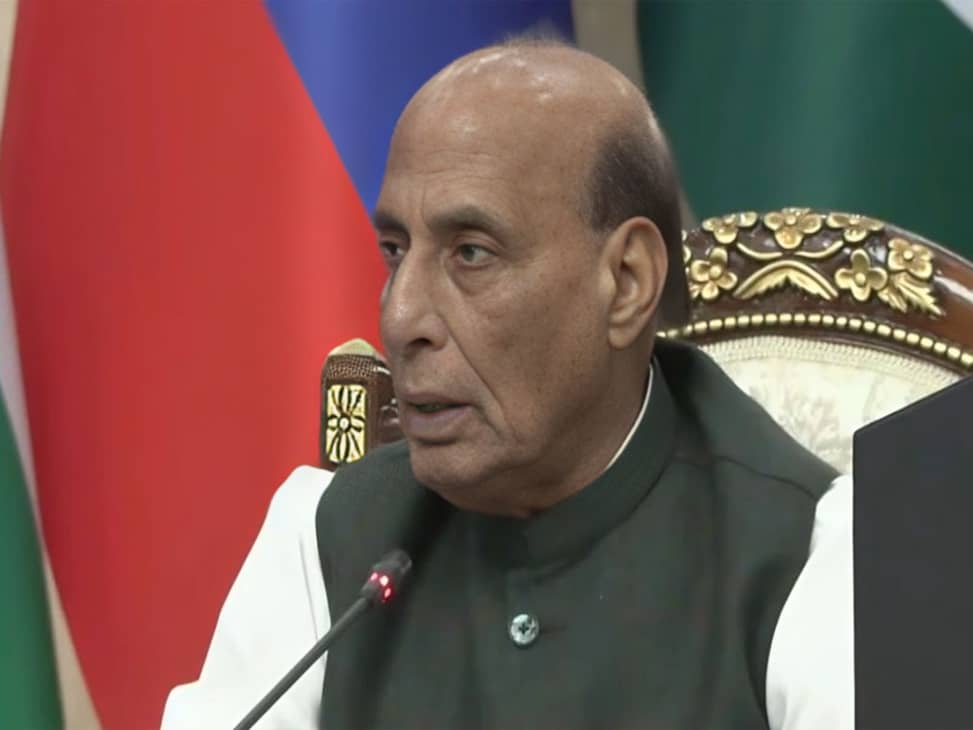
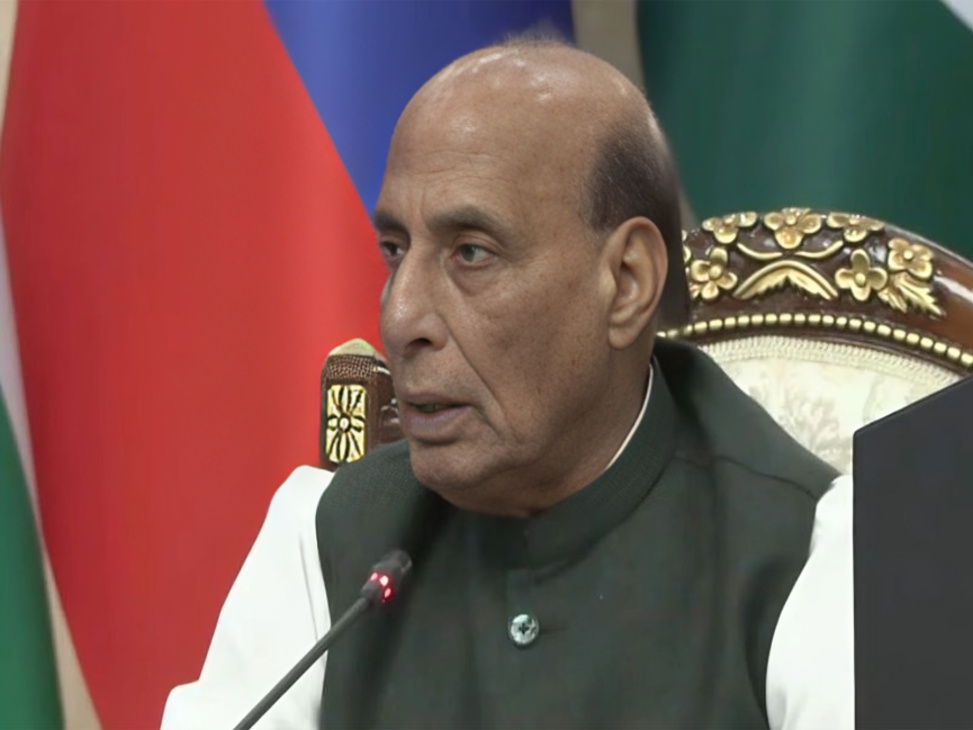
Dushanbe, October 20: Indian Defence Minister Rajnath Singh called for a consistent international approach to combating terrorism while addressing representatives of member countries at the Shanghai Cooperation Organisation (SCO) Council of Heads of Government meeting in Dushanbe, Tajikistan, on Tuesday. Pakistan Deputy Prime Minister Ishaq Dar was present during the address.
Singh said terrorism remains a major threat to peace and development, with consequences that extend beyond the loss of innocent lives. He highlighted its impact on investment, commerce, social stability and opportunities for young people.
The minister stressed that terrorism cannot be justified under any circumstances. He also called for a united response against individuals and groups that finance, support or provide safe havens to terrorists.
Rajnath Singh highlights the wider impact of terrorism
Addressing the gathering, Singh explained that terrorism affects societies in several ways. Apart from causing deaths and injuries, terrorist activity can undermine confidence in public safety, disrupt economic activity and discourage investment.
He also drew attention to the social consequences of radicalisation. According to his remarks, the spread of extremist ideas can affect communities and deprive young people of opportunities for education, employment and development.
Singh’s message focused on the need to treat terrorism as a common security challenge rather than an issue that countries address selectively. His call for consistent standards reflected India’s position that terrorist acts and support for terrorist organisations should be opposed regardless of the circumstances.
The presence of Pakistan Deputy Prime Minister Ishaq Dar during the address drew attention to the remarks, given the longstanding tensions between India and Pakistan over cross-border terrorism. However, Singh’s statement at the multilateral meeting was framed as a broader appeal for cooperation against terrorism and those who enable it.
Call for a united international response
Singh urged SCO member countries to work together against terrorism and avoid applying different standards in dealing with those responsible for terrorist activity or those who support them.
The call places emphasis on cooperation among governments, intelligence and law-enforcement agencies, and other relevant institutions. International cooperation can be important in addressing the movement of funds, recruitment networks, extremist propaganda and the provision of shelter to terrorist groups.
The minister’s position also underscored the importance of accountability. A coordinated response, he argued, should address not only those who carry out attacks but also the networks and individuals that facilitate terrorist activity.
For countries participating in the SCO, counterterrorism remains a significant area of regional security cooperation. The organisation brings together countries across Eurasia and provides a forum for discussions on security, economic relations and other shared concerns.
SCO meeting in Dushanbe
The meeting in Dushanbe was the 25th meeting of the SCO Council of Heads of Government, held on October 19 and 20, 2026. India was represented by Rajnath Singh, according to the Ministry of Defence.
The official agenda included strengthening cooperation among member states in trade, economic development, investment, connectivity, innovation and cultural and humanitarian exchanges. The meeting also provided an opportunity for participating countries to review ongoing initiatives and discuss the organisation’s institutional and financial matters.
Although the agenda covered a broad range of regional issues, terrorism and security remain important concerns for India and other member countries. Singh’s remarks brought attention to the relationship between security, economic stability and social development.
India has repeatedly argued in SCO forums that terrorism must be opposed in all its forms and that countries should cooperate to prevent terrorist organisations from receiving support, funding or safe havens.
India’s position on terrorism
India has consistently called for collective action against terrorism at international forums. Its position is that peace, economic growth and regional stability cannot be sustained if terrorist organisations are allowed to operate or receive support.
At previous SCO meetings, Indian representatives have also called for stronger cooperation against terrorism, extremism and radicalisation. Such efforts include information-sharing, security coordination and action against networks that facilitate terrorist activities.
Singh’s latest remarks continued this emphasis on a common approach. His appeal for there to be no double standards highlighted the importance India attaches to consistent responses by all countries, irrespective of political relationships or regional differences.
At the same time, practical progress depends on cooperation among member states and on the implementation of agreed measures. Public statements at multilateral meetings are one part of that process; the effectiveness of any response also depends on concrete action by governments and relevant agencies.
Security and economic development
Singh’s remarks connected counterterrorism with economic and social priorities. Terrorist attacks and instability can disrupt business operations, affect trade routes, discourage investment and place additional pressure on public institutions. Communities affected by violence may also face long-term social and economic challenges.
By highlighting these consequences, the minister presented counterterrorism as an issue that extends beyond defence and law enforcement. It is also linked to the ability of societies to provide stable conditions for businesses, education and employment.
The address in Dushanbe reinforced India’s call for a coordinated international response to terrorism. Singh emphasised that no circumstances can justify terrorist violence and urged countries to take a consistent position against those who carry out, finance or support such activities.
The meeting brought together representatives of SCO member countries to discuss regional cooperation and shared priorities. Singh’s statement placed the fight against terrorism among the issues requiring sustained international attention and cooperation.