The Congress has raised concerns over a recent Supreme Court judgment concerning the legal definition of an industry, arguing that the ruling could create uncertainty in future labour disputes and potentially weaken safeguards available to workers.
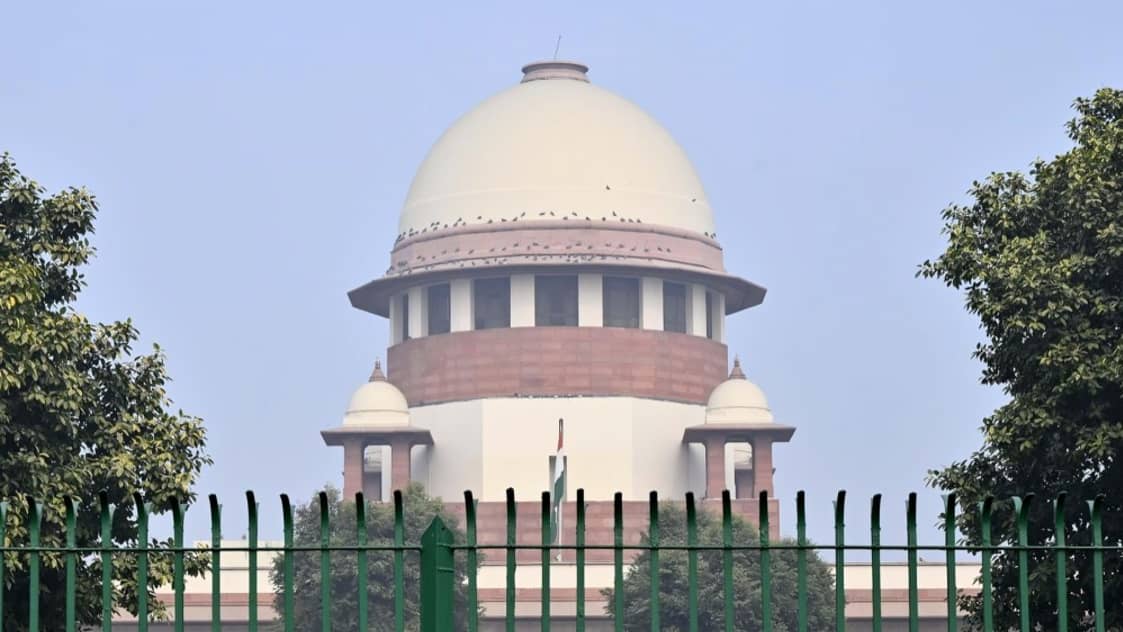
The Supreme Court delivered its judgment on August 20 in the case of State of Uttar Pradesh versus Jai Bir Singh. A nine judge Constitution Bench examined the interpretation of the term industry and revisited the legal principles associated with the Triple Test established by the Supreme Court in its landmark 1978 judgment in Bangalore Water Supply and Sewerage Board versus A Rajappa.
The definition of an industry has significant implications for labour law because it helps determine which establishments and activities fall within the scope of statutory protections available to workers. The interpretation can therefore influence the rights and remedies available to employees involved in industrial disputes.
The 1978 Bangalore Water Supply judgment had established a broad framework commonly referred to as the Triple Test. Under this framework, an activity was examined based on systematic activity, cooperation between employers and employees, and the production or distribution of goods or services intended to satisfy human wants and needs.
The latest Supreme Court judgment revisited this framework in the context of changes in labour legislation. The Court clarified that its new interpretation would not disturb concluded or pending proceedings governed by the earlier Industrial Disputes Act. It also stated that the earlier judicial interpretation would not serve as the guiding precedent for interpreting the Industrial Relations Code, 2020.
The Congress has expressed concern about the implications of this change. Senior Congress leader Jairam Ramesh said the judgment could create what he described as an interpretive gap for future labour disputes. According to him, uncertainty could emerge before Labour Courts and Industrial Tribunals when they deal with questions concerning the scope of the term industry.
Ramesh also argued that the change could have implications for worker protections because the legal definition of an industry determines whether particular establishments and activities come within the framework of labour legislation. He warned that a narrower interpretation could potentially reduce the number of workers and establishments covered by certain safeguards.
The Supreme Court’s decision, however, needs to be understood in the context of the transition from the earlier Industrial Disputes Act to the Industrial Relations Code. The Court has specifically clarified that its latest interpretation does not reopen concluded cases or alter pending proceedings under the earlier legal framework.
This distinction is important because workers and employers involved in existing disputes will continue to be governed by the applicable legal provisions and judicial principles relevant to those proceedings. The controversy primarily concerns how the concept of industry will be understood in future cases under the current legal framework.
The judgment has therefore attracted attention from labour organisations, political parties and legal experts because the definition has historically played an important role in determining the reach of industrial relations legislation.
The original 1978 judgment was considered significant because it adopted a wide interpretation of the term industry. That interpretation brought a broad range of activities and establishments within the scope of labour law, subject to the specific statutory exclusions and conditions applicable at the time.
The latest judgment does not simply erase the earlier ruling from legal history. Instead, it addresses how the earlier interpretation should operate in light of subsequent legislative changes. The Supreme Court’s clarification regarding pending and concluded cases is consequently an important part of the judgment.
The Congress, however, has focused on the possible consequences for future workers. Ramesh said that uncertainty over the interpretation of industry could result in additional litigation and prolonged disputes before Labour Courts and Industrial Tribunals.
The party has also linked the issue to its broader criticism of the Industrial Relations Code, 2020. Congress has argued that changes in labour legislation should not reduce protections available to workers and has raised concerns about the balance between industrial flexibility and employee safeguards.
From the employers’ perspective, greater clarity in the interpretation of labour laws could potentially help reduce uncertainty over regulatory obligations. However, any change in the scope of labour protections can have significant consequences for workers, particularly in sectors where the classification of an establishment determines access to statutory remedies.
The Supreme Court judgment therefore represents an important development in Indian labour jurisprudence. Its practical effect will depend on how courts, tribunals, employers and workers apply the new interpretation in future disputes.
The debate also highlights the changing nature of employment and industrial relations in India. The structure of workplaces has evolved considerably since the 1978 judgment, with the economy now including a wider range of service sector activities, technology driven businesses and new forms of employment.
The legal system is consequently required to interpret labour legislation in the context of both established principles and newer employment structures. The Supreme Court’s latest judgment attempts to address this legal question while also clarifying the relationship between the earlier Industrial Disputes Act framework and the current Industrial Relations Code.
For workers, the immediate clarification that pending and concluded cases under the old law will not be affected provides an important degree of legal certainty. However, questions remain about how future cases will be decided under the new legal framework.
The Congress has said that the government and policymakers must ensure that changes in labour law do not result in the weakening of essential worker protections. The party is expected to continue raising the issue as the implications of the Supreme Court judgment become clearer.
The ruling has thus opened a fresh debate about the balance between legal certainty, industrial relations and worker protection in India. While the Supreme Court has provided important clarification about the scope of its ruling, the practical impact of the new interpretation will become clearer through future cases and decisions by Labour Courts and Industrial Tribunals.