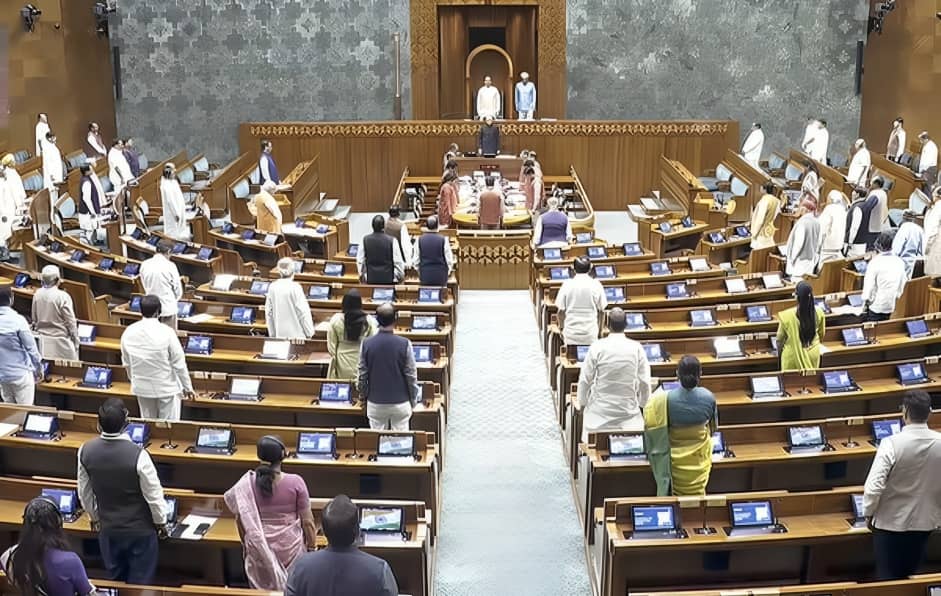
The debate over delimitation in India has intensified as Parliament takes up discussions on the Constitution Amendment Bill and the Delimitation Bill 2026. The government is expected to present a statement clarifying that the proposed exercise for redrawing Lok Sabha constituencies will not depend solely on the 2011 Census for seat allocation.
Delimitation is the process through which the boundaries of parliamentary and assembly constituencies are redrawn to reflect changes in population. It is a constitutional requirement intended to ensure that each constituency represents a roughly equal number of people. However, the process has become a subject of political debate due to its potential impact on the balance of representation among states.
Concerns have been raised by several states, particularly in southern India, that relying exclusively on the 2011 Census could disadvantage regions that have successfully controlled population growth. Leaders from these states argue that such an approach could reduce their relative share of seats in the Lok Sabha, thereby affecting their influence in national decision making.
In response to these concerns, the government is expected to clarify that multiple factors may be considered in the delimitation process. While population remains a key criterion, officials have indicated that the final framework will aim to balance fairness, representation, and federal principles. The statement to be tabled in Parliament is likely to address questions about how seat allocation will be determined and whether alternative formulas will be used.
The discussions are taking place alongside the consideration of the Constitution Amendment Bill, which is expected to provide the legal basis for changes in the number of seats and the delimitation process. The Delimitation Bill 2026 is also likely to outline the procedures and guidelines for carrying out the exercise.
Political parties have expressed varying views on the issue. While there is broad agreement on the need for periodic delimitation, disagreements remain over the criteria and timing of the exercise. Some opposition parties have called for greater transparency and consultation with states before finalising any decisions.
Experts note that delimitation has historically been a complex process in India, requiring careful consideration of demographic data, regional diversity, and political balance. The last major delimitation exercise was carried out based on earlier census data, and the upcoming exercise is expected to be one of the most significant in recent years.
The debate has also been linked to other proposed reforms, including the implementation of women’s reservation in legislative bodies. Some leaders have raised concerns about introducing multiple changes simultaneously without a clear understanding of their combined impact on representation.
As Parliament continues its discussions, the government’s clarification is expected to play a crucial role in addressing concerns and shaping the direction of the delimitation process. The outcome of these debates will have long term implications for the structure of the Lok Sabha and the distribution of political power among states.
The delimitation exercise remains a key issue in India’s evolving political landscape, highlighting the challenges of balancing population based representation with regional equity and federal stability.