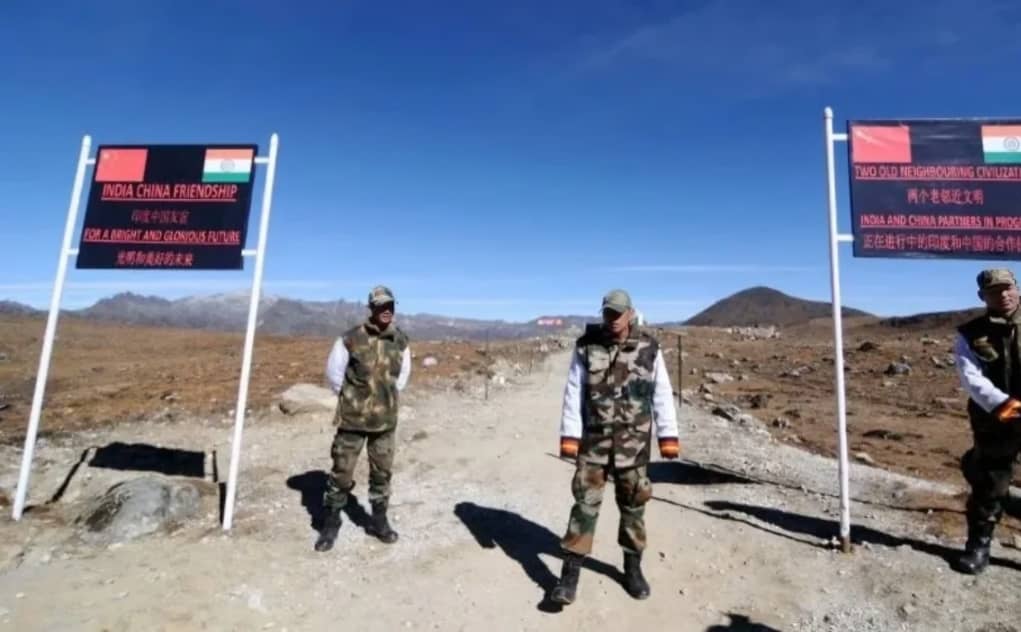
The Indo-Tibetan Border Police has raised a specialised combat unit called the Shaurya commandos to strengthen its operational preparedness along the India-China border. ITBP Director General Shatrujeet Singh Kapur said the newly formed unit had demonstrated its capabilities during face-offs with Chinese People's Liberation Army troops at multiple locations along the Arunachal Pradesh border.
The remarks highlight continuing challenges along the Line of Actual Control, the effective boundary between India and China. They also underline India's efforts to improve the readiness of its border forces through specialised training, modern equipment and improved infrastructure.
Kapur said the Shaurya commandos would be deployed across the ITBP's border battalions. The initiative is intended to strengthen the force's ability to respond to confrontations and operate in demanding high-altitude terrain.
The development comes as the ITBP expands its modernisation programme to address changing security requirements along the Himalayan frontier.
Specialised Commandos for High-Altitude Operations
The Shaurya commandos have been developed to strengthen the ITBP's capabilities in mountain combat and challenging border environments. The force operates in some of the most difficult terrain in the country, where high altitude, extreme cold and limited access can make routine duties particularly demanding.
The commandos are intended to provide specialised capabilities that complement the ITBP's regular border security responsibilities. Their planned deployment across border battalions is expected to make this specialised capability available to a wider range of units.
According to reports quoting the ITBP chief, the new teams played a role during face-offs with Chinese troops at several locations in Arunachal Pradesh. The remarks indicate that the force is preparing for situations in which patrols from the two countries encounter one another in areas where their perceptions of the boundary differ.
The ITBP works alongside other Indian security and military organisations in safeguarding the border. Specialised training and improved coordination are important because personnel may have to operate in remote locations with difficult weather conditions and limited infrastructure.
Face-Offs Along the Arunachal Pradesh Border
Kapur's remarks indicate that face-offs between Indian and Chinese troops have continued at multiple locations along the Arunachal Pradesh sector. These developments are significant because border tensions can persist even while diplomatic and military discussions continue between the two countries.
The India-China boundary has not been fully demarcated, and differing perceptions of the Line of Actual Control can result in patrols encountering one another in disputed areas. Such situations are generally managed through established communication channels and border protocols.
Recent reports have highlighted incidents in the Taksing area of Arunachal Pradesh, including encounters involving patrol teams. Military-level meetings have also taken place as part of efforts to address concerns and manage local tensions.
The ITBP chief's public remarks bring renewed attention to the security challenges facing personnel deployed along the eastern sector of the border. However, the existence of face-offs does not by itself establish that a wider armed conflict is taking place.
India and China have continued to use diplomatic and military channels to address border-related concerns. The situation remains important for both countries because stability along the frontier influences their broader bilateral relationship.
Modernisation and New Warfare Technologies
The creation of the Shaurya commandos forms part of a wider effort to modernise the ITBP. The force is placing greater emphasis on technologies and training methods that can support operations in difficult terrain and respond to changes in modern warfare.
One of the major areas of focus is the use of drones. These systems can support surveillance, reconnaissance and situational awareness in remote mountainous regions. Counter-drone capabilities are also increasingly relevant as unmanned systems become more widely used in military and security operations.
Reports on Kapur's remarks state that the ITBP has established drone platoons in its border units. The force is also working to improve personnel training and equipment to meet emerging operational requirements.
Another priority is improving infrastructure at forward locations. The ITBP is developing underground shelters and other facilities along the border. Such infrastructure can help protect personnel and improve the resilience of border posts under difficult security and weather conditions.
Modernisation also includes attention to weapons, vehicles, communications and the living conditions of personnel deployed at high altitude. These improvements are important because equipment must remain reliable in areas where temperatures can fall well below freezing and where access to maintenance and supplies may be difficult.
Training for Future Border Challenges
Specialised training is another key part of the ITBP's preparedness plans. Reports indicate that the force has introduced a training programme known as the Strike course to improve its ability to respond to serious confrontations, including situations resembling the physical clashes witnessed at Galwan in June 2020.
The Galwan Valley clash resulted in the deaths of Indian soldiers and marked a serious deterioration in India-China border relations. The incident highlighted the risks associated with close encounters between patrols in disputed areas and the importance of discipline, preparedness and established protocols.
The ITBP is seeking to improve the ability of its personnel to respond to such situations through structured training and specialised capabilities. According to reports, the force intends to train its personnel under the new programme by the end of 2027.
Training for high-altitude duties requires physical fitness, mountaineering skills, familiarity with local conditions and the ability to function effectively in extreme weather. These requirements make specialised preparation essential for personnel deployed along the Himalayan frontier.
The development of the Shaurya commandos is one part of this broader effort to improve readiness. The force's modernisation programme also reflects the need to adapt to new technologies and evolving security challenges.
The ITBP's Role Along the Line of Actual Control
The Indo-Tibetan Border Police was established on October 24, 1962, following the India-China conflict that year. It is a Central Armed Police Force under the Union Ministry of Home Affairs and is responsible for guarding India's borders with China in coordination with other security and military agencies.
The ITBP monitors approximately 3,488 kilometres of the India-China border, extending from the Karakoram region in Ladakh to the eastern Himalayan areas of Arunachal Pradesh. Many of its border outposts are located at altitudes ranging from around 9,000 to 18,800 feet.
Personnel must deal with steep mountain terrain, severe cold, limited oxygen and difficult logistical conditions. These factors make the ITBP's duties different from conventional policing and require specialised operational skills.
The force also conducts mountaineering, skiing, rescue and disaster-response operations. Its responsibilities therefore extend beyond routine border observation to include supporting emergency operations in remote Himalayan areas.
What the Development Means for Border Security
The establishment of the Shaurya commandos reflects India's continuing efforts to strengthen preparedness along the Line of Actual Control. Their planned deployment across border battalions, combined with improvements in training, equipment, drone capabilities and infrastructure, is intended to make the force better equipped for demanding operational conditions.
At the same time, security preparedness remains only one part of managing the India-China border. Communication between local commanders, military-level meetings and diplomatic engagement continue to play an important role in preventing local confrontations from escalating.
Kapur's remarks have drawn attention to the fact that face-offs remain a concern at multiple locations along the Arunachal Pradesh border. The ITBP's modernisation programme indicates that the force is preparing for continuing challenges while adapting to changes in technology and operational requirements.
The situation along the border will depend on developments on the ground and the progress of efforts by India and China to maintain stability. For now, the formation of the Shaurya commandos represents a significant step in the ITBP's efforts to improve specialised high-altitude combat readiness and strengthen border security.