
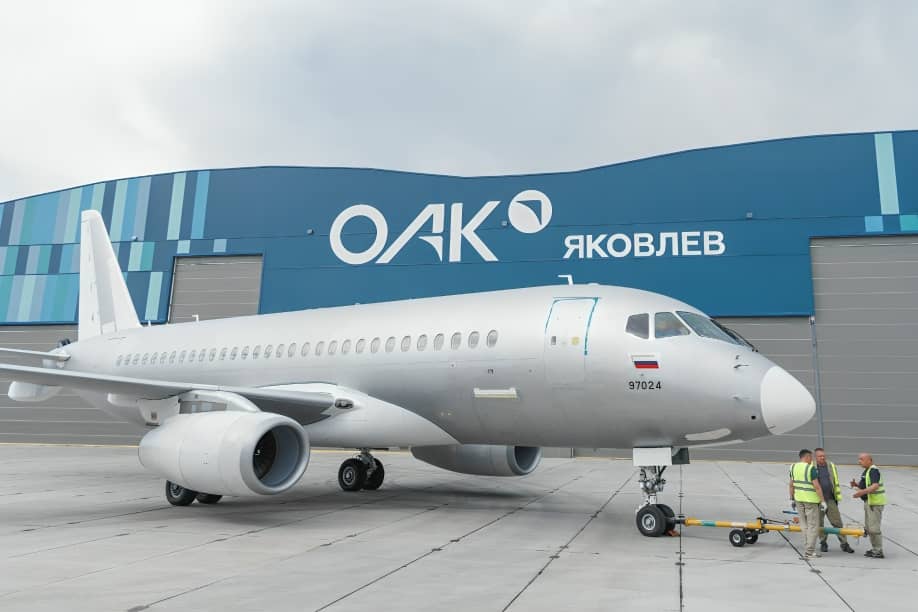
Hindustan Aeronautics Ltd has outlined an ambitious plan to expand its footprint in the civil aviation sector, with the state-run aerospace company targeting the assembly of Russia’s SuperJet 100 aircraft within the next three years. The move marks a strategic shift for HAL, which has traditionally focused on defence manufacturing, towards building a stronger presence in commercial aviation.
Addressing a press conference, HAL Chairman and Managing Director DK Sunil said the company plans to roll out the SuperJet 100 in a semi knock-down format using its existing facilities. Under this approach, major aircraft assemblies will be imported and assembled domestically, allowing HAL to enter the civil aviation market without waiting for full-scale manufacturing infrastructure to be developed.
HAL recently signed an agreement with Russia’s United Aircraft Corporation to collaborate on the SuperJet 100, also known as the SJ100. The aircraft is a regional jet designed for short and medium-haul routes, and HAL sees it as an opportunity to tap into India’s growing civil aviation demand.
Sunil said the company’s broader objective is to increase the share of civil aviation in its overall revenue to 25 percent over the next decade. Currently, civil aviation contributes only about 4 to 5 percent of HAL’s revenue, with the majority coming from defence-related projects. The proposed expansion reflects HAL’s intent to diversify its business portfolio and reduce dependence on defence orders alone.
Explaining the timeline, Sunil said the company aims to complete the assembly setup within three years by bringing in the required facilities, test equipment, and infrastructure. He noted that the aircraft would initially be assembled from imported components before moving towards deeper localisation at a later stage.
In parallel with manufacturing plans, HAL is also exploring leasing options for the SuperJet 100. According to Sunil, leasing is being pursued as a separate track that would allow the company to deploy the aircraft earlier while the assembly facilities are being established. This approach could help HAL gain operational experience and market presence in civil aviation more quickly.
India’s civil aviation market has been expanding steadily, driven by rising passenger demand, regional connectivity initiatives, and fleet expansion by domestic airlines. HAL’s entry into this segment aligns with broader efforts to promote domestic aerospace capabilities and reduce reliance on fully imported aircraft.
Industry observers note that while the SuperJet 100 programme presents opportunities, it will also require HAL to navigate certification, maintenance support, and airline acceptance challenges. However, HAL’s experience in aircraft manufacturing and maintenance for defence platforms is expected to support its civil aviation ambitions.
Sunil emphasised that the company is committed to executing the plan within the stated timeline. The semi knock-down assembly of the SuperJet 100 is expected to serve as a foundation for HAL’s long-term strategy in commercial aviation, positioning the company as a player beyond its traditional defence role.


