
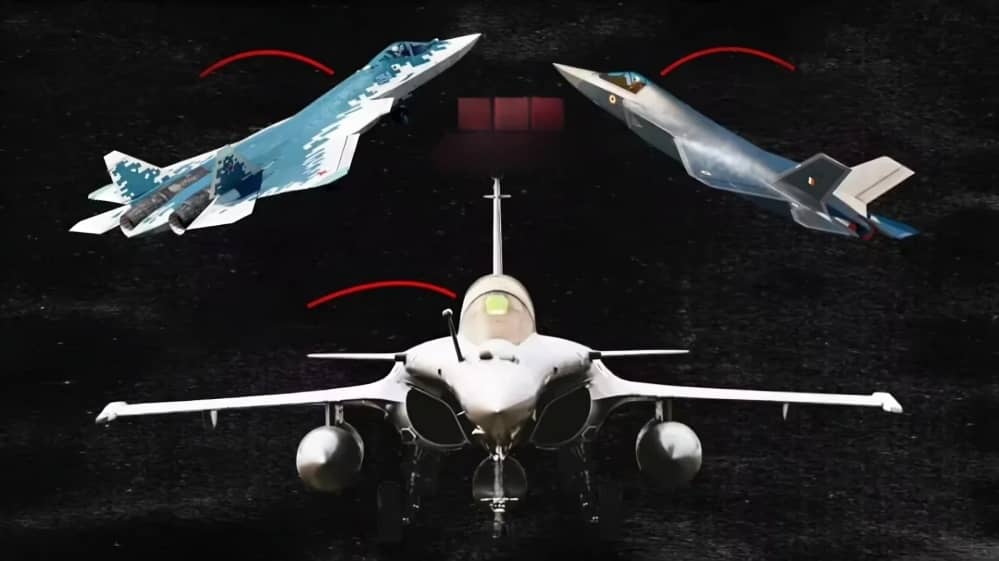
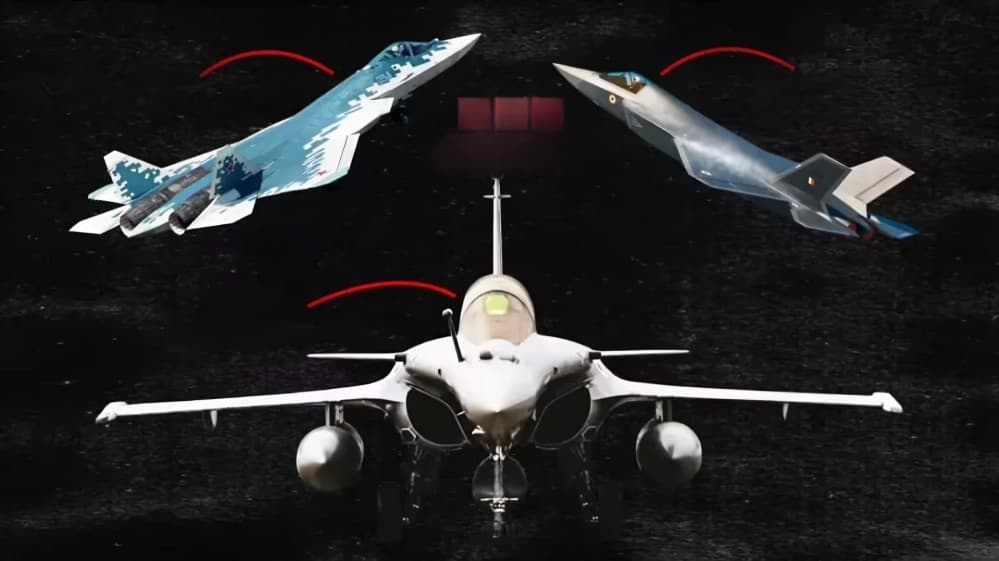
The Indian Air Force is exploring additional options to strengthen its future combat fleet following the government’s approval of a major deal for 114 Dassault Rafale fighter aircraft from France. While the Rafale acquisition significantly boosts India’s 4.5 generation combat capability, defence planners are assessing the need for an operational fifth generation stealth platform.
According to defence sources, the Air Force may approach the Defence Acquisition Council to seek approval for procuring between 36 and 40 Sukhoi Su-57 fighters from Russia. The potential deal, estimated at approximately seven billion dollars, is being considered as an interim solution until the indigenous Advanced Medium Combat Aircraft programme reaches operational readiness.
The Su 57 is Russia’s fifth generation stealth fighter designed for air superiority and multirole missions. If pursued, the acquisition would provide the IAF with stealth capabilities aimed at enhancing survivability and situational awareness in contested airspace. Defence analysts note that the absence of an operational stealth aircraft in India’s inventory has been a subject of strategic discussion, particularly in light of regional developments.
China’s continued expansion of its advanced fighter fleet has added urgency to India’s modernisation efforts. While the Rafale jets strengthen air dominance capabilities, stealth aircraft are considered crucial for deep strike missions and advanced air combat scenarios.
In parallel, the Air Force is also studying global developments in next generation fighter programmes, including the Future Combat Air System, a collaborative initiative involving France, Germany, and Spain. The FCAS programme aims to develop a next generation combat system integrating manned aircraft, unmanned systems, and advanced networking technologies. Although India is not currently a participant, the evaluation reflects interest in long term technological partnerships.
India’s broader strategy appears to follow a multi vector approach, maintaining defence cooperation with multiple global partners. The recent clearance of the Rafale deal underscores New Delhi’s commitment to strengthening its air power. At the same time, consideration of Russian platforms indicates continued defence engagement with Moscow.
Officials emphasise that any decision regarding the Su 57 or other platforms would follow established procurement procedures, including technical evaluations and cost assessments. The Defence Acquisition Council would need to review and approve any proposal before formal negotiations begin.
Meanwhile, India’s indigenous Advanced Medium Combat Aircraft programme remains a priority for long term self reliance in defence production. Until that platform becomes operational, interim solutions are being studied to address capability gaps.
As regional security dynamics evolve, the Indian Air Force’s evaluation highlights ongoing efforts to maintain technological parity and operational readiness.


