
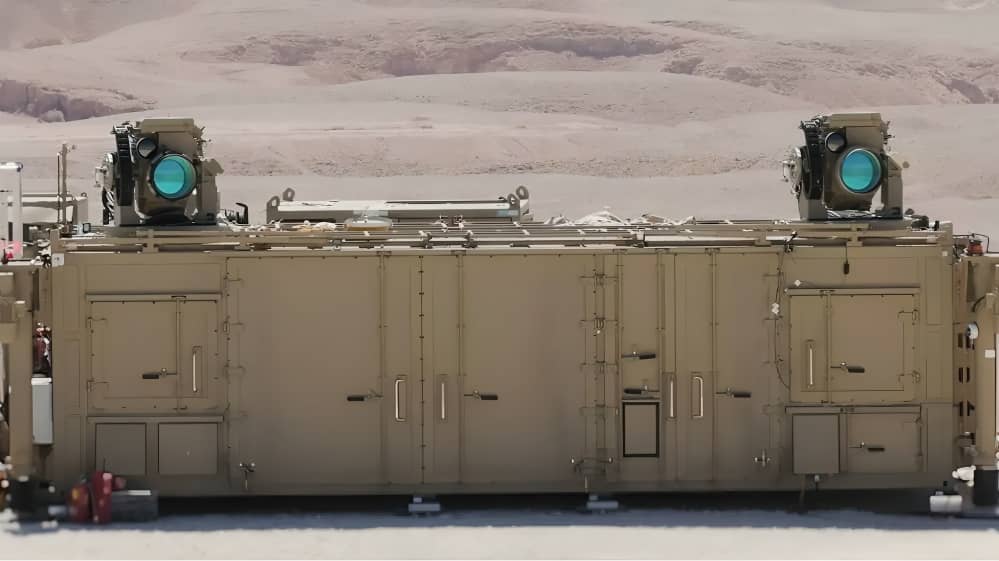
India is exploring the possibility of acquiring or collaborating on Israel’s Iron Beam laser weapon system as part of its broader strategy to enhance air and missile defence capabilities. The discussions come ahead of Prime Minister Narendra Modi scheduled visit to Israel, where defence cooperation is expected to feature prominently on the agenda.
Iron Beam is a high energy laser based air defence system developed by Rafael Advanced Defense Systems. The system is designed to intercept short range rockets, unmanned aerial vehicles, and mortar shells at relatively low operational cost compared to traditional interceptor missiles. By using directed energy technology, Iron Beam offers rapid response capabilities and is considered a complementary layer within Israel’s multi tiered air defence architecture.
India’s interest in advanced laser technology aligns with its efforts to modernise Mission Sudarshan, a framework aimed at strengthening national air defence through integrated systems. New Delhi has already cooperated closely with Israel in the defence sector, including systems inspired by the Iron Dome and Arrow programmes. These systems provide layered protection against different categories of aerial threats, ranging from short range rockets to ballistic missiles.
The potential integration of laser based interception technology could enhance India’s ability to counter emerging threats such as drone swarms and precision guided munitions. Defence analysts note that directed energy weapons are increasingly viewed as cost effective solutions for high frequency low cost threats, especially in conflict scenarios involving saturation attacks.
The discussions are taking place against the backdrop of Operation Sindoor and evolving regional security dynamics. Officials have indicated that India is keen to strengthen technological cooperation with trusted partners to ensure readiness against future challenges.
A memorandum of understanding on advanced defence collaboration is expected to be considered during the upcoming high level meetings. Such an agreement could include research cooperation, technology transfer, and joint development initiatives. India has consistently emphasised self reliance in defence manufacturing while maintaining strategic partnerships for critical technologies.
Experts highlight that any procurement decision would require evaluation by relevant defence authorities and approval through established procedures. Cost effectiveness, compatibility with existing systems, and long term maintenance considerations will play a significant role in decision making.
India and Israel share a strong defence partnership, with collaboration spanning missiles, surveillance systems, unmanned platforms, and cyber security. The exploration of Iron Beam technology underscores the expanding scope of this cooperation.
As global defence technologies evolve, laser based systems are emerging as an important component of modern air defence networks. India’s interest reflects its broader objective of building a comprehensive and resilient missile shield capable of addressing diverse security threats.


