
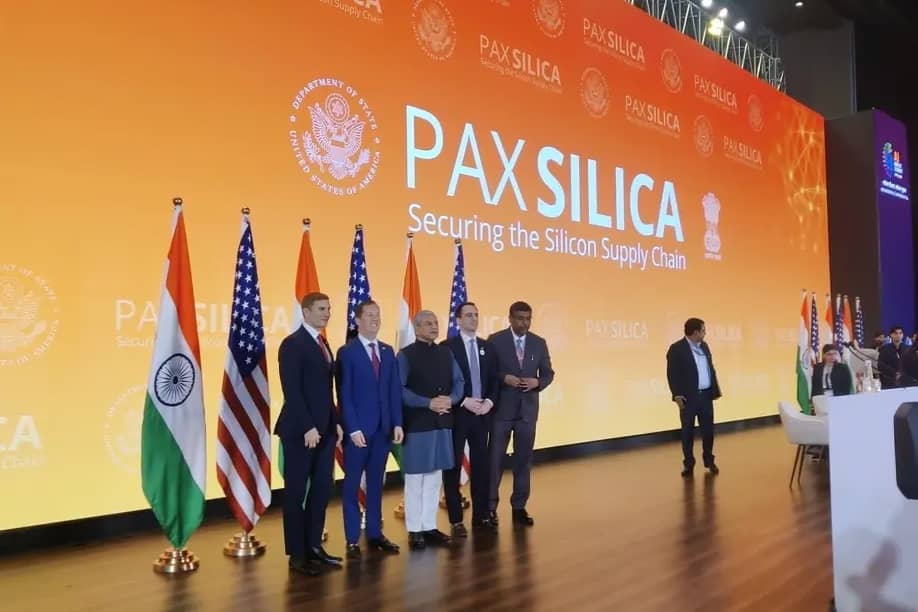
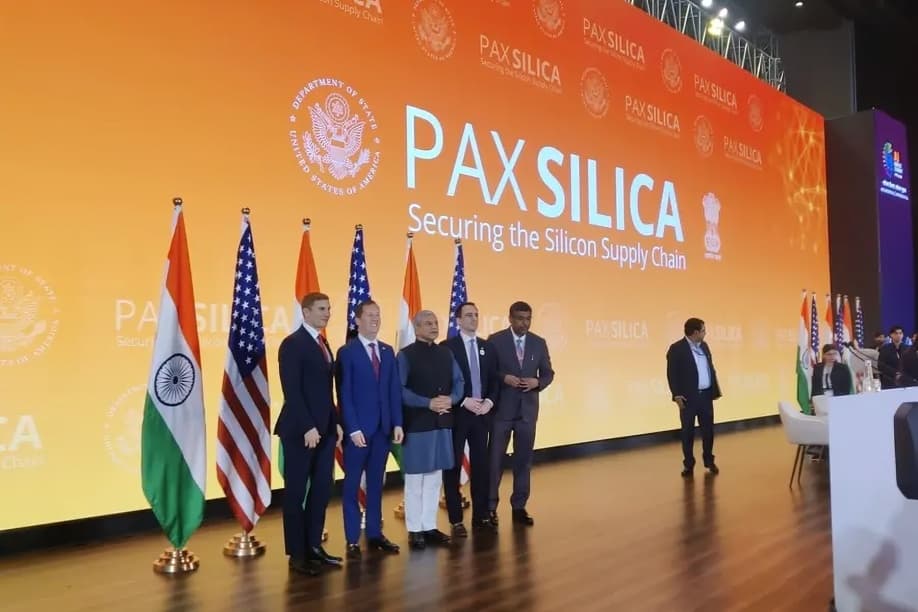
India has formally joined Pax Silica, a US-led strategic coalition focused on strengthening supply chains for critical minerals and advancing artificial intelligence collaboration. The agreement was signed during the AI Impact Summit held in New Delhi, marking a significant step in India United States technology cooperation. The ceremony was attended by Union Minister Ashwini Vaishnaw and US envoy to India Sergio Gor, among other senior officials.
Pax Silica is designed to build resilient and trusted supply chains for materials essential to advanced technologies, including artificial intelligence systems. Critical minerals play a key role in manufacturing semiconductors, renewable energy infrastructure, defence equipment, and other high technology industries. By joining the coalition, India aligns itself with efforts to reduce vulnerabilities in global supply networks and promote reliable partnerships in technology development.
Speaking at the event, Sergio Gor described India’s inclusion as more than symbolic, calling it both strategic and essential. He emphasised India’s engineering depth and skilled workforce as critical strengths that add value to the coalition. According to Gor, India’s growing capabilities in critical mineral processing and advanced manufacturing make it a vital partner in ensuring stable and secure supply chains. He also noted that enhanced policy coordination between the two countries would power artificial intelligence innovation and long term technology adoption.
The development comes at a time when India and the United States are working to finalise a proposed trade agreement and advance multiple initiatives aimed at strengthening bilateral ties. Relations between the two countries had experienced periods of strain in recent years, but both sides have renewed efforts to deepen cooperation across defence, technology, energy, and supply chain sectors.
India’s participation in Pax Silica reflects its broader strategy of positioning itself as a global hub for technology development and manufacturing. The government has been promoting initiatives to boost semiconductor production, electronics manufacturing, and renewable energy projects, all of which require secure access to critical minerals. Strengthening supply chain resilience is seen as essential to sustaining economic growth and technological advancement.
The collaboration under Pax Silica is also expected to support the development and sharing of trusted artificial intelligence technologies. Officials indicated that cooperation between India and the United States in AI research, policy frameworks, and industrial applications could accelerate innovation while ensuring responsible use of emerging technologies.
Analysts suggest that India’s entry into the coalition will enhance its role in shaping global standards for technology governance and supply chain security. By working closely with the United States and other partners, India can leverage its talent base and industrial capabilities to contribute to a more stable and diversified global technology ecosystem.
In conclusion, India’s decision to join Pax Silica at the AI Impact Summit underscores a strategic commitment to deepening technology cooperation with the United States. The move is expected to strengthen critical mineral supply chains, advance artificial intelligence collaboration, and reinforce long term bilateral ties between the two nations.


