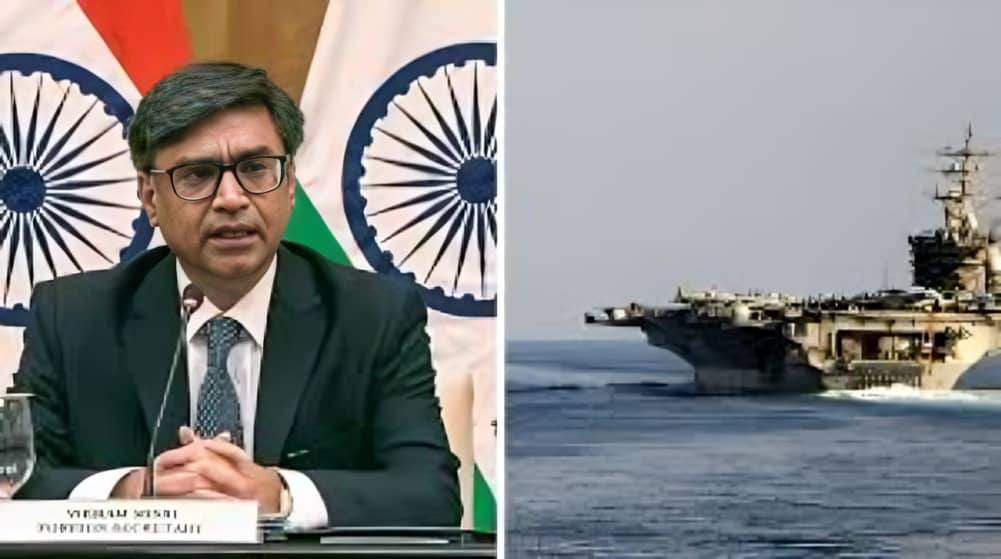
India has raised strong concerns following reports that Indian linked oil tankers were targeted in the Strait of Hormuz, a crucial global shipping route. Foreign Secretary Vikram Misri communicated India position to Iranian authorities, emphasizing the seriousness of the situation and its potential impact on maritime security and international trade.
The Strait of Hormuz is one of the most strategically important waterways in the world, serving as a key passage for a significant portion of global oil shipments. Any disruption in this region can have far reaching consequences for energy supplies and economic stability. The reported targeting of Indian tankers has therefore drawn immediate attention from Indian officials and international observers.
According to official sources, India has conveyed its concerns through diplomatic channels, seeking clarity on the incident and urging measures to ensure the safety of vessels operating in the region. Vikram Misri highlighted that such incidents not only pose a risk to crew members but also threaten the smooth functioning of global trade routes.
The Indian government is closely monitoring developments and coordinating with relevant authorities to assess the situation. Officials have indicated that safeguarding maritime interests remains a priority, especially in regions that are vital for energy imports. India relies heavily on oil transported through the Strait of Hormuz, making stability in the area essential for the country economic needs.
The incident has also prompted discussions about the broader security environment in the region. Experts note that tensions in the Middle East can often lead to disruptions in shipping lanes, affecting multiple countries. Ensuring freedom of navigation and the protection of commercial vessels is considered critical under international maritime norms.
India diplomatic engagement with Iran reflects the importance of dialogue in addressing such concerns. By raising the issue directly, India aims to seek cooperation in preventing further incidents and maintaining stability in the region. The response from Iranian authorities and any subsequent actions will be closely watched in the coming days.
Shipping companies and maritime agencies are also likely to review their safety protocols in light of the incident. Increased vigilance, route monitoring, and coordination with naval forces are among the measures that may be adopted to enhance security for vessels passing through sensitive areas.
The situation underscores the interconnected nature of global trade and the importance of secure maritime routes. Any disruption can have ripple effects on supply chains, fuel prices, and economic activity worldwide. India response highlights its commitment to protecting its economic interests and ensuring the safety of its shipping operations.
Further updates are expected as more information becomes available. Authorities have assured that they will continue to engage with international partners and take necessary steps to address the situation effectively.