Indian Navy Rescues 20 Crew Members from Somali Pirates After 48 Hour Operation
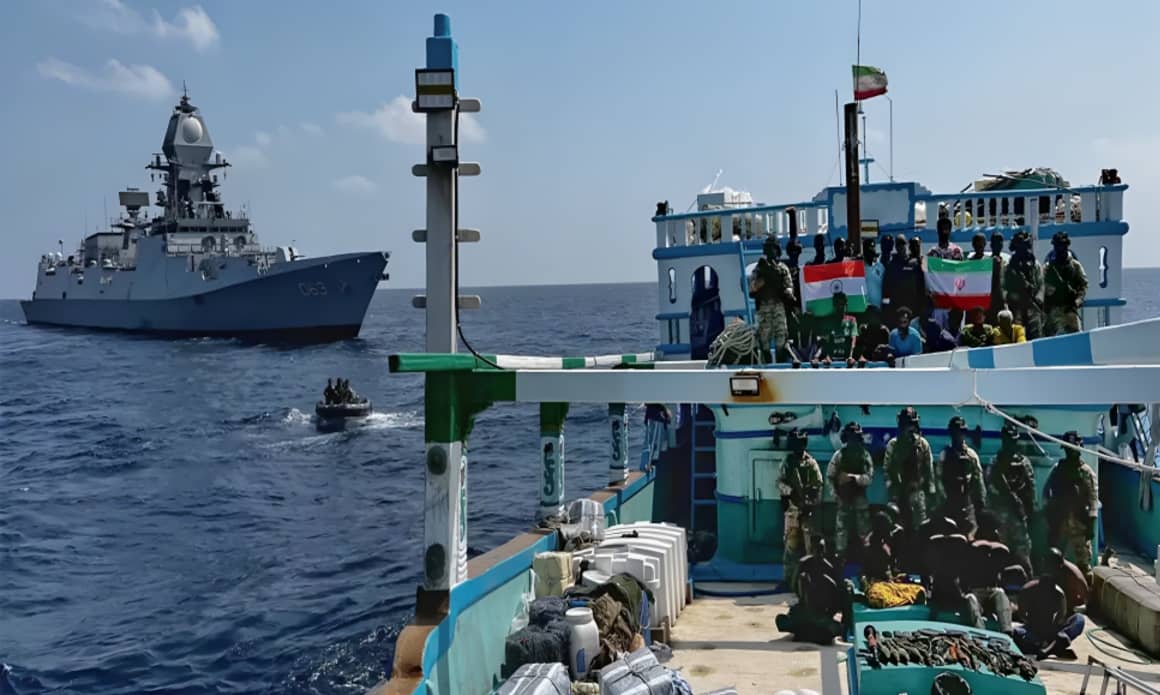
The Indian Navy has successfully rescued all 20 crew members of a hijacked fishing vessel following a coordinated maritime security operation lasting more than 48 hours off the northeastern coast of Somalia. The operation was conducted after an armed pirate group seized the fishing vessel Azini, creating concerns about a possible threat to commercial shipping in the region.
The rescue operation involved multiple Indian defence assets, including a mission-deployed Indian Navy warship, a maritime reconnaissance aircraft, Marine Commandos and an Indian Air Force C-17 aircraft. Through sustained surveillance, vessel tracking and a carefully coordinated tactical intervention, the Navy brought the situation under control and secured the release of all crew members.
According to the information provided about the operation, all 20 people were rescued safely. No casualties or injuries were reported.
Fishing Vessel Azini Hijacked by Armed Pirates
The fishing vessel Azini was hijacked by an armed pirate group earlier last month. The incident took place off the northeastern coast of Somalia, an area where maritime security remains an important concern for vessels operating through nearby international shipping routes.
The hijacking raised concerns beyond the immediate safety of the fishing vessel's crew. Security officials were concerned that the pirates could potentially use the seized vessel as a mother ship. In maritime piracy, a mother ship can serve as a platform from which smaller boats are deployed to approach and attack other vessels.
Such a possibility could increase the threat to merchant ships operating in the surrounding waters. The hijacked fishing vessel therefore required a response that would protect its crew while also preventing the pirates from using it to support further attacks.
Indian Navy Launches a Coordinated Rescue Operation
After receiving information about the hijacking, the Indian Navy deployed a warship and a maritime reconnaissance aircraft to locate and intercept the vessel.
The operation involved continuous monitoring of the hijacked fishing vessel and efforts to restrict its movement. The Navy used coordinated surveillance and tracking measures to maintain awareness of the vessel's position and activities.
The mission continued for more than 48 hours. During this period, the deployed assets worked together to contain the situation and prepare for a tactical intervention. The operation required careful coordination because the vessel was under the control of an armed pirate group and had 20 crew members on board.
The Navy's response was aimed at securing the vessel and protecting the lives of those being held by the pirates. The operation ultimately led to the safe rescue of all 20 crew members.
Marine Commandos Take Part in Tactical Intervention
Marine Commandos were also deployed as part of the operation to secure the hijacked fishing vessel. Their role formed an important part of the tactical response to the armed threat.
The Navy used what was described as calibrated non-kinetic measures while managing the situation. Such measures focus on controlling and resolving a threat without relying primarily on the use of lethal force. The operation combined surveillance, movement containment and a planned tactical intervention to overcome the pirate threat.
The involvement of Marine Commandos provided the specialised capability required to approach and secure the vessel. Their deployment was coordinated with the Navy warship and the maritime reconnaissance aircraft.
The operation was completed without reported casualties or injuries among the rescued crew members. The safe recovery of all 20 people was the central outcome of the mission.
Indian Air Force C-17 Aircraft Supports the Mission
The operation also involved an Indian Air Force C-17 aircraft, adding an air-support component to the wider mission.
The participation of the Navy and the Air Force highlighted the coordinated nature of the response. The Navy's warship and reconnaissance aircraft were involved in tracking and containing the hijacked vessel, while Marine Commandos carried out the tactical role required to secure it.
The C-17 aircraft was among the assets involved in the overall operation. The use of multiple platforms demonstrated how different branches of the Indian armed forces can contribute to a maritime security mission when a situation requires coordinated capabilities.
The operation continued until the crew members were brought to safety and the pirate threat was overcome.
Concerns Over Piracy and Commercial Shipping
The hijacking of Azini highlighted the continuing risks posed by armed piracy in waters off Somalia. Fishing vessels and commercial ships can face serious threats when armed groups attempt to seize control of vessels or use them to support further maritime attacks.
The possibility of a hijacked vessel being converted into a mother ship is particularly concerning because it could allow pirates to operate farther from their original base and target other ships. This can create additional risks for merchant vessels and maritime traffic in the surrounding region.
For this reason, the Indian Navy's response focused not only on rescuing the crew but also on containing the movement of the hijacked vessel and preventing its potential use in further attacks.
Maritime security operations in such circumstances require reliable surveillance, coordination between different military platforms and careful planning to protect people on board.
All 20 Crew Members Rescued Safely
The successful conclusion of the operation ensured that all 20 crew members aboard Azini were rescued. The Navy completed the mission without any reported casualties or injuries.
The operation lasted more than 48 hours and involved a combination of maritime surveillance, vessel interception, movement containment and tactical intervention. The participation of the Indian Navy, Marine Commandos and the Indian Air Force demonstrated a coordinated response to the hijacking.
The rescue also prevented the immediate threat posed by the armed pirates and addressed concerns that the fishing vessel could be used as a platform for further attacks against merchant ships.
The operation underlines the importance of continued maritime vigilance and cooperation among defence assets in responding to piracy incidents. The safe rescue of all 20 crew members marks the key achievement of the Indian Navy's mission off the coast of Somalia.