Supreme Court Declines Urgent Hearing on Plea Against 700 Percent Rise in Diwali Airfares
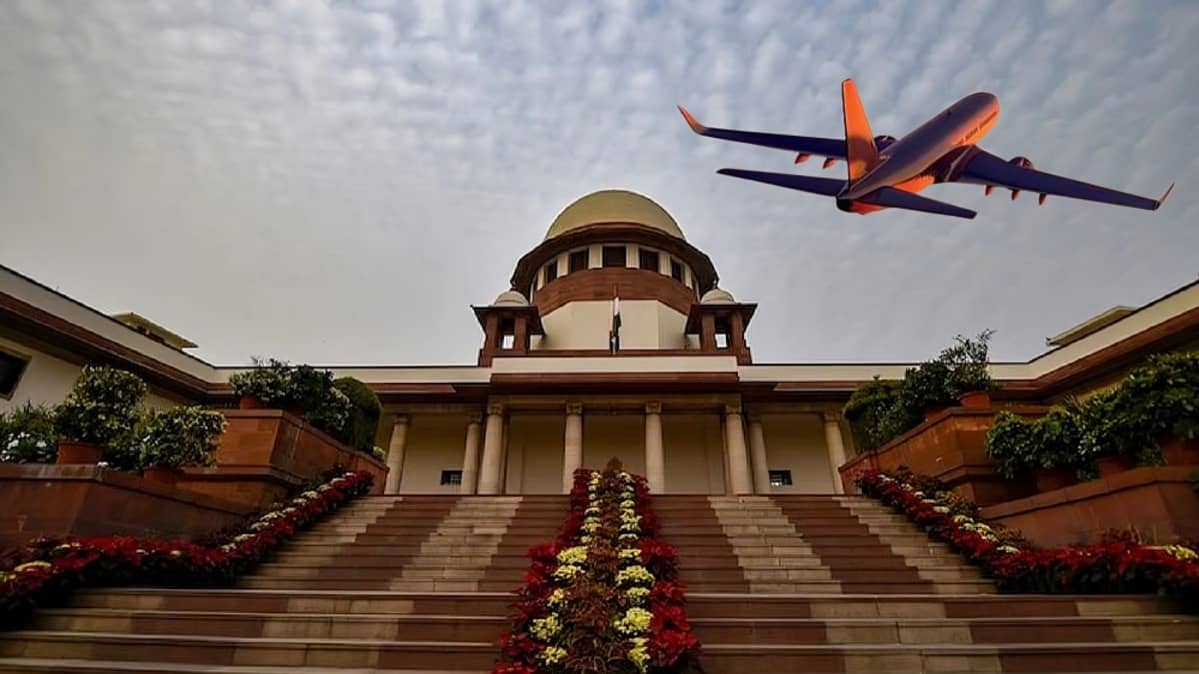
The Supreme Court of India has refused to urgently list a petition challenging the sharp increase in domestic airfares during the Diwali festive season. The petition sought the court's intervention to direct the Union government to introduce a mechanism for regulating air ticket prices on domestic routes during major festival periods.
During the proceedings in New Delhi, the petitioner alleged that domestic airfares had increased by as much as 700 percent during the festive season. The petitioner argued that such a steep rise placed an unreasonable burden on passengers and raised concerns about equal treatment under the Constitution.
However, the Supreme Court bench declined the request for an urgent hearing. Responding to the petitioner's submissions, the bench made the remark, "Don't travel by air."
Petition Challenges Sharp Increase in Airfares
The petition was filed in response to the reported increase in domestic flight ticket prices during the Diwali travel period. Festival seasons generally see increased demand for air travel as people travel to their hometowns, visit family members and take holidays.
According to the petitioner, the sharp rise in ticket prices had made air travel significantly more expensive for passengers. Advocate Abhinav, appearing for the petitioner, submitted that airfares had reportedly increased by up to 700 percent.
The petitioner argued that such a steep increase amounted to a violation of Article 14 of the Indian Constitution, which guarantees equality before the law and equal protection of the laws.
The plea requested the Supreme Court to intervene and direct the Centre to establish a system for regulating domestic airfares during festival periods. It sought a mechanism that could prevent excessive increases in ticket prices when passenger demand rises significantly.
Supreme Court Refuses Urgent Listing
During the hearing, the petitioner requested the court to take up the matter urgently, highlighting the impact of rising airfares on passengers travelling during Diwali.
The petitioner also informed the bench that the broader issue of regulating domestic air ticket prices was already pending before the Supreme Court. The submission was made to explain why the court's intervention was being sought at this stage.
Despite these arguments, the bench refused to list the petition for an urgent hearing. The remark, "Don't travel by air," came in response to the submissions concerning the high cost of domestic flight tickets.
The court's refusal to grant urgent listing does not, by itself, amount to a final decision on the broader question of airfare regulation. The issue of whether and how domestic airfares should be regulated remains a separate matter from the immediate request for an urgent hearing.
Centre's Earlier Assurance on Airfare Rules
The regulation of domestic airfares has been discussed in connection with the Bharatiya Vayuyan Adhiniyam, 2024, which provides the legislative framework for civil aviation in India.
During an earlier hearing, the Centre informed the Supreme Court that rules relating to airfares under the legislation would be published within two weeks.
The assurance was significant because the petitioner was seeking a formal mechanism to address steep increases in ticket prices, particularly during periods of high passenger demand.
The Centre's earlier statement indicated that the government was working on the rules under the new aviation law. However, the information provided in the present proceedings does not establish whether those rules have subsequently been published or what specific fare-related provisions they will contain.
Why Festival Airfares Have Become a Concern
Air travel demand generally increases during major festivals such as Diwali. A large number of passengers book tickets to travel between cities and return to their hometowns. When demand rises sharply, ticket prices can also increase, depending on airline pricing practices and seat availability.
Passengers who need to travel on fixed dates may have fewer options to avoid higher fares. This can particularly affect families, students and workers who depend on air travel during holiday periods.
The petition has brought attention to concerns about the affordability of domestic air travel during such peak-demand periods. Its request for a fare-regulation mechanism reflects the argument that passengers should receive protection against unusually steep price increases.
At the same time, the question of regulating airfares involves broader considerations concerning aviation policy, airline operations and the government's role in the domestic aviation market.
What Happens Next
The Supreme Court's refusal to urgently list the petition means that the immediate request for an early hearing was not accepted. The broader issue of airfare regulation, which the petitioner said was already pending before the court, remains distinct from this development.
The Centre's earlier assurance regarding rules under the Bharatiya Vayuyan Adhiniyam, 2024, is also relevant to the discussion. The publication and contents of those rules will be important in understanding the government's approach to airfare-related concerns.
For now, the reported 700 percent increase remains an allegation made by the petitioner during the hearing. The court has not made a final finding on that figure or ruled on the constitutional challenge.
The case has renewed public attention on domestic flight ticket prices during festival seasons and the need to balance passenger affordability with the functioning of India's aviation sector.