Supreme Court Says Election Commission Cannot Monopolise Voter Awareness Campaigns
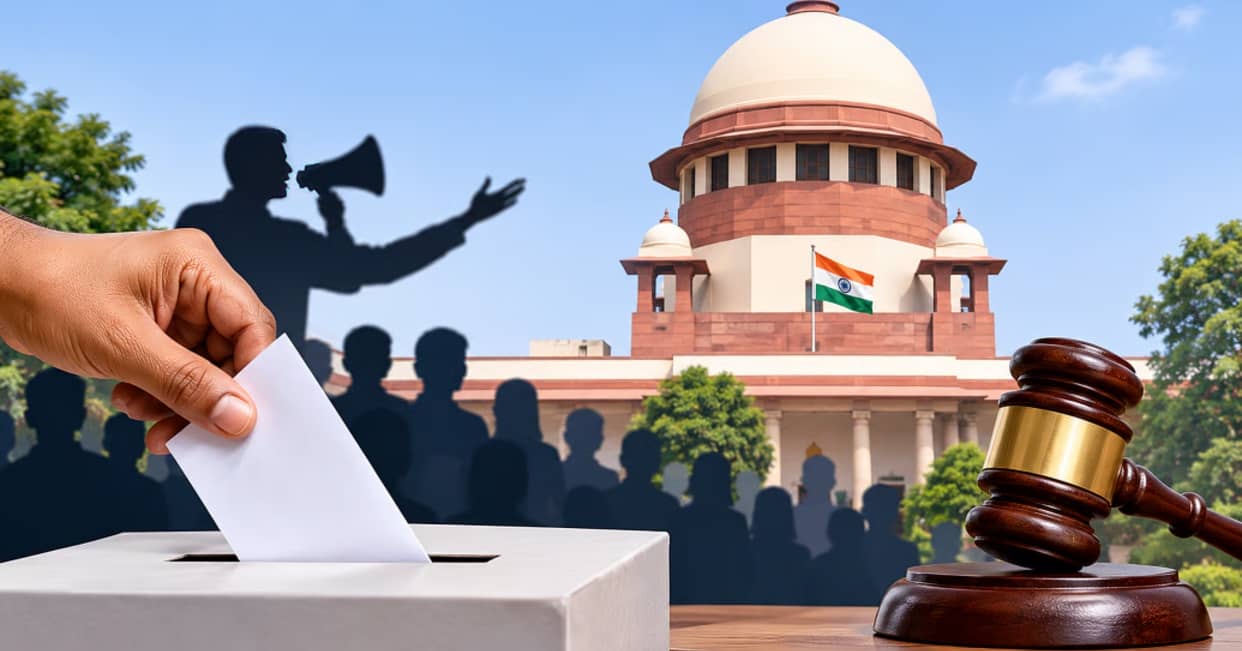
The Supreme Court of India has set aside an order issued by the Rajasthan State Election Commission refusing permission to a civil society group led by social activist Aruna Roy to conduct voter awareness campaigns ahead of the state's local body elections. The court observed that voter education cannot be treated as the exclusive responsibility of election authorities and that civil society organisations also have the right to educate voters.
A bench comprising Chief Justice of India Surya Kant and Justices Joymalya Bagchi and V Mohana directed the Rajasthan State Election Commission to reconsider the group's request within 48 hours. The application relates to voter awareness activities planned for the final phase of the Panchayati Raj elections, scheduled for November 14.
The ruling came after Aruna Roy and other activists challenged the commission's decision to deny permission for their proposed campaign. The Supreme Court emphasised that election authorities should regulate any misuse of such activities rather than prevent independent organisations from conducting genuine voter education programmes.
Supreme Court Sets Aside Election Commission's Order
The case concerned an application submitted by social activists, including Aruna Roy and Nikhil Dey, seeking permission to organise voter awareness campaigns in Rajasthan.
The organisers approached the Rajasthan State Election Commission with a proposal to conduct awareness activities ahead of the local body elections. However, the commission rejected their request through an order dated October 9.
The activists challenged the decision before the Supreme Court, arguing that their proposed campaign was non-political and intended to help voters understand their democratic rights and responsibilities.
After hearing the arguments, the Supreme Court set aside the commission's October 9 communication and directed it to reconsider the application within 48 hours. The court also issued notice to the Rajasthan State Election Commission and asked it to take a fresh decision on the request.
The order does not automatically grant permission for the campaign. Instead, it requires the commission to reconsider the proposal and pass an appropriate decision within the specified period.
Court Says Voter Awareness Is Not the Commission's Exclusive Responsibility
During the hearing, the Supreme Court questioned the reasoning behind the commission's refusal. The Rajasthan State Election Commission had reportedly argued that it was already conducting voter awareness programmes and had concerns about the possibility of the proposed campaign being organised at the request of another person.
Responding to this position, Justice Joymalya Bagchi observed that the commission's own awareness programmes could not prevent other organisations from conducting similar activities.
The bench made it clear that election authorities could not claim exclusive control over voter awareness initiatives. It also observed that civil society organisations could support the democratic process by helping citizens understand electoral procedures and make informed decisions.
The court indicated that the commission had the responsibility to monitor and regulate any corrupt practices carried out in the name of voter awareness. However, it could not use that responsibility as a reason to prevent all independent awareness campaigns.
The observation highlights the importance of public participation in strengthening democratic institutions and ensuring that voters have access to information before casting their ballots.
Aruna Roy's Group Explains the Purpose of the Campaign
Social activist Aruna Roy and other members of the civil society group said their campaign was designed to educate voters about democratic rights and responsible participation in elections.
The proposed voter awareness activities aim to encourage citizens to examine candidates carefully before making their electoral choices. The organisers also seek to discourage voters from accepting money, gifts or other inducements in exchange for their votes.
Advocate Prashant Bhushan, appearing for the petitioners, told the court that the campaign was not intended to support or oppose any political party or candidate. He described it as a non-partisan initiative involving small groups conducting interactive awareness sessions in villages.
The campaign also seeks to inform voters about the None of the Above option, commonly known as NOTA. This option allows voters to register their decision not to support any of the candidates contesting an election.
According to the organisers, similar voter awareness activities have been conducted during elections for nearly two decades. They argued that preventing such initiatives would restrict efforts to improve public understanding of the electoral process.
Election Commission Cites Law and Order Concerns
Representing the Rajasthan State Election Commission, advocate Amit Kuri told the Supreme Court that permission had been denied after considering the law and order situation during the election period.
The commission referred to prohibitory orders imposed under Section 163 of the Bharatiya Nagarik Suraksha Sanhita. These orders empower authorities to restrict certain activities, including public gatherings, when necessary to prevent potential disturbances and maintain public order.
The commission argued that such restrictions were intended to prevent unwanted activities and the involvement of anti-social elements during the election period.
However, Prashant Bhushan questioned the use of blanket restrictions to prevent a non-political voter awareness campaign. He argued that the proposed activities were limited in size and did not involve political campaigning.
The court considered these submissions while examining the commission's decision. It indicated that organisers should provide specific details about the proposed activities rather than seek general permission for an unspecified campaign.
The bench said the organisers should clearly identify the places, dates and times of their proposed programmes so that the authorities could examine each request appropriately.
Voter Awareness Campaign Planned Across Rajasthan
The civil society organisations had sought permission to conduct voter awareness activities across 11 districts in Rajasthan. These included Ajmer, Beawar, Bhilwara, Bikaner, Dungarpur, Jaipur, Rajsamand, Salumber, Sirohi, Tonk and Udaipur.
The organisations involved include Rajasthan Election Watch and the Mazdoor Kisan Shakti Sangathan, along with other partner groups.
Their proposed activities focus on village-level interactions and awareness sessions aimed at encouraging voters to participate responsibly in elections.
The organisers have maintained that the campaign does not promote any particular political party or candidate. Instead, it seeks to explain the importance of independent voting decisions and discourage electoral malpractice.
The Supreme Court's direction to reconsider the application could allow the organisations to receive a fresh decision before the final phase of polling. However, the commission must still examine the specific locations and timings and take an appropriate decision.
Rajasthan Panchayati Raj Elections
The Supreme Court's order comes during the ongoing Panchayati Raj election process in Rajasthan. The elections cover Zila Parishads, Panchayat Samitis and Gram Panchayats across the state.
The final phase of voting for Zila Parishad and Panchayat Samiti members is scheduled for November 14. Elections for Sarpanch and Panch posts are scheduled for November 16.
The electoral process covers 41 Zila Parishads, 457 Panchayat Samitis and 14,403 Gram Panchayats. A large number of voters are expected to participate in these local elections.
Voter awareness is particularly important in local body elections because these institutions play a significant role in local administration, public services and rural development.
Educating voters about candidates, electoral procedures and the importance of rejecting inducements can contribute to a more informed electoral process.
What Happens Next?
Following the Supreme Court's direction, the Rajasthan State Election Commission must reconsider the civil society group's application and issue a fresh decision within 48 hours.
The organisers will need to provide the necessary details about the locations, dates and timings of the proposed awareness activities. The commission will then have to examine the request in accordance with applicable election rules and public order requirements.
The court's ruling does not remove the commission's authority to regulate election-related activities. Instead, it clarifies that such regulatory powers should not be used to claim exclusive control over voter education.
The decision is significant for civil society organisations seeking to promote democratic awareness during elections. It reinforces the principle that voter education can involve both official election authorities and independent organisations, provided their activities remain lawful and non-partisan.
The immediate outcome will depend on the fresh decision of the Rajasthan State Election Commission. The Supreme Court's observations, however, have established an important distinction between regulating election-related activities and preventing independent voter awareness initiatives.