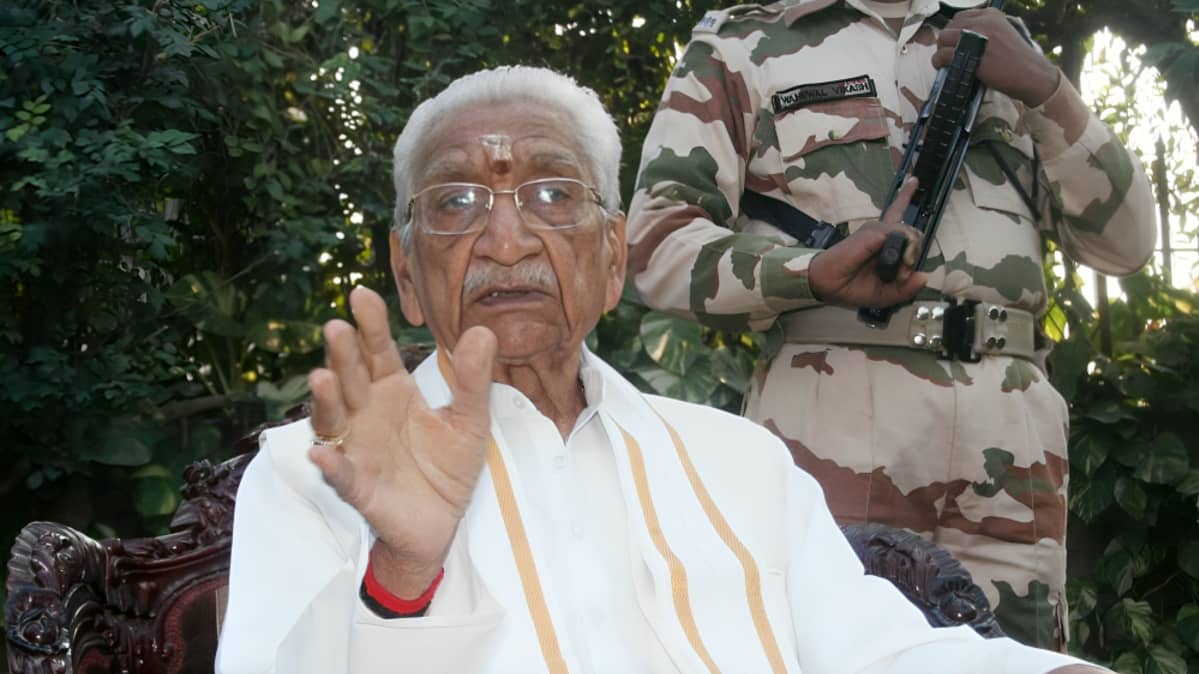
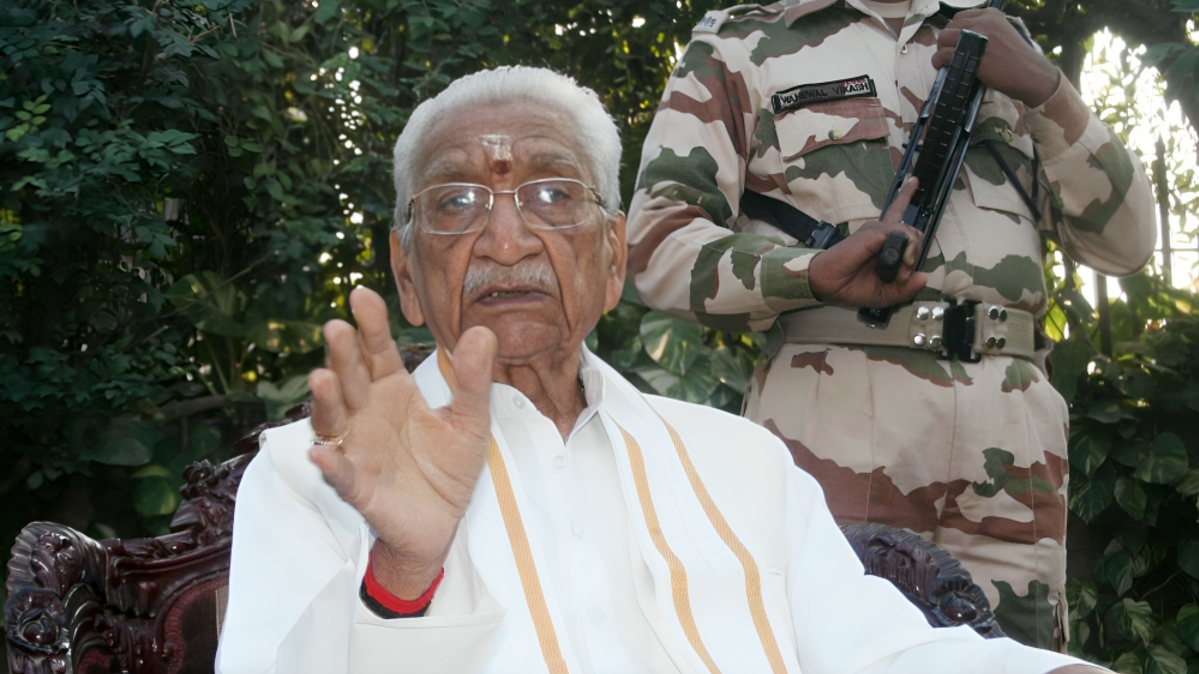
Prime Minister Narendra Modi has paid tribute to former Vishwa Hindu Parishad leader Ashok Singhal on the occasion of his birth centenary, recalling his contribution to the Ram Janmabhoomi movement as well as his organisational, social and community work.
Singhal’s birth centenary year began on September 27, 2026. In an article shared by the Prime Minister, Modi described Singhal as a person who combined spiritual commitment with organisational work and a focus on social unity. He also recalled his own interactions with Singhal over several decades.
According to Modi’s account, one of his earliest interactions with Singhal took place in 1981, when Modi was involved in organisational activities. He recalled receiving a handwritten letter from Singhal concerning an upcoming programme and responsibilities associated with it.
Modi also highlighted Singhal’s extensive travels and his work in remote parts of the country. He specifically recalled Singhal’s interest in visiting tribal areas of Gujarat and his concern for communities facing difficulties. Modi said Singhal would either personally reach areas affected by natural disasters or guide volunteers involved in relief efforts.
The Prime Minister referred to his experience with Singhal following the 2001 Kutch earthquake as one example of their association in relief work. He said Singhal remained concerned about the welfare of people living in difficult circumstances.
A significant part of Modi’s tribute focused on Singhal’s involvement in the Ram Janmabhoomi movement. Modi recalled Singhal’s address at the Vishwa Hindu Parishad’s Boat Club rally in New Delhi in April 1991. He also referred to an incident in Ayodhya in October 1990 in which Singhal was injured during a police lathi charge.
Modi said Singhal played a significant role in the movement and linked his contribution with the eventual construction of the Ram temple in Ayodhya. This is presented as Modi’s assessment of Singhal’s role in the movement.
Singhal’s work was not limited to the Ram Janmabhoomi movement, according to the tribute. Modi also discussed his views on social harmony and equality. He said Singhal believed that society needed greater harmony and that every individual should be treated with dignity and respect.
Modi specifically recalled Singhal’s decision that Kameshwar Choupal, a VHP worker from Bihar who came from a marginalised community, should lay the first brick for the proposed Ram temple. The reference was presented as an example of Singhal’s approach towards social inclusion.
Education was another area highlighted in the tribute. Modi noted Singhal’s association with Banaras Hindu University and his connection with the Ekal Vidyalaya initiative, which worked to provide basic education in remote villages, particularly in tribal areas.
The Prime Minister also recalled Singhal’s interest in reading and his encouragement to younger organisational workers to read extensively. Modi described education and learning as important aspects of Singhal’s wider social activities.
Music was another part of Singhal’s life mentioned by Modi. The Prime Minister recalled occasions when Singhal sang Ekal Geet during meetings in Nagpur. He also referred to a performance during Singhal’s 90th birthday celebrations in 2015.
Modi further recalled Singhal’s involvement in international Hindu conferences. He cited the 1993 VHP convention in the United States organised to mark 100 years since Swami Vivekananda’s Chicago address. He also referred to the World Hindu Conference held in Port of Spain, Trinidad and Tobago, in 2000. According to Modi, these events demonstrated Singhal’s organisational abilities and his ability to bring together people from different backgrounds.
Ashok Singhal was born on September 27, 1926, and died in 2015. He served as an important leader of the Vishwa Hindu Parishad and was closely associated with the Ram Janmabhoomi movement. His birth centenary celebrations began in September 2026.
The centenary has also prompted tributes from other senior political and social figures. Union Home Minister Amit Shah recalled Singhal’s role in the Ram temple movement and described his organisational dedication as an example for younger generations.
The VHP has separately highlighted Singhal’s work on social harmony, religious education and the participation of different sections of Hindu society. These statements reflect the organisation’s own assessment of his legacy.
The Prime Minister concluded his tribute by calling for greater awareness among younger generations about Singhal’s life and work. His article placed Singhal’s legacy in the context of organisational service, social initiatives, education, cultural activities and the Ram Janmabhoomi movement.
With the beginning of his birth centenary year, Singhal’s decades-long association with the VHP, the Ram Janmabhoomi movement and various social initiatives are once again receiving public attention. The tributes also highlight the continuing political and social significance of the movements and organisations with which he was associated.