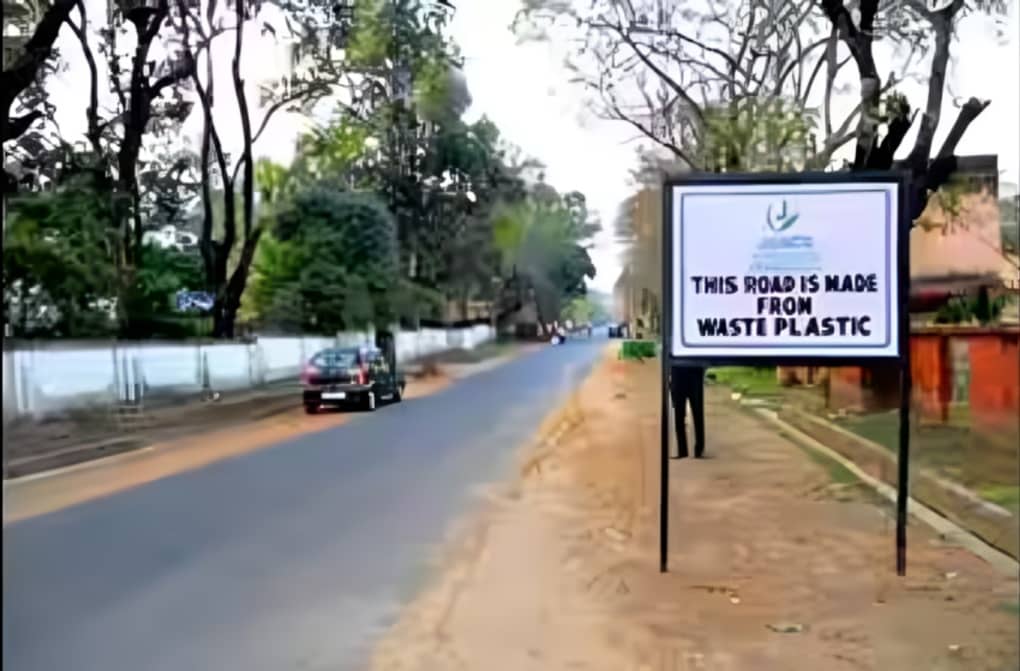
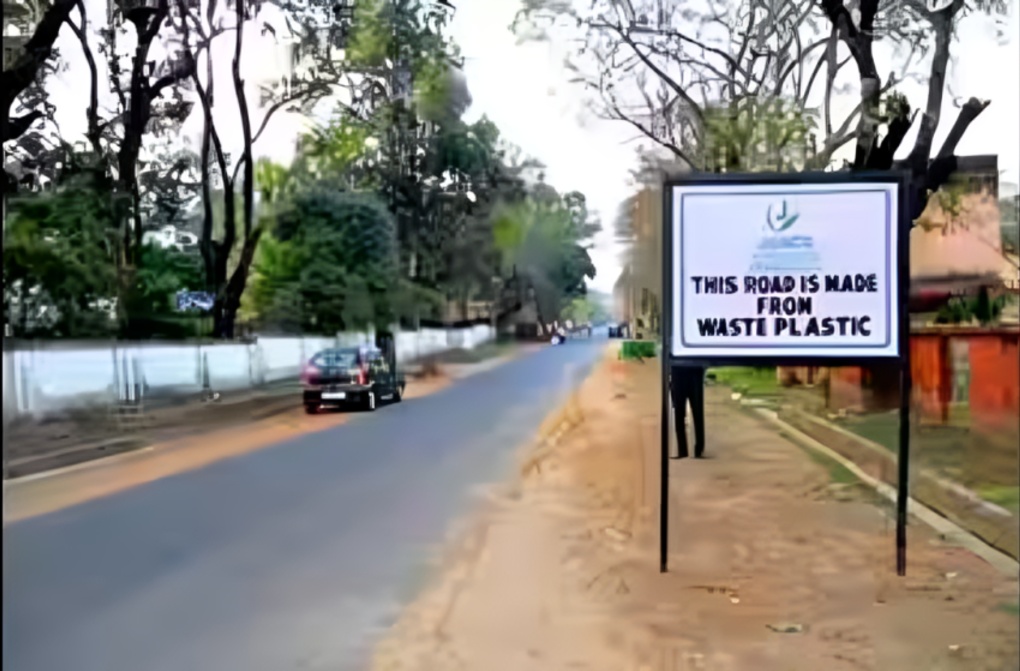
India has taken a new step towards using waste plastic in highway construction with a pilot test section on National Highway 44 in Jhansi, Uttar Pradesh. The project involves mixing processed waste plastic directly with bitumen before the material is used to lay the road surface.
The pilot section was laid on the main carriageway of NH 44 on Thursday. Officials associated with the project said the technology could help reduce the consumption of conventional bitumen while also providing a productive use for waste plastic. The initiative is being monitored as a pilot project before any decision on wider application is considered.
The new approach is different from the dry process that has previously been used for incorporating waste plastic into road construction. Under the dry process, processed plastic is added to aggregates before the bituminous material is applied. The new pilot uses a wet process in which the processed plastic is mixed directly with bitumen to produce Waste Plastic Modified Bitumen.
The technology, identified as Waste Plastic Modified Bitumen, or W PMB 76 10, was developed by the Indian Institute of Technology Banaras Hindu University in Varanasi. The research was carried out under a programme funded by the Ministry of Road Transport and Highways. Officials said the technology has also recently received a patent.
One of the expected benefits of the technology is a reduction in conventional bitumen consumption. According to officials associated with the pilot, the process has the potential to reduce bitumen consumption by approximately 4 percent. This could be significant because India depends substantially on imports to meet its domestic requirement for bitumen and crude oil based construction materials.
Officials have also estimated that the modified bitumen could cost around 20 percent less than conventional bitumen. However, these figures are projections associated with the technology, and the actual economic benefits will depend on field performance, availability of suitable plastic waste, processing costs and the results of long term monitoring.
The initiative also addresses the growing challenge of plastic waste management. India generates around 25,000 tonnes of plastic waste every day, according to the information cited in the report on the new pilot. Finding suitable applications for processed waste plastic could help reduce the amount of plastic requiring disposal while creating value from material that would otherwise become waste.
The plastic used in the new process includes low density polyethylene, commonly known as LDPE. This material is used in products such as discarded irrigation pipes, waste files and plastic folders. For the Jhansi pilot, the material was processed with support from local recyclers and micro, small and medium enterprises.
The involvement of local recyclers and MSMEs could provide an additional link between waste management and infrastructure development. Instead of treating selected plastic waste only as a disposal problem, the technology seeks to convert it into a material that can be incorporated into road construction after appropriate processing.
Another expected benefit relates to road performance. Officials associated with the project said the modified bitumen could improve resistance to rutting in bituminous mixes, particularly under high temperatures and heavy axle loads. Rutting refers to the formation of permanent depressions or grooves in a road surface caused by repeated traffic loading.
However, the Jhansi stretch is still a pilot project, and its long term performance needs to be established through field monitoring. IIT BHU will monitor the section to assess its engineering behaviour and determine whether the technology is suitable for wider application under actual highway conditions.
The use of waste plastic in Indian roads is not entirely new. The Ministry of Road Transport and Highways has previously promoted the use of waste plastic in hot bituminous mixes. In 2019, the government said Indian Roads Congress guidelines had been formulated for using waste plastic in wearing courses through the dry process. The ministry had also encouraged the use of waste plastic on National Highways within specified areas and called for pilot stretches to evaluate performance.
Government information from 2019 noted that waste plastic had already been used in wearing courses of several National Highway stretches. It also highlighted potential benefits such as improved resistance to deformation, increased durability, better fatigue performance and reduced bitumen consumption. These earlier initiatives provide the background for the development of newer approaches to incorporating plastic waste into road materials.
The Jhansi pilot represents a further development because the waste plastic is processed and mixed directly with bitumen through a wet process. The objective is to develop a controlled material that can be evaluated for engineering performance rather than simply adding plastic waste to road construction.
The project could also have implications for India’s efforts to reduce dependence on imported construction materials. Bitumen is an important component of flexible pavement construction, and any technology that reduces the quantity of conventional bitumen required for road works could potentially have economic benefits. However, the extent of those benefits will depend on the results of the pilot and whether the technology can be implemented consistently at a larger scale.
Environmental considerations are another important part of the project. Plastic waste can remain in the environment for long periods when it is improperly discarded. Government policy has increasingly encouraged the recycling and productive reuse of waste materials in infrastructure projects. The use of waste plastic in bituminous road construction is one of the approaches being promoted, subject to technical feasibility and applicable guidelines.
The new wet process could therefore bring together three objectives: reducing plastic waste, lowering the requirement for conventional bitumen and potentially improving certain properties of bituminous road surfaces.
At the same time, the pilot stage is important because highway materials must meet strict engineering and durability requirements. A technology that works successfully in one test section still needs to demonstrate consistent performance across different temperatures, traffic conditions, road designs and construction environments before large scale adoption.
The NH 44 pilot in Jhansi will therefore be closely watched by road engineers and researchers. Its performance over time will provide information about durability, resistance to traffic loading, maintenance requirements and the economic feasibility of using waste plastic modified bitumen.
If the technology performs as expected, it could provide another option for incorporating recycled plastic into highway construction. It could also strengthen the connection between waste management and infrastructure development by creating a market for suitable processed plastic waste.
For now, the Jhansi stretch remains a pilot test section rather than evidence of nationwide adoption. IIT BHU’s monitoring and the subsequent assessment of the road’s performance will be important in determining whether the technology can be expanded to other National Highway projects.
The initiative reflects the broader shift towards resource efficient and environmentally conscious road construction in India. Along with waste plastic, government and research agencies are also examining other recycled and alternative materials for highway development.
The NH 44 project therefore marks an important test of whether processed waste plastic can be effectively incorporated into bitumen through a wet process under real highway conditions. The results of the pilot will determine how far this technology can contribute to reducing plastic waste and conventional bitumen consumption in India's future road construction projects.