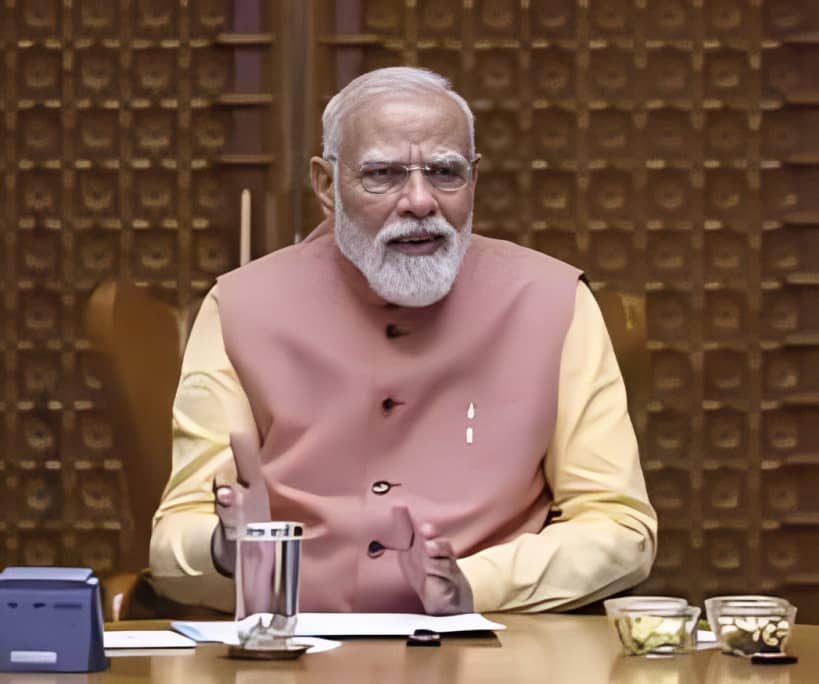
Narendra Modi has called on Members of Parliament to support the women’s reservation initiative, describing it as a historic opportunity to strengthen representation and advance gender equality in politics. The proposal aims to reserve a portion of seats in legislative bodies for women, marking a major step in the ongoing effort to increase their participation in governance.
The Prime Minister emphasised the importance of not delaying the implementation of such measures, highlighting that discussions around women’s reservation have been ongoing for decades. He urged lawmakers to come together and ensure that the initiative is passed without further delay, presenting it as a milestone in the country’s democratic journey.
While the proposal has received support from various political parties, it has also sparked a wider debate. Opposition leaders have raised concerns about the linkage between women’s reservation and delimitation, the process of redrawing constituency boundaries. They argue that combining these issues could affect representation and create uncertainties about how seats will be allocated in the future.
Another point of discussion is the demand for a caste based census, which some opposition parties believe is necessary to ensure fair representation across different communities. They have expressed concerns that without such data, the implementation of reservation policies may not fully reflect the social composition of the population.
The debate has brought attention to broader questions about electoral reforms and the structure of representation in Parliament. Delimitation, which is typically based on population data, can influence the number of seats allocated to different states. This has implications for political balance and regional representation.
Supporters of the women’s reservation initiative argue that it is a long overdue reform that will help address gender disparities in political participation. Increasing the number of women in legislative bodies is seen as a way to bring diverse perspectives into policymaking and strengthen democratic institutions.
At the same time, experts note that the success of such measures depends on effective implementation and clarity in the legal framework. Ensuring that the reservation system is transparent and equitable will be important in achieving its intended objectives.
The current discussions reflect the complexity of balancing different aspects of representation, including gender, region, and social groups. Policymakers are required to consider multiple factors while designing reforms that have long term implications for the political system.
The issue has also generated public interest, with various stakeholders expressing their views on the proposed changes. Civil society organisations and advocacy groups have highlighted the importance of inclusive policies that address multiple dimensions of representation.
As the debate continues, the focus will remain on how Parliament approaches the proposal and whether consensus can be reached among different political parties. The outcome of these discussions could shape the future of electoral reforms in India.
The women’s reservation initiative represents a significant step in the evolution of the country’s democratic framework. Its progress will depend on legislative support and the ability to address concerns raised by different stakeholders.