

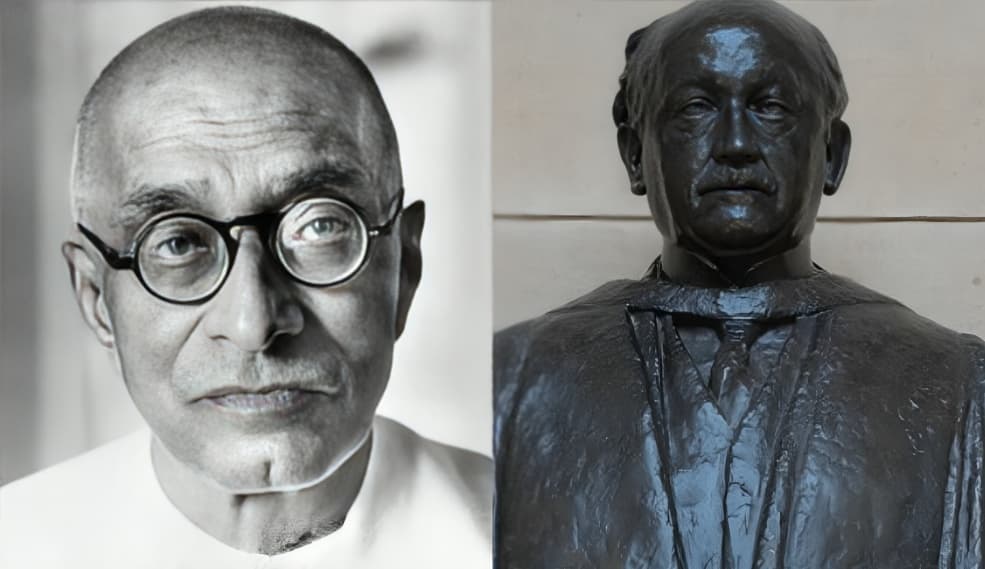
A recent development at Rashtrapati Bhavan has sparked political discussion after the statue of British architect Edwin Lutyens was replaced with a bust of Chakravarti Rajagopalachari. President Droupadi Murmu unveiled the bust at the Grand Open Staircase near Ashok Mandap, positioning it opposite the statue of Mahatma Gandhi. The move is being viewed as part of a broader initiative to highlight India cultural legacy and move away from symbols linked to the colonial period.
Chakravarti Rajagopalachari, widely known as Rajaji, holds an important place in Indian history. He was the last Governor General of India and the only Indian to hold the position after Independence. A freedom fighter, statesman and scholar, Rajaji played a key role in India political and intellectual life during the early years of the Republic. His contribution to governance, literature and public discourse continues to be acknowledged across political lines.
Edwin Lutyens was the British architect who designed much of New Delhi central administrative district during British rule, including the building that now serves as Rashtrapati Bhavan. The earlier presence of his statue within the presidential estate symbolised the architectural legacy of the colonial era. The decision to replace it with the bust of Rajagopalachari is being interpreted by the government as a symbolic shift in narrative.
In a statement issued by the President office, the initiative was described as one among several efforts aimed at shedding vestiges of a colonial mindset and embracing India rich cultural heritage and timeless traditions. The statement emphasised pride in national icons and the importance of commemorating leaders who contributed to the country journey after Independence.
Prime Minister Narendra Modi also referred to the development in his Mann Ki Baat radio address. He said that unveiling Rajaji bust represents a meaningful step toward removing remnants of colonial influence and strengthening national identity rooted in Indian values and history.
The move has prompted varied reactions from political leaders. Congress MP Shashi Tharoor publicly endorsed the change, indicating support for recognising Indian leaders within national institutions. However, some members of the Opposition have raised concerns about the broader narrative surrounding historical reinterpretation and symbolism.
Political observers note that symbolic gestures involving statues and memorials often carry deeper ideological meanings. In recent years, the government has undertaken several projects aimed at renaming institutions and highlighting indigenous heritage. Supporters argue these actions restore historical balance, while critics suggest such changes should be approached with broader consensus.
The replacement at Rashtrapati Bhavan therefore goes beyond a mere structural alteration. It reflects an ongoing national conversation about history, identity and how independent India chooses to represent itself within its most prominent institutions. As reactions continue to emerge, the development underscores how historical memory and symbolism remain central to contemporary political discourse.


