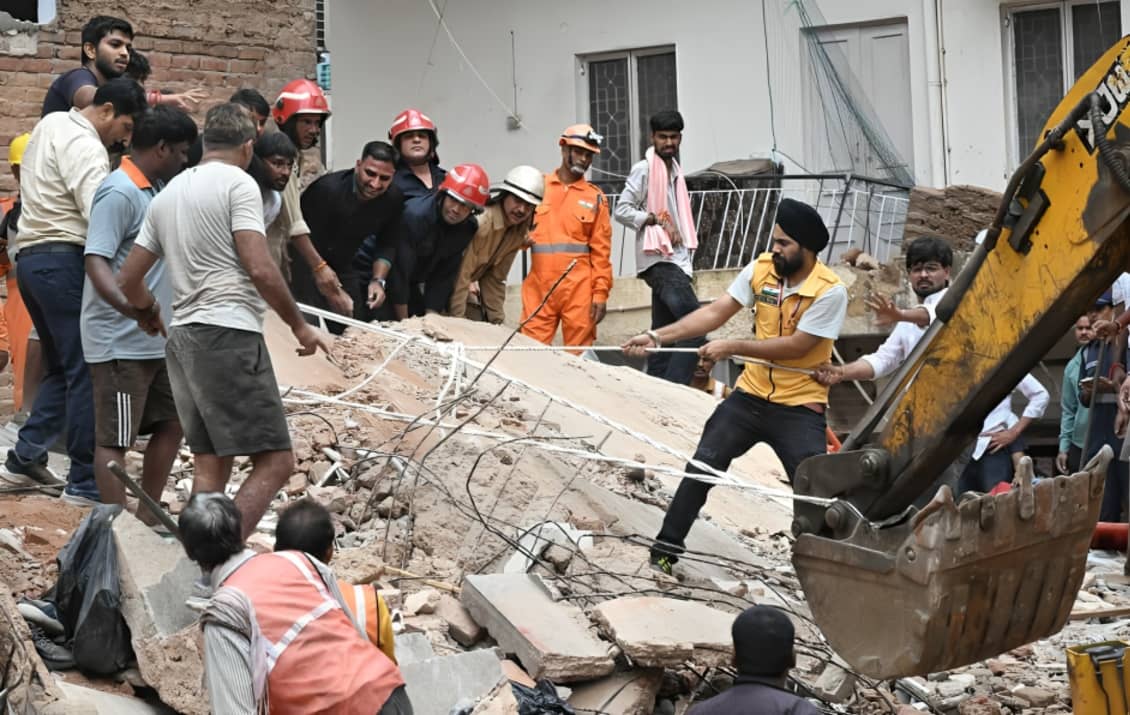
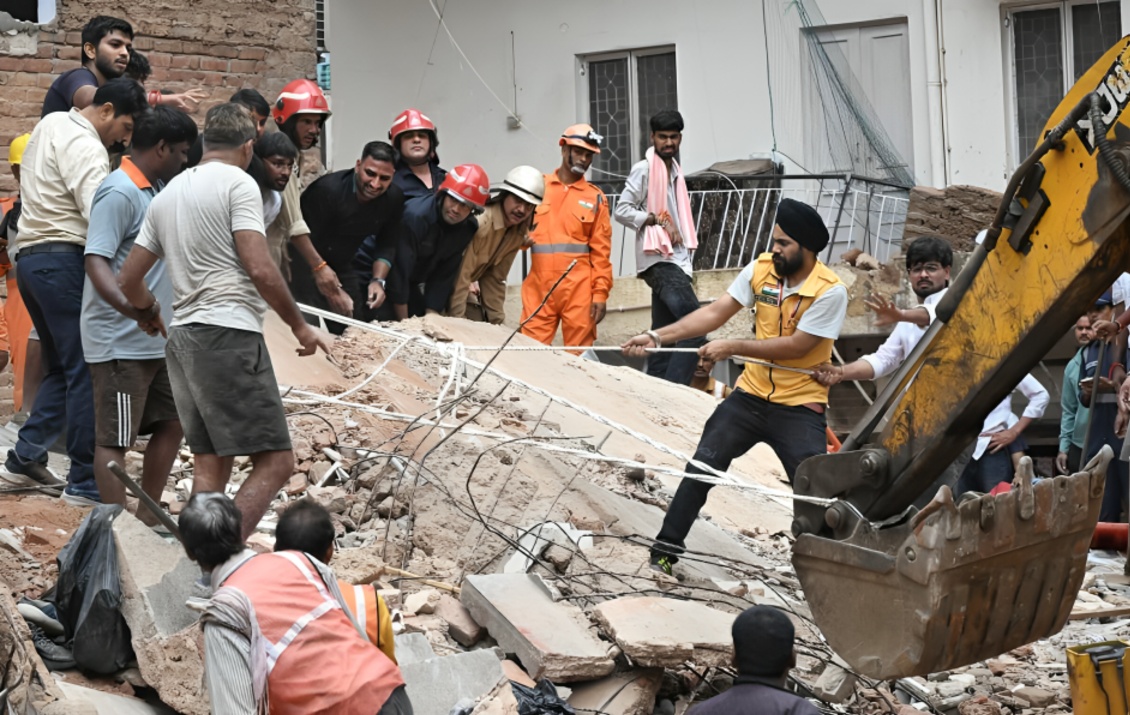
The collapse of a multi storey building in Delhi's Satya Niketan has raised serious questions about the safety of accommodation used by students in the national capital. The building, located in an area near Delhi University's South Campus, collapsed on Sunday afternoon while rescue teams were working to locate people who may have been trapped beneath the debris.
The incident has resulted in at least six deaths, while several people were rescued and others were taken to hospitals for treatment. Emergency personnel, including teams from the National Disaster Response Force, Delhi Fire Services and other agencies, were involved in the rescue operation. Search teams continued working through the night and into Monday as they cleared debris and looked for survivors.
The building was being used as a paying guest accommodation for students. Satya Niketan is located close to Delhi University's South Campus and is one of the areas where students from different parts of the country seek accommodation while pursuing higher education in the capital.
The collapse has brought renewed attention to the conditions in which many students live. Delhi attracts thousands of students every year because of its universities, colleges and coaching centres. Areas around major educational institutions often have large numbers of paying guest facilities, hostels and rented rooms. The demand for affordable accommodation can put pressure on the existing housing infrastructure.
For many students, choosing accommodation is influenced by factors such as rent, distance from college, access to public transport and availability of basic facilities. Safety and structural condition may not always be easy for students or their families to assess before taking a room.
The Satya Niketan incident has therefore triggered wider concerns about whether student accommodation is being regularly inspected and whether buildings being used as hostels or paying guest facilities meet required safety standards.
The exact cause of the collapse has not yet been conclusively established. Reports have indicated that repair or construction work was taking place at the building, while authorities have also been examining other circumstances surrounding the incident. Investigators will have to determine whether structural weaknesses, construction activity, maintenance problems or other factors contributed to the collapse.
Authorities have initiated action following the incident. The Delhi government has ordered a magisterial inquiry, while an FIR has been registered against the owner of the building. The Municipal Corporation of Delhi has also announced action against illegal constructions and said officials found responsible for allowing unsafe structures could face disciplinary measures.
The incident has also led to calls for wider inspections of buildings that accommodate students. The focus is not limited to the collapsed structure. Residents and student groups have raised concerns about other buildings in the locality and whether they have adequate structural safety measures.
Student accommodation can present particular safety challenges because buildings originally designed for residential use may sometimes accommodate larger numbers of people. Additional rooms, alterations, extensions or changes in building use can increase pressure on a structure if they are not properly approved and assessed.
Regular structural inspections can help identify problems before they become serious. Experts and authorities can assess factors such as the condition of columns and beams, foundations, electrical systems, fire safety arrangements, emergency exits and other essential infrastructure.
The tragedy has also highlighted the importance of clear accountability. If a building is found to have been used illegally or without the required safety approvals, questions can arise about the responsibilities of owners, operators and authorities responsible for enforcement.
Delhi Chief Minister Rekha Gupta has announced plans for stronger structural safety measures, including a policy requiring regular structural audits and safety certifications for buildings used by students, patients and educational institutions. Such measures could become an important part of efforts to prevent similar incidents in the future.
The issue is particularly significant for students because they may have limited control over the condition of the buildings in which they live. Many students move to Delhi from other states and depend on private accommodation providers. They may also be reluctant to leave an unsafe building if alternative accommodation is significantly more expensive or located far from their college.
The availability of affordable housing is therefore closely connected to student safety. Regulatory inspections alone may not resolve the problem if students have no practical alternatives when unsafe accommodation is identified.
Educational institutions can also play a role in improving awareness. Colleges and universities could provide students with information about verified accommodation, emergency procedures and ways to report unsafe living conditions. They could also coordinate with local authorities when serious safety concerns are reported.
Several Delhi University colleges have already stepped forward to support students affected by the collapse. Sri Venkateswara College, located close to the incident site, opened its campus to students affected by the incident and provided temporary shelter and food.
The response has also demonstrated the importance of cooperation between students, local residents and emergency services. During the rescue operation, students and local residents were reported to have assisted first responders in the immediate aftermath of the collapse.
The tragedy has raised a broader question about the balance between affordability and safety in Delhi's student housing market. Students come to the capital primarily to pursue education and build their careers. Their accommodation should provide a basic level of safety and security rather than expose them to avoidable structural risks.
The collapse also comes during the monsoon season, when water accumulation and prolonged rainfall can create additional challenges for ageing or poorly maintained structures. However, authorities have not yet established a final cause for the Satya Niketan collapse, and any connection between rainfall and the structural failure remains subject to investigation.
The deaths in Satya Niketan have consequently renewed attention on building safety enforcement across Delhi. The focus is expected to remain on identifying unauthorised structures, checking buildings being used for accommodation and ensuring that owners comply with structural and safety requirements.
The incident also underscores the need for timely action when buildings show signs of structural distress. Cracks, water seepage, damaged foundations, unauthorised construction and other warning signs require professional assessment rather than being ignored.
For students and their families, the incident serves as a reminder of the importance of checking accommodation conditions before moving into a property. At the same time, responsibility for ensuring structural safety ultimately extends beyond individual tenants and requires effective enforcement by property owners and government agencies.
The Satya Niketan collapse is now the subject of official investigation, and the final findings will be important in determining what caused the building to fail and whether safety regulations were violated. Those findings could also influence future measures for student accommodation across Delhi.
The tragedy has made student safety a central part of the conversation around urban housing in the capital. As authorities investigate the collapse and review other potentially unsafe buildings, the immediate challenge will be to ensure that students have access to accommodation that is not only affordable and conveniently located but also structurally safe.
The incident has also reinforced the importance of regular inspections, transparent safety certification and strict action against unauthorised construction. Preventive measures, rather than action after a tragedy, will be essential to protect students and other residents living in high density areas of Delhi.
The Satya Niketan collapse has therefore become more than an isolated building accident. It has raised questions about the condition of student housing, enforcement of building regulations and the responsibility of authorities and property owners to provide safe living environments. The ongoing inquiry is expected to establish the precise circumstances behind the collapse and help determine what further action is required.