Supreme Court Calls for Balance Between Right to Protest and Right to Trade
The Supreme Court of India has emphasised the need to maintain a balance between the constitutional right to peaceful protest and the right to conduct business and earn a livelihood. The court observed that no individual, organisation or group can claim the right to occupy a designated protest venue indefinitely, as other sections of society must also be given an opportunity to use public spaces for demonstrations.
The observations were made by a bench headed by Chief Justice of India Surya Kant while hearing a batch of petitions connected to protests in Delhi. The bench also included Justices Joymalya Bagchi and V Mohana. The proceedings involved concerns raised by traders’ organisations over the impact of demonstrations on commercial activities, along with other petitions relating to police action and restrictions during protests.
Supreme Court Highlights Competing Constitutional Rights
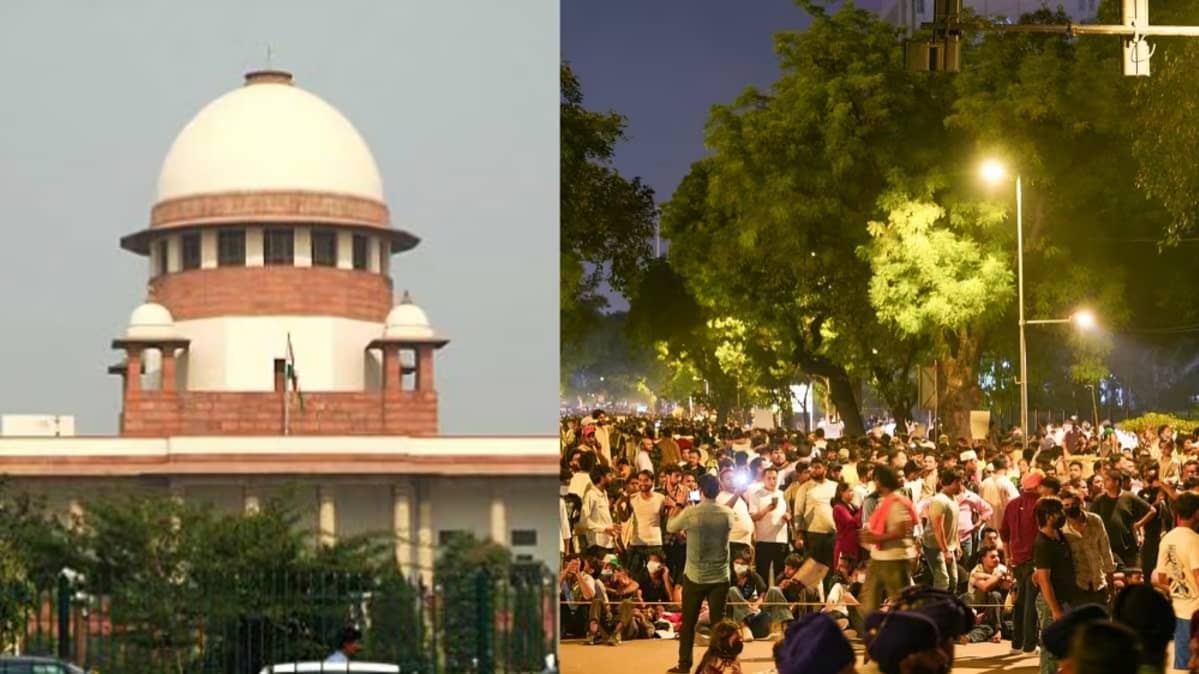
During the hearing, Chief Justice Surya Kant observed that a designated protest site cannot remain occupied by one group permanently. He pointed out that several sections of society, including farmers, workers, journalists and trade unions, may also need public spaces to express their concerns.
The court stressed that everyone has the right to protest peacefully, but permission to use a designated venue should be limited to a specified period. The bench indicated that the authorities must establish clear conditions regarding the duration and use of protest locations.
The observations highlight the need to protect different constitutional rights without allowing one group’s activities to prevent others from exercising their rights. The court also noted that the right to trade and conduct business is not limited to the interests of shop owners and commercial establishments. It also affects daily-wage workers and people whose income depends on regular economic activity.
Traders Raise Concerns Over Business Losses
The Supreme Court was hearing a petition filed by the Kirana Committee Delhi and other traders’ organisations. The petitioners alleged that protests in parts of the national capital had affected business activities, particularly during the festive shopping period.
Senior advocate Mukul Rohatgi, representing the traders, told the court that commercial establishments in areas surrounding Ramlila Maidan and Connaught Place had experienced disruptions. He argued that the protests and associated restrictions had affected shop owners, small traders, daily-wage workers and people involved in transportation and related services.
The traders sought restrictions on protests and demonstrations in Delhi for a period of two months, arguing that continued disruptions could affect businesses during an important shopping season.
The financial losses mentioned during the proceedings were claims made by traders’ organisations. These estimates have not been established as final findings by the court. The extent to which protests, traffic restrictions and other administrative measures contributed to the reported losses remains an issue for examination.
Court Directs Traders to Include Protest Organisers
The bench directed the traders’ organisations to include the organisers of the protests as parties to their petition. The court indicated that it would need to hear the organisations involved in the demonstrations before examining the allegations and deciding the competing claims.
The direction is significant because the dispute involves the rights and responsibilities of several parties. Traders have raised concerns about the impact of demonstrations on their businesses, while protest organisers may have arguments regarding their right to assemble and express political or public grievances.
By asking the petitioners to include the organisers, the court has sought to ensure that all relevant parties have an opportunity to present their positions. The matter will require the court to examine the circumstances surrounding the demonstrations, the permissions granted and the restrictions imposed by the authorities.
Government Explains Protest Permission and Duration
Solicitor General Tushar Mehta, representing the Centre and Delhi Police, told the bench that permission for an earlier demonstration at Jantar Mantar had reportedly been granted for one day. However, according to his submission, the protesters continued occupying the site for 17 days.
He also referred to a subsequent proposed march towards Parliament and argued that demonstrations must comply with the conditions imposed by the authorities.
The submissions from the government and the traders raised questions about the enforcement of protest permissions, the use of designated public spaces and the responsibilities of organisers.
The court's observations indicated that permission orders should clearly specify the period and conditions under which a protest venue can be used. Such conditions could help ensure that public spaces remain accessible to different groups while reducing disruption to nearby communities and commercial activities.
Petitions Also Raise Questions About Police Action
The hearing covered several petitions concerning the handling of protests in Delhi. Apart from the traders’ concerns, some petitions raised allegations of mass detentions, police excesses, restrictions on journalists, internet disruptions and the closure of Metro stations.
Issues relating to the use of surveillance technology during demonstrations were also brought before the court. Petitioners questioned the legal framework governing facial recognition systems and the collection and use of information about individuals attending public protests.
The court is required to examine these issues separately, including whether the actions taken by authorities followed the applicable legal procedures and constitutional safeguards.
The proceedings also involved concerns about access to public spaces, restrictions imposed during demonstrations and the treatment of people participating in protests. These allegations remain matters for judicial consideration and should not be treated as established findings.
Need for Clear Rules on Public Protest Venues
The Supreme Court's observations underline the importance of having clear arrangements for the use of designated protest locations. Public spaces are used by different groups to raise demands, highlight grievances and seek government action. Allowing one organisation to occupy a venue without a time limit could prevent other citizens from using the same location.
At the same time, restrictions on demonstrations must take into account the constitutional protection available to peaceful protesters. Authorities need to consider the nature of the protest, public safety, traffic management and the possible impact on people living or working nearby.
The court has highlighted that the right to earn a livelihood also deserves consideration. Small businesses, street vendors, daily-wage workers and transport operators may depend on uninterrupted access to commercial areas. Any arrangements for demonstrations should therefore consider the interests of both protesters and the wider public.
What Happens Next?
The Supreme Court has sought responses from the Centre and other concerned authorities in connection with the petitions. The traders’ organisations have also been asked to include the protest organisers in their case so that the court can hear the relevant parties.
The connected petitions raise several legal and constitutional questions, including the right to peaceful assembly, the regulation of designated protest sites, the right to trade, alleged police action and surveillance during demonstrations.
The court's observations do not amount to a final ruling on all these issues. Further hearings and responses from the parties will be important in determining how the competing claims should be addressed.
The central message from the hearing is that constitutional rights must be protected in a manner that allows different sections of society to exercise them. The right to protest cannot be ignored, while the economic interests and livelihoods of traders and workers must also be considered. The Supreme Court's further examination of the petitions may provide greater clarity on the rules governing demonstrations and the use of public spaces in Delhi.