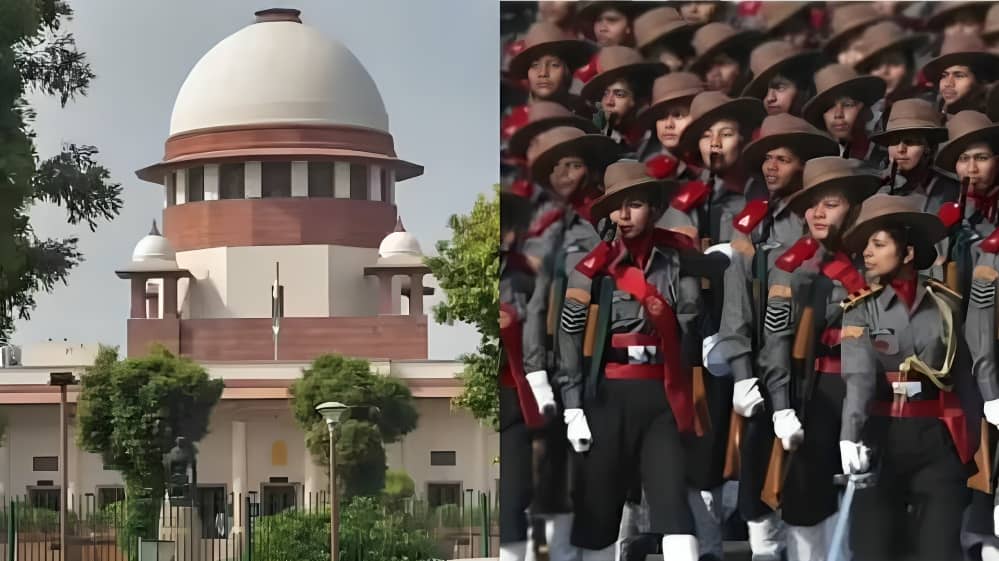
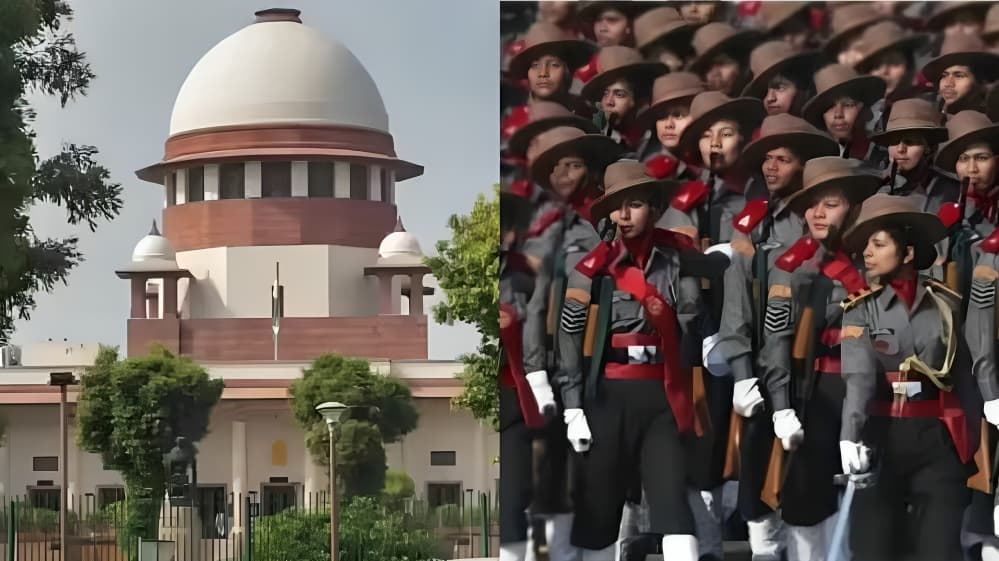
The Supreme Court has raised serious concerns over the evaluation process used in granting Permanent Commission to women officers in the armed forces. In a recent judgment, the court observed that the denial of Permanent Commission to women Short Service Commission officers was influenced by a flawed and discriminatory assessment system.
A bench comprising Chief Justice of India Surya Kant and Justices Ujjal Bhuyan and N Kotiswar Singh examined the process through which women officers were evaluated for career progression. The court noted that the Annual Confidential Reports, which play a crucial role in determining an officer’s suitability for Permanent Commission, were not assessed fairly in several cases.
According to the court’s observations, there appeared to be a presumption in the evaluation process that women officers would not continue long term in service. This assumption, the bench stated, negatively affected the assessment of their performance and ultimately reduced their chances of being granted Permanent Commission. The court emphasised that such an approach undermines the principle of equality and fairness in professional evaluation.
The bench also highlighted issues related to the lack of transparency in the evaluation criteria. It pointed out that the authorities failed to clearly disclose the parameters used to assess the officers. This lack of clarity made it difficult for the officers to understand how their performance was being judged and to address any shortcomings.
While acknowledging that certain evaluation models may have been introduced as one time measures, the court stated that their implementation must still adhere to principles of fairness and non discrimination. Any deviation from these principles, especially in matters affecting career progression, can have long lasting consequences for individuals.
The judgment is seen as a significant step in addressing gender related concerns within the armed forces. Over the years, there has been increasing focus on providing equal opportunities to women officers, including granting them Permanent Commission and allowing them to serve in various roles.
Legal experts believe that the court’s observations could lead to reforms in the evaluation system, ensuring that all officers are assessed based on merit and performance rather than assumptions or biases. It may also prompt authorities to review existing procedures and introduce more transparent and objective assessment mechanisms.
The ruling also reinforces the broader principle that institutional processes must be free from discrimination and must provide equal opportunities to all individuals. In the context of the armed forces, this is particularly important as decisions related to promotions and career progression have a direct impact on morale and professional growth.
Following the judgment, it is expected that the concerned authorities will take steps to address the issues highlighted by the court. This may include revisiting evaluation criteria, ensuring greater transparency, and providing clearer guidelines for assessing officers.
The Supreme Court’s intervention underscores the importance of fairness and accountability in administrative processes. It also reflects the judiciary’s role in upholding constitutional values and ensuring that equal opportunities are available to all, regardless of gender.