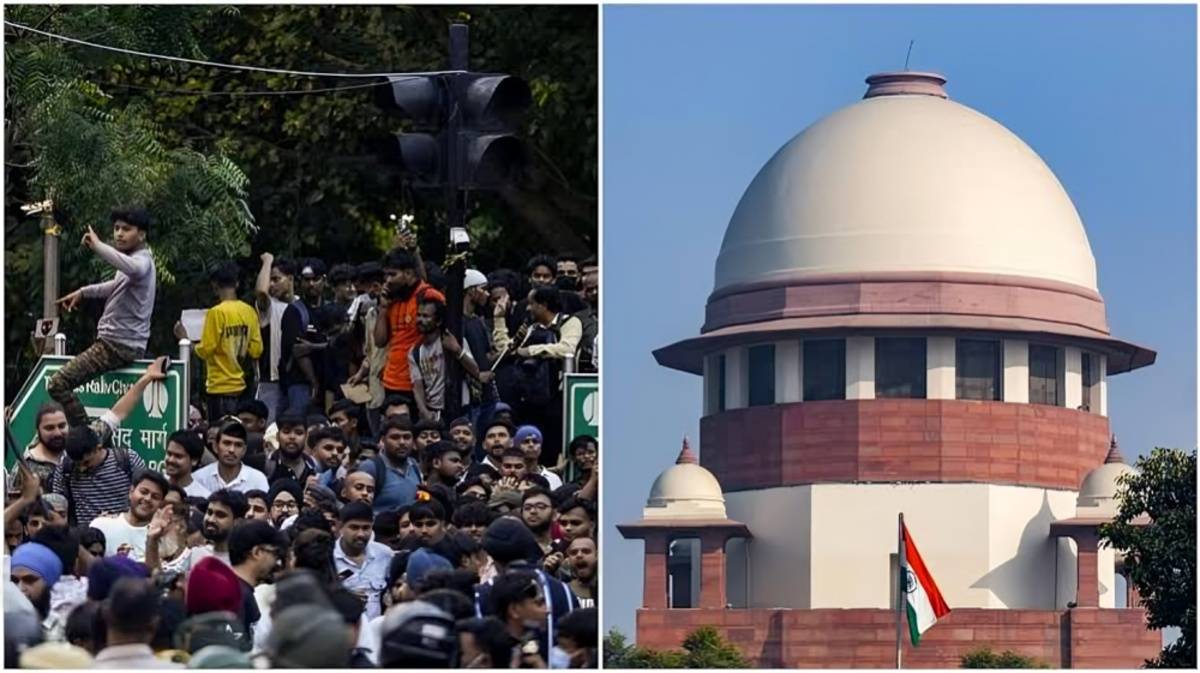
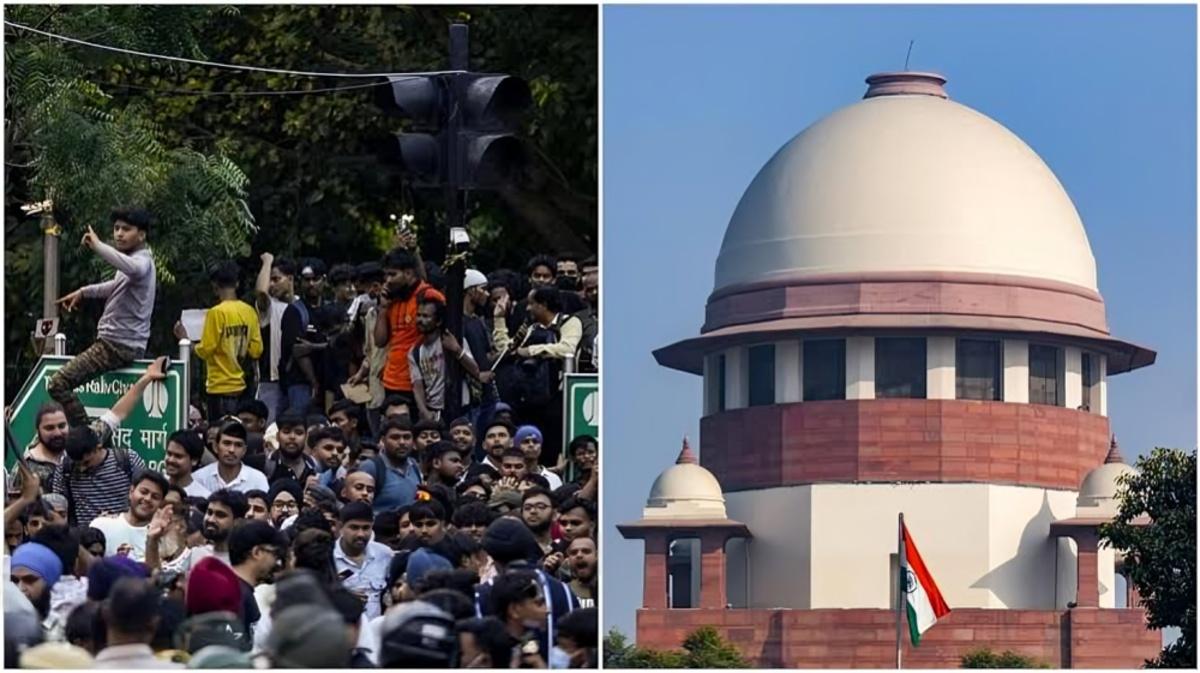
The Supreme Court of India has issued notices to the Cockroach Janata Party, Congress, Aam Aadmi Party and All India Students Association following a petition filed by traders in Delhi. The petition alleges that political demonstrations organised by these groups in the national capital disrupted commercial activities and caused financial losses to businesses operating in the affected areas.
The matter came before the Supreme Court on Wednesday, November 18, 2026. The traders have argued that protests held against Chief Election Commissioner Gyanesh Kumar affected business establishments and the livelihoods of people working in central Delhi's commercial areas.
The petition was filed by Kirana Committee Delhi and the Delhi Iron and Hardware Merchant Association. The traders have requested judicial intervention, arguing that political demonstrations should not be allowed to disrupt commercial activities and the right of businesses to operate.
Supreme Court Issues Notices to Four Organisations
A three-judge bench comprising Chief Justice of India Surya Kant, Justice Joymalya Bagchi and Justice V. Mohana heard the petition.
During the proceedings, the court issued notices to the Cockroach Janata Party, Indian National Congress, Aam Aadmi Party and All India Students Association. These organisations were added as respondents after the court had earlier asked the petitioners to include the organisers of the protests in the case.
Following this direction, the traders amended their petition and included the organisations concerned. The Supreme Court subsequently accepted the amended petition and ordered notices to be issued to the newly added respondents.
The notices seek responses from the organisations regarding the allegations raised by the traders. The issuance of notices does not mean that the court has accepted the allegations or reached a final conclusion on the matter.
Traders Allege Business Disruption Due to Political Demonstrations
The petitioners have argued that demonstrations organised in Delhi affected commercial activities, particularly in areas where wholesale markets and other business establishments operate.
According to the traders, the protests caused difficulties for businesses, customers, employees and people involved in commercial activities. They have claimed that demonstrations and related disruptions affected the movement of people and the normal functioning of markets.
The traders have also raised concerns about the financial impact of such disruptions. They argue that businesses operating in commercial areas depend on regular customer movement, transportation and access to markets. When demonstrations interfere with these activities, traders may experience reduced sales and other financial difficulties.
The petitioners have therefore sought the court's intervention to ensure that protests do not adversely affect the livelihood of traders and other commercial establishments.
These claims form part of the petition and have not yet been established through a final judicial finding.
Objections Raised Over Jantar Mantar and Ramlila Maidan
Senior advocate Mukul Rohatgi, appearing for the traders, presented arguments concerning the impact of demonstrations in central Delhi.
He submitted that protests at Jantar Mantar had disrupted business activities in the surrounding areas. He also raised objections to Ramlila Maidan being used as a designated location for political demonstrations.
Rohatgi argued that Ramlila Maidan is situated in a commercially important part of the national capital, with several wholesale markets and business establishments located nearby.
He questioned whether demonstrations should be permitted at a location surrounded by major commercial areas when such activities could affect the functioning of businesses.
The traders' side argued that the location and management of protest venues should take into account the interests of nearby commercial establishments, traders and workers.
The issue raises questions about how public protest locations should be managed in densely populated urban areas where commercial activities take place alongside political and public gatherings.
Petition Filed by Two Delhi Traders' Associations
The case was brought before the Supreme Court by Kirana Committee Delhi and the Delhi Iron and Hardware Merchant Association.
Both organisations represent traders whose business activities depend on the smooth functioning of markets and commercial areas in the national capital.
Their petition focuses on the difficulties allegedly faced by traders during political demonstrations. They have argued that protests should not result in prolonged disruption to business operations or affect the livelihood of people who depend on daily commercial activity.
The petition also raises the broader question of balancing the right to organise demonstrations with the right of individuals and businesses to carry on their occupations and commercial activities.
The traders want the authorities and relevant organisations to ensure that public demonstrations are conducted in a manner that minimises disruption to nearby markets.
Case May Be Heard Alongside Other Petitions
During the hearing, the Supreme Court indicated that the traders' petition could be listed along with other related matters, including the case of MA Baby versus Union of India.
That case concerns challenges to restrictions imposed following protests. The matters are tentatively scheduled to be listed on November 27, 2026.
The bench also indicated that contempt petitions filed against police officials and other authorities would be taken up separately on another date.
The proposed listing alongside related cases could allow the court to consider wider legal questions concerning public demonstrations, restrictions on protests and the responsibilities of authorities in maintaining public order.
However, the exact schedule and further directions will depend on the court's subsequent listing and proceedings.
Balancing the Right to Protest and the Right to Conduct Business
The case brings attention to two important interests in a democratic society. Citizens and political organisations have the right to assemble peacefully and express their views through demonstrations. At the same time, traders and business owners have the right to carry on their occupations without unreasonable interference.
Political demonstrations are an important part of democratic participation. However, when protests take place near commercial centres, they can create practical difficulties for traders, customers, employees and transport services.
The challenge for authorities is to ensure that public demonstrations can take place while preventing unnecessary disruption to essential activities and businesses.
The choice of protest venues, crowd management, traffic arrangements and coordination with local authorities can play an important role in reducing the impact on surrounding areas.
The traders' petition seeks judicial consideration of these concerns, particularly in relation to demonstrations held in commercially significant parts of central Delhi.
What Happens Next?
With notices issued to the four organisations, the matter will proceed after the relevant respondents are given an opportunity to present their responses.
The Supreme Court may consider the submissions of the traders, the responses from the organisations and the applicable legal principles before deciding the next course of action.
The petitioners have raised concerns about the financial losses allegedly caused by demonstrations and the impact on traders' livelihoods. The organisations receiving notices will have an opportunity to respond to these claims.
The next possible hearing is expected to be considered alongside related petitions tentatively listed for November 27.
The Supreme Court's proceedings will be important in examining the balance between the right to peaceful protest and the right to conduct business. For now, the court has issued notices and has not delivered a final ruling on the traders' allegations or the future use of the protest venues.