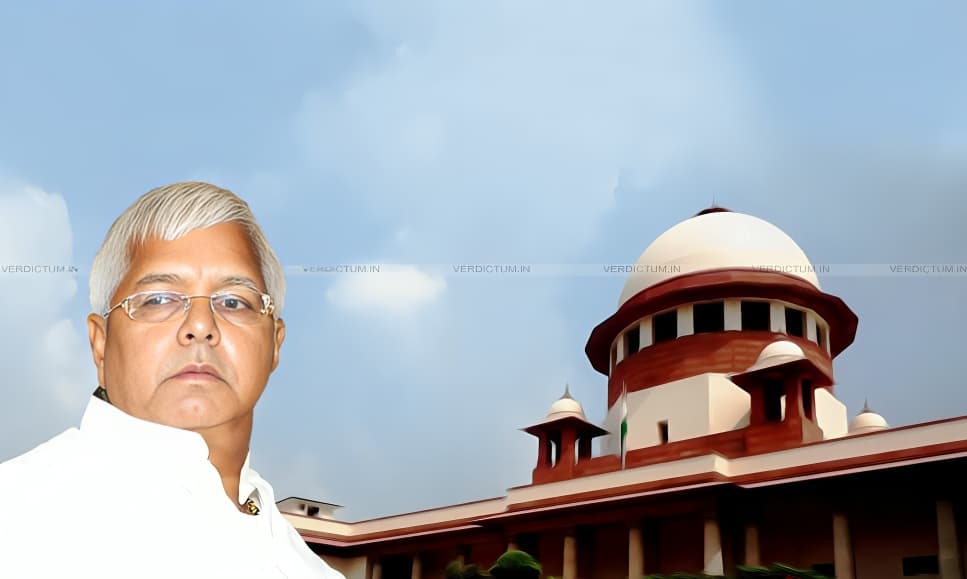
The Supreme Court of India has refused to grant relief to Lalu Prasad Yadav in connection with the land for jobs case, allowing the proceedings initiated by the Central Bureau of Investigation to continue. The decision marks an important development in the ongoing legal matter involving the former Bihar Chief Minister and his family members.
The case relates to allegations that land parcels were taken in exchange for providing jobs during Lalu Prasad Yadav’s tenure as Railway Minister. The Central Bureau of Investigation has been examining the matter and has registered cases against several individuals, including members of Yadav’s family. The investigation seeks to determine whether there were irregularities in recruitment processes and whether any undue benefits were received.
Lalu Prasad Yadav had approached the Supreme Court seeking relief from the proceedings, arguing for dismissal of the case. However, the court declined to intervene at this stage, effectively allowing the investigation and related legal processes to move forward. The ruling indicates that the court found no immediate grounds to halt the proceedings.
Legal experts note that such decisions are significant as they reinforce the principle that investigative agencies must be allowed to carry out their duties without undue interference, provided due process is followed. The Supreme Court’s stance suggests that the matter should be examined thoroughly through established legal channels.
The development has drawn attention from political circles, given Lalu Prasad Yadav’s prominent role in Indian politics and his leadership of the Rashtriya Janata Dal. The case has been a subject of debate, with different parties expressing varying views on the allegations and the investigation.
Supporters of Yadav have maintained that the charges are politically motivated, while others have emphasised the need for accountability and transparency. The legal process is expected to address these claims as evidence is presented and examined in court.
The Central Bureau of Investigation has stated that it is conducting its probe in accordance with legal procedures. The agency is responsible for collecting evidence, recording statements, and presenting its findings before the court. The continuation of proceedings will allow for further examination of the allegations.
The case also highlights broader issues related to governance and accountability in public office. Allegations involving recruitment and misuse of authority are taken seriously, as they can affect public trust in institutions. Ensuring a fair and transparent investigation is therefore crucial.
As the proceedings continue, the focus will be on how the case develops in the courts. The legal process may involve multiple stages, including hearings, submission of evidence, and arguments from both sides. The outcome will depend on the findings presented during these proceedings.
The Supreme Court’s decision underscores the importance of allowing the judicial process to take its course. It reflects the role of the judiciary in maintaining the balance between protecting individual rights and ensuring that allegations are properly investigated.
The case is likely to remain under close scrutiny as it progresses. Observers will be watching for further developments and their implications for both legal and political landscapes.