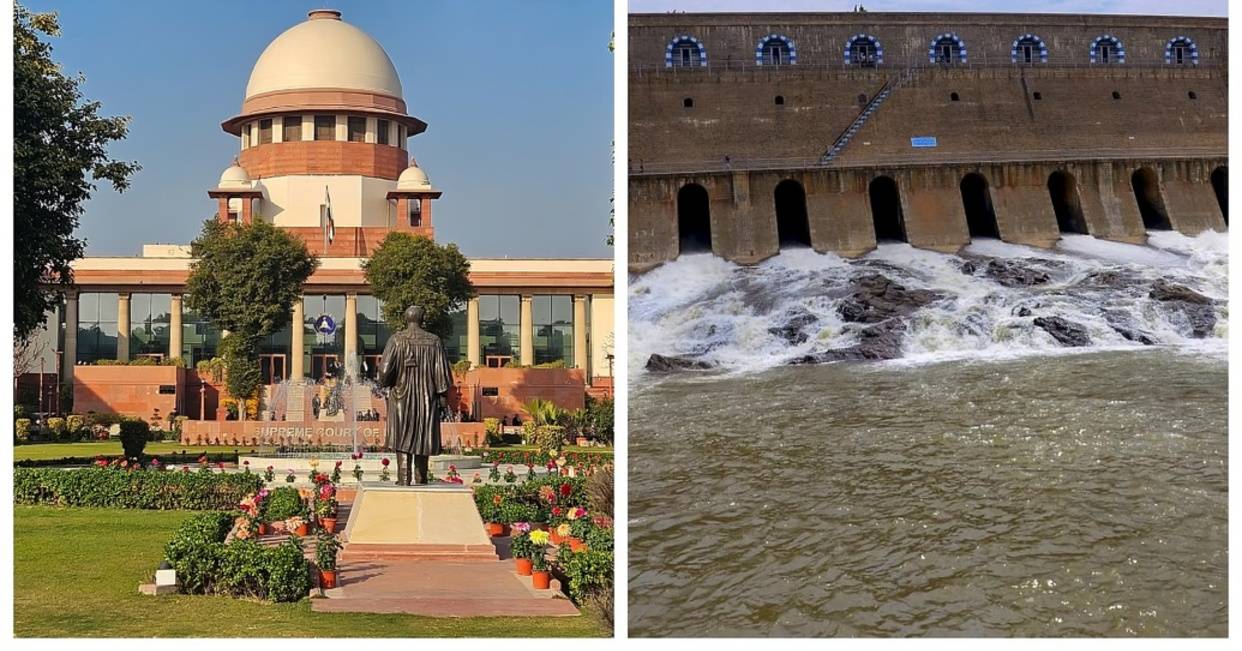
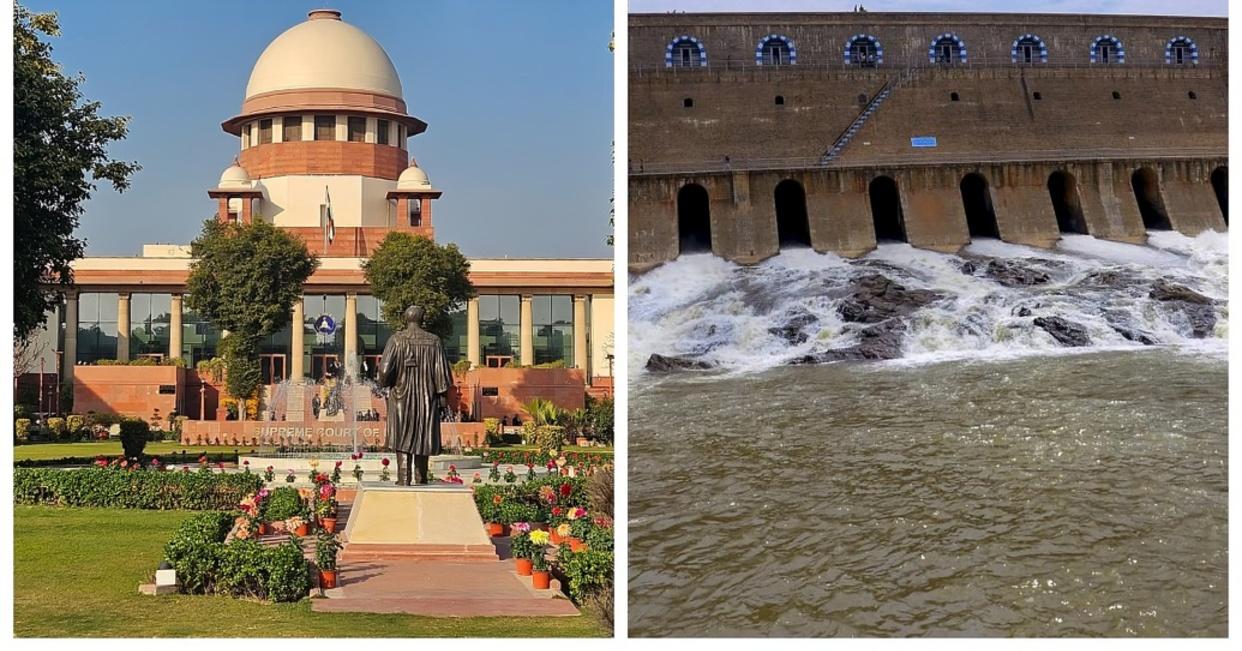
The Supreme Court has declined to entertain a petition filed by the Tamil Nadu government seeking the release of 11 thousand million cubic feet (TMC) of Cauvery water from Karnataka. Tamil Nadu had approached the country's highest court seeking additional water to compensate for an alleged shortfall in its allocated share.
The petition highlighted the difficulties caused by water scarcity in the state, particularly its impact on farmers and agricultural activities. Tamil Nadu also sought directions to ensure that Karnataka implemented the water-release instructions issued by the Cauvery Water Management Authority.
A Supreme Court bench comprising Justices Vikram Nath and Aparesh Singh passed the order on Friday, declining to entertain the state's plea.
Tamil Nadu Seeks 11 TMC of Additional Cauvery Water
Tamil Nadu approached the Supreme Court seeking the release of 11 TMC of Cauvery water from neighbouring Karnataka. The state argued that there was a shortfall in the water received against its share and requested additional water to address the situation.
The demand was based on concerns over water availability for agriculture. Cauvery water is an important resource for farmers in Tamil Nadu, particularly those dependent on the river for irrigation and crop cultivation.
The state highlighted that insufficient water could affect agricultural operations and create difficulties for farming communities. It therefore sought the Supreme Court's intervention to secure the additional quantity of water.
Supreme Court Bench Declines to Entertain the Petition
The petition came before a bench comprising Justices Vikram Nath and Aparesh Singh. After considering the plea, the bench declined to entertain Tamil Nadu's request for a direction to Karnataka to release the additional 11 TMC of water.
The order represents a setback for Tamil Nadu's latest attempt to obtain additional Cauvery water through the Supreme Court.
The supplied report does not provide further details about the court's reasoning or whether the state was given any alternative legal option. Therefore, the decision should be understood specifically as the court declining to entertain this particular petition.
Tamil Nadu Refers to Cauvery Water Management Authority Directions
Another important aspect of Tamil Nadu's petition was its request for the implementation of directions issued by the Cauvery Water Management Authority (CWMA).
The authority is responsible for overseeing the implementation of water-sharing arrangements between the Cauvery basin states. Its directions are important in managing the distribution of river water, particularly during periods of limited availability.
Tamil Nadu approached the Supreme Court seeking enforcement of the authority's instructions requiring Karnataka to release water to the neighbouring state.
The state argued that compliance with these directions was necessary to address its water requirements. The petition therefore involved both the demand for additional water and the implementation of the existing water-management instructions.
Water Scarcity Raises Concerns Among Farmers
The availability of Cauvery water is closely connected to agricultural activities in Tamil Nadu. Farmers in several parts of the state depend on the river and its irrigation network for cultivating crops.
When water availability falls below requirements, agricultural activities can face difficulties. Insufficient irrigation water may affect crop growth, farming schedules and the overall livelihood of agricultural communities.
Tamil Nadu's petition highlighted these concerns and referred to the impact of water scarcity on farmers and crops.
The state's demand for additional water was therefore presented as an important requirement for addressing agricultural needs.
Cauvery Water Dispute Between Tamil Nadu and Karnataka
The sharing of Cauvery water has been a longstanding issue between Tamil Nadu and Karnataka. Both states depend on the river for agriculture, drinking water and other essential requirements.
Differences over the quantity and timing of water releases have frequently led to disputes. During periods of reduced rainfall and lower reservoir storage, demands for water can become more urgent.
The Cauvery Water Management Authority plays an important role in monitoring water availability and overseeing the implementation of the established sharing arrangements.
The latest Supreme Court order adds another development to the continuing dispute between the two states.
What Happens Next?
The Supreme Court's decision to decline Tamil Nadu's petition means that the state has not secured the requested direction for the release of an additional 11 TMC of Cauvery water through this particular plea.
The immediate concern for Tamil Nadu remains the availability of water for agricultural requirements and the implementation of the applicable water-sharing directions.
The supplied report does not specify the next legal steps planned by the Tamil Nadu government or whether it intends to pursue another course of action.
The development is likely to remain significant for farmers and policymakers in the Cauvery basin, as water availability continues to be a major concern for both Tamil Nadu and Karnataka.