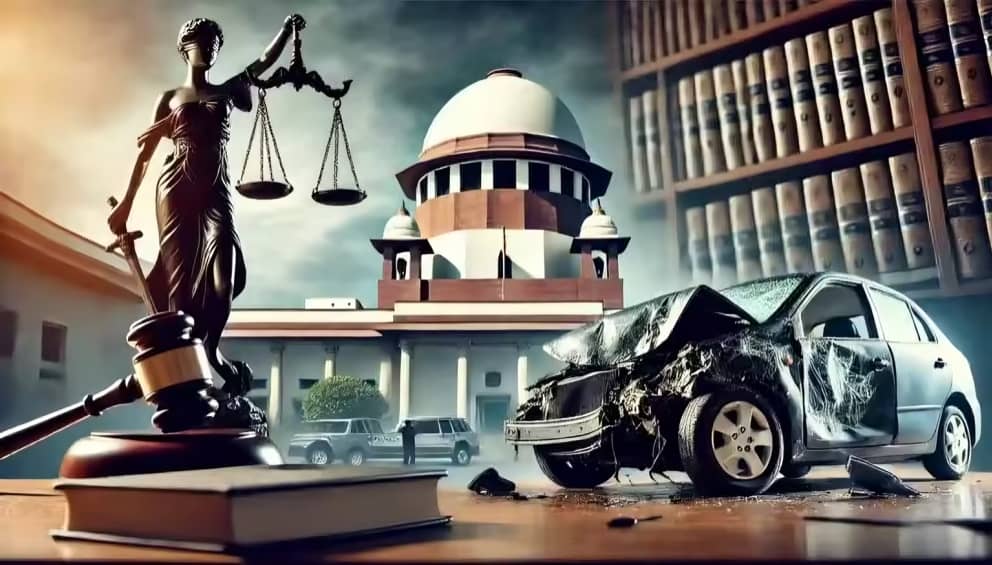

The Supreme Court of India has clarified that when a private vehicle is requisitioned by government authorities for public purposes, the responsibility for any third party damages arising during that period will rest with the government and not with the insurance company of the vehicle owner.
The ruling was delivered by a bench comprising Justices Sanjay Karol and N K Singh. The court observed that once a vehicle is requisitioned, the owner no longer has control over its use, and therefore liability cannot be imposed on the insurer engaged for the owner regular use of the vehicle.
The case relates to an incident in Gwalior where a bus owned by a private school was requisitioned by the district administration for gram panchayat election duties. During this period, the bus was involved in an accident that resulted in the death of a motorcyclist. The Motor Accident Claims Tribunal had initially awarded compensation of Rs 5.1 lakh along with interest.
In a subsequent hearing, the Supreme Court enhanced the compensation amount to Rs 27 lakh, taking into account various factors including the circumstances of the accident and the need for fair compensation to the victim family. The court further clarified the issue of liability in its latest ruling.
The bench rejected the argument made by the district administration that holding the government liable could send a negative message. Instead, the court emphasised that when the state takes control of a private asset for public purposes, it also assumes responsibility for any consequences arising from its use during that period.
The judgment highlights the legal principle that control and custody determine liability. Since the government exercises authority over the vehicle during requisition, it is responsible for ensuring its proper use and for compensating any third party affected by its operation.
Legal experts believe that this ruling provides clarity on an important aspect of motor accident liability and will have implications for similar cases in the future. It reinforces the responsibility of government agencies to act with caution when using private resources for official duties.
The decision is also expected to influence how insurance claims are handled in such situations, ensuring that vehicle owners and insurers are not held accountable for incidents occurring beyond their control.
Overall, the Supreme Court ruling establishes a clear framework for determining liability in cases involving requisitioned vehicles, emphasising the role of the government in safeguarding public interest and ensuring justice for victims.