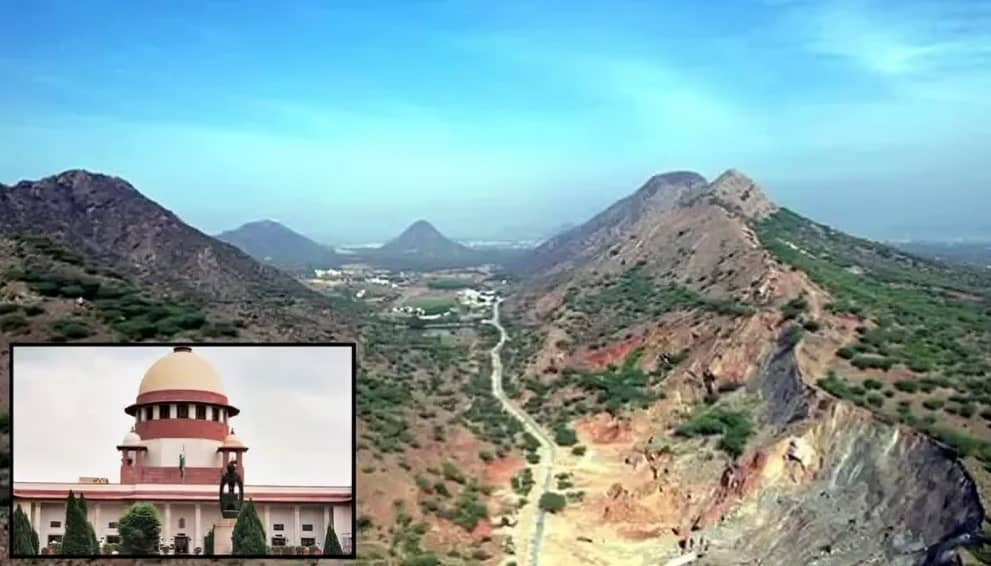

The Supreme Court has sought a fresh review of the official definition of the Aravalli mountain range following public concern that an earlier description was too limited in scope. In December, the court stayed the definition after it triggered debate among environmentalists, researchers and local communities. The move has reopened discussion about how the Aravallis should be understood, not only in geographical terms but also in ecological and cultural contexts.
The Aravalli Range stretches for nearly 600 kilometres across four states including Rajasthan, Gujarat, Haryana and Delhi. Recognised as one of the world’s oldest fold mountain systems, the range is estimated to be around two billion years old. Over centuries, it has played a crucial role in shaping the landscape, climate and settlement patterns of northwestern India.
In Rajasthan, the state most closely associated with the Aravallis, the hills are deeply connected to daily life. The range influences rainfall distribution, groundwater recharge and soil stability in arid and semi arid regions. Forests in the Aravallis support biodiversity and provide grazing land, minor forest produce and other resources that sustain rural and tribal communities. Many villages depend on the ecological balance maintained by these hills for agriculture and water security.
Local voices argue that reducing the Aravallis to a technical or administrative boundary overlooks their broader significance. For communities living along the range, the mountains are intertwined with traditions, faith practices and cultural identity. Several temples and historical sites are located in the hills, and folklore and local dialects reflect the influence of the terrain. The range has also historically served as a natural barrier and habitat corridor for wildlife.
Environmental experts have expressed concern that a narrow definition could weaken conservation measures and open ecologically sensitive areas to development activities. The Aravallis act as a natural shield against desertification from the Thar Desert and help regulate air quality in nearby urban centres. Degradation due to mining, deforestation and unplanned construction has already raised alarms about long term environmental consequences.
By seeking a new yardstick to define the range, the Supreme Court has signalled the importance of clarity in environmental governance. A comprehensive definition could strengthen legal protections and ensure that policies reflect both ecological realities and community concerns. The outcome of this review is likely to influence future decisions related to land use, infrastructure projects and conservation strategies in the region.
As discussions continue, the debate highlights a broader question about how natural landscapes are measured and protected. For many in Rajasthan and neighbouring states, the Aravallis represent more than geological formations. They are a living landscape that shapes livelihoods, culture and environmental stability. The Supreme Court’s review may ultimately determine how this ancient mountain system is safeguarded for future generations while balancing developmental needs.